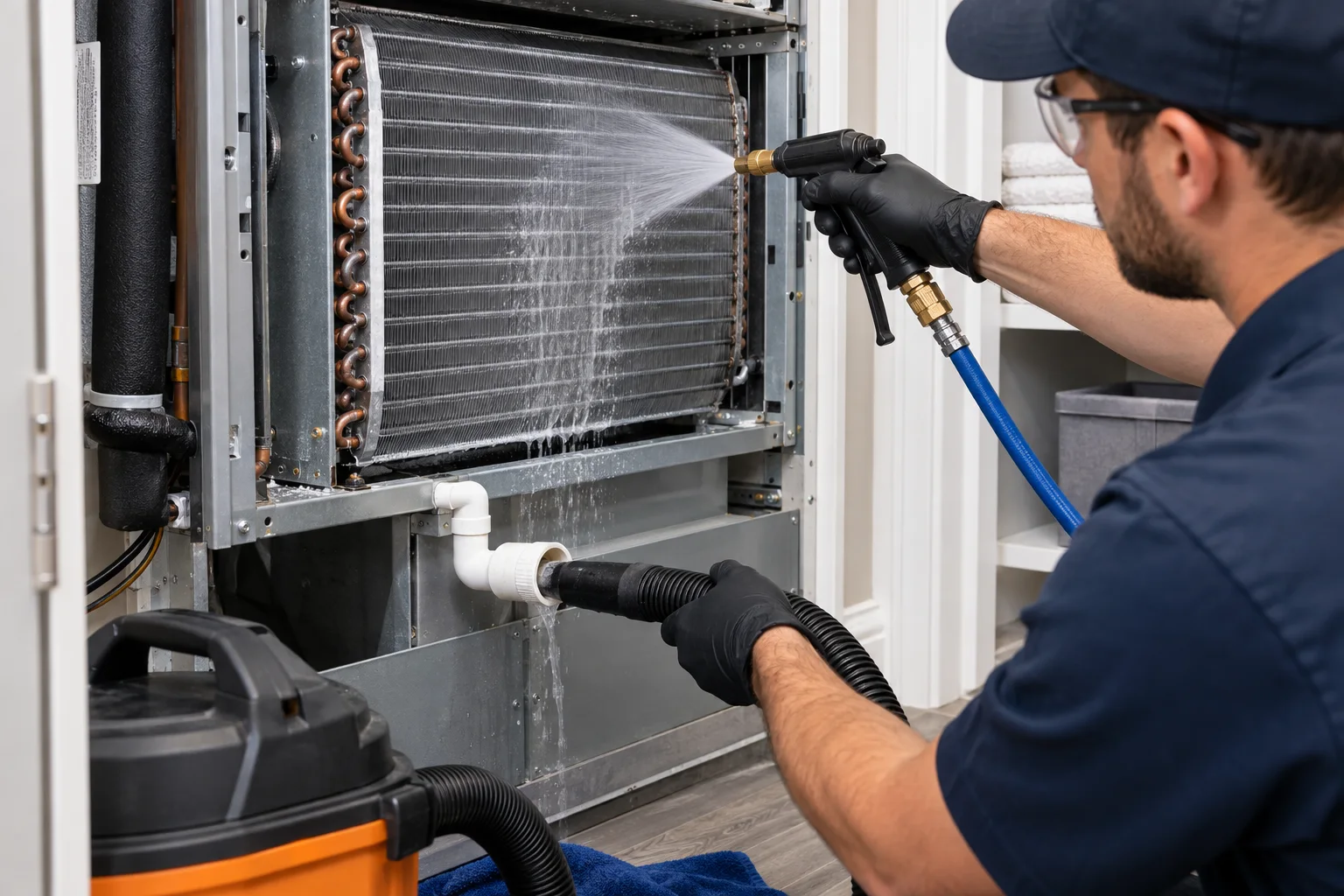
Amana central heating repair in Largo: start with the symptom and the equipment
Uneven heating can make one room uncomfortable while another feels warm, but that pattern does not identify a failed part. Airflow, ductwork, thermostat settings, system controls, equipment condition, and the home’s heat loss can all contribute. A useful Amana repair visit connects the complaint to measurements and inspection findings rather than guessing from the symptom.
Amana central heating equipment is not all configured alike. A home may have a furnace, a heat pump, or another central heating arrangement. The equipment label and model number help identify what is installed and which parts and service information apply. If you request service in Largo, share the model number if it is easy and safe to read, along with which rooms are affected and when the problem occurs.
Safe observations to make before scheduling
Homeowners can collect useful information without opening the equipment or attempting a repair. Note the thermostat setting, any displayed message or code, when the system starts and stops, and whether the issue affects the whole home or specific rooms. You can also check whether registers are visibly blocked and whether the thermostat is set to the intended heating mode.
- If the filter is readily accessible, check its condition and follow the equipment instructions for replacement. Do not reach into the equipment or use a filter size that does not fit.
- Note whether airflow seems weak at several registers or only in particular rooms. This observation can help guide an inspection, but it does not establish the cause.
- Keep a record of unusual sounds, odors, or repeated shutdowns. A photo of a thermostat message or an equipment label can be useful when arranging service.
- Do not remove access panels, handle wiring, bypass a safety control, or attempt refrigerant work.
If a carbon monoxide alarm sounds, or anyone has symptoms that could indicate carbon monoxide exposure, leave the home and contact emergency services. Do not re-enter until it is safe. For a burning odor, exposed wiring, repeated breaker trips, or another immediate safety concern, stop using the system if you can do so safely and arrange qualified help.
What an Amana heating repair inspection should establish
A technician should first identify the equipment type and confirm the reported problem. The inspection can then follow the appropriate system-specific checks. The exact tests depend on the model and configuration; a furnace and a heat pump do not use identical heating components or diagnostic steps.
For a comfort complaint, the technician may assess thermostat operation, system response, airflow, the condition of accessible filters and coils, and the supply and return paths. If the complaint points to room-to-room differences, the inspection may also consider registers, dampers, duct condition, and whether the distribution system is delivering air as intended. These are possible areas to examine, not assumed causes.
For equipment that starts and stops, produces little heat, or displays a fault, the technician should use the model-specific diagnostic information and appropriate instruments to evaluate operation and safety. Depending on the equipment, that may involve checking controls, electrical operation, heating components, or heat-pump operation. A displayed code can narrow the investigation, but it does not by itself prove that a particular part has failed.
Ask what was tested, what the findings show, and how the proposed repair relates to the rooms or symptoms you reported. If a part is recommended for replacement, ask why it is implicated, whether other conditions could be contributing, and whether the repair addresses the full complaint. If airflow or ductwork is involved, replacing an equipment component alone may not resolve a distribution problem.
Amana parts, compatibility, and warranty considerations
Parts must match the installed equipment and the repair need. Genuine parts may be appropriate, and a technician can explain whether a genuine Amana part is recommended and whether a compatible alternative is available. Do not assume that a part is interchangeable based only on appearance or a similar model name.
Before authorizing work, ask whether the equipment or proposed part may be covered by a warranty and what documentation or conditions apply. Warranty coverage depends on the applicable terms and the specific equipment; it should be verified rather than assumed. Keep any service records and equipment information that may help with that review.
Repair options and scheduling in Largo
When the findings are available, compare the repair scope with the system’s age, repair history, parts availability, comfort concerns, and condition. A repair recommendation should describe the work and any relevant limitations. If a larger repair or replacement is being considered, ask what each option includes and how it addresses the original heating issue. The decision should follow the inspection, not a brand name or a single symptom.
Qualified 24/7 availability, including nights and weekends, is available. Qualified same-day or next-available dispatch depends on scheduling and the service situation, so ask what timing is available when you contact the provider. Nights and weekends have no extra charge.
When arranging service, describe the Amana equipment if known, the symptoms, affected rooms, any displayed codes, and any safety concerns. If you do not know the system type or model, say so; do not remove panels to find the information. The technician can identify the equipment during the visit.
Questions homeowners ask about Amana central heating
Does an Amana fault code identify the part that needs replacement?
Not necessarily. A code is diagnostic information for the specific equipment, not proof that a part has failed. A technician should interpret it using the model information and confirm relevant operation and safety before recommending work.
Can a dirty filter cause uneven heating?
A restricted filter can affect airflow, but uneven temperatures can have other causes, including duct distribution, controls, or equipment conditions. Check only an accessible filter as directed by the equipment instructions, and arrange an inspection if the problem continues.
Should I keep running the system while waiting for service?
That depends on the symptoms and safety conditions. Stop using the system and seek qualified help if there is a burning odor, repeated breaker trip, exposed wiring, or another unsafe condition. If you are unsure whether operation is safe, turn it off if you can do so safely and ask for guidance.
Next step: Request an Amana central heating evaluation in Largo and ask for the inspection findings, repair options, parts information, and proposed scope before approving work.