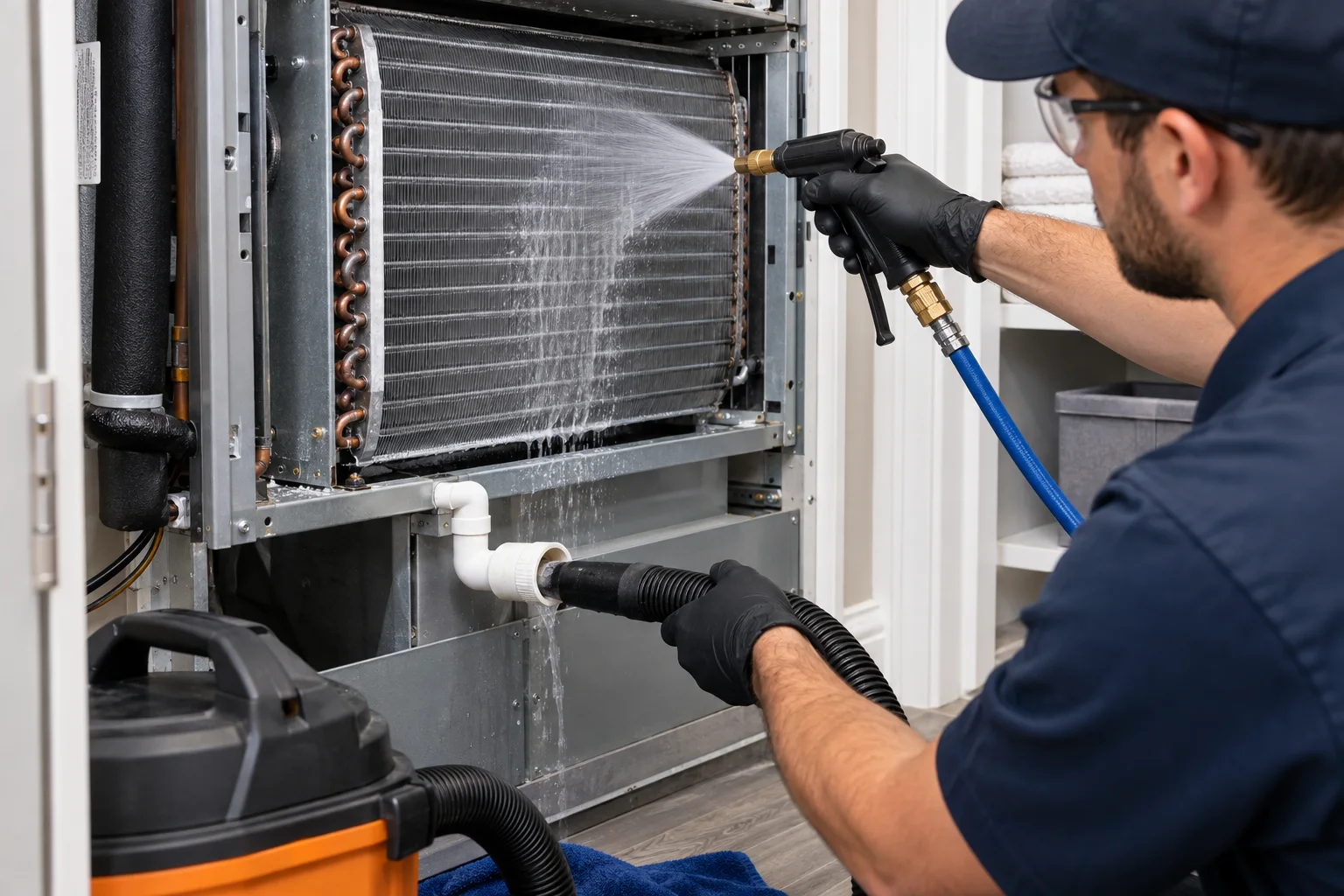
Amana Gas Furnace Maintenance in Treasure Island
Annual maintenance gives a technician an opportunity to inspect an Amana gas furnace, check its operation, and identify concerns that may need attention. It cannot guarantee that a furnace is safe or prevent every breakdown. Findings depend on the furnace’s model, condition, installation, and the results of the inspection.
For Treasure Island homeowners, a scheduled check before the heating season can help clarify the furnace’s current condition and whether any follow-up work is recommended. If the system has unusual noises, a gas odor, repeated shutdowns, or other changes in operation, report those symptoms rather than assuming a particular part has failed.
What a Maintenance Visit May Include
The technician should confirm the equipment information and explain the planned inspection. The exact work varies by Amana model and the system’s condition. A maintenance visit may include checks of:
- The burner area, ignition sequence, flame-sensing components, and operating controls.
- The heat exchanger and venting, using inspection methods appropriate to the furnace. An inspection can identify visible concerns, but no single check should be described as proof that a heat exchanger is free of every defect.
- Gas connections and operating conditions, with measurements or tests selected for the equipment and reported symptoms.
- The blower, accessible electrical connections, filter, and airflow. A dirty or unsuitable filter can affect airflow, but it does not by itself establish the cause of a heating problem.
- The thermostat and the furnace’s response to a call for heat.
Some higher-efficiency furnaces also have condensate components that may need inspection. The technician can explain which checks apply to the specific unit, what was observed, and whether a repair or further evaluation is advisable. Maintenance findings should distinguish an observation from a confirmed diagnosis.
What Homeowners Can Safely Check
Homeowners can take a few basic steps without opening the burner compartment or working on gas or electrical components:
- Check the filter according to its instructions and replace it with the correct type and size when needed.
- Keep supply registers and return-air grilles unobstructed.
- Check thermostat settings and note whether the furnace starts, stops, or behaves differently than usual.
- Keep the area around the furnace clear and make sure carbon monoxide alarms are present and maintained according to their instructions.
- Write down symptoms, when they occur, and any error code shown by the equipment, without removing panels to investigate.
Do not adjust the gas valve, dismantle burners, bypass a safety control, or attempt to clean internal furnace components. These tasks require appropriate training and equipment. If a carbon monoxide alarm sounds, or anyone experiences possible carbon monoxide symptoms, leave the home and call emergency services from outside. Do not re-enter until authorities say it is safe.
If you smell gas, avoid operating switches or creating a flame. Leave the area and contact the appropriate emergency service or gas provider from a safe location. If the furnace repeatedly shuts down or shows signs of malfunction, stop trying to restart it and request professional assessment.
Maintenance, Repairs, and Warranty Records
Routine service is an inspection and maintenance opportunity, not a promise that a furnace will not fail or that every concern will be found. If a technician recommends a repair, ask what evidence supports the diagnosis, what the proposed work involves, and whether the furnace needs to remain off while the issue is addressed.
Keep the service record with the furnace’s model and serial information. Warranty terms vary by product and situation, so review the applicable Amana warranty and ask what documentation it requires. Maintenance does not automatically preserve or establish warranty coverage. When a replacement component is needed, genuine Amana parts may be used when appropriate and available; the technician can explain the part selection and any warranty implications.
Amana materials use “Million-Air” stainless-steel heat exchanger engineering as a brand descriptor. Confirm whether that description applies to the particular furnace model before treating it as a feature of the equipment being serviced.
Scheduling in Treasure Island
Annual service is a practical way to have the furnace’s condition reviewed before you rely on it for heating. If you are scheduling maintenance, have the model information ready if it is accessible without removing panels, and describe any operating changes. A technician can then confirm the appointment scope and whether additional diagnostic work may be needed.
Qualified 24/7 availability includes nights and weekends. No extra charge applies for nights or weekends. Same-day dispatch may be available; otherwise, dispatch is for the next available appointment, subject to scheduling and technician availability. Dispatch timing is not a guarantee that a repair will be completed that day.
Questions About Amana Gas Furnace Maintenance
How often should an Amana gas furnace be serviced?
Many homeowners arrange a professional inspection about once a year, often before the heating season. Check the instructions for the specific model and ask the technician whether the equipment’s usage or condition calls for a different schedule.
Does an inspection prove the furnace cannot produce carbon monoxide?
No. A maintenance visit can include checks of the heat exchanger, venting, and furnace operation, but it should not be presented as a guarantee that carbon monoxide cannot occur. Maintain working carbon monoxide alarms and respond to an alarm by leaving the home and calling emergency services from outside.
Can I clean the burners or test the gas valve myself?
No. Leave burner, gas-valve, ignition, and internal electrical work to a qualified technician. Homeowners can safely check the thermostat, filter, and visible airflow obstructions without opening the furnace cabinet.
Will annual maintenance prevent a breakdown or protect my warranty?
Maintenance may identify conditions that warrant follow-up, but it cannot prevent every failure. Warranty coverage depends on the applicable terms and circumstances. Keep service records and consult the warranty documents rather than assuming that a maintenance visit guarantees coverage.