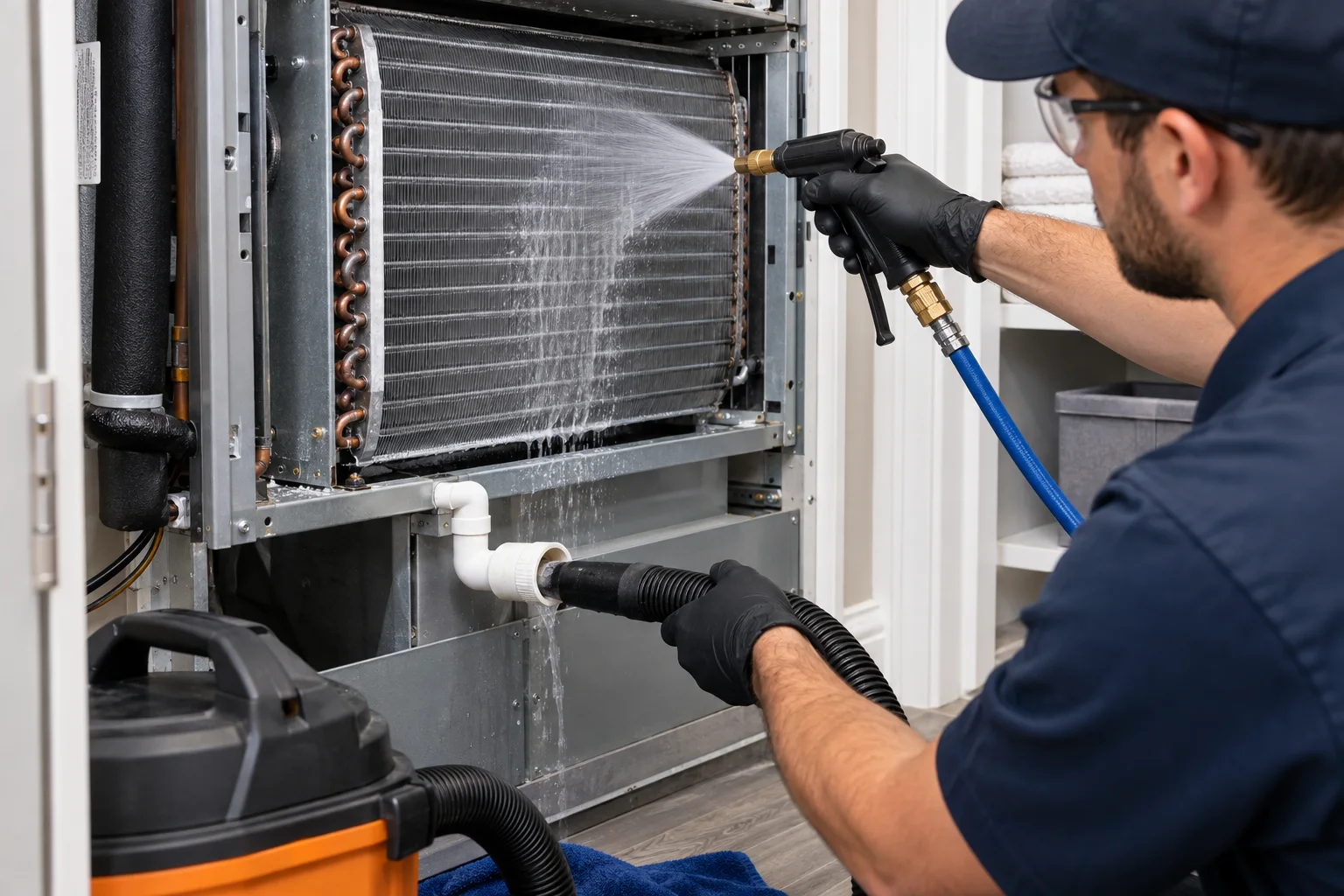
If your Carrier heat pump is blowing cold air in heat mode, the first job is to separate a normal defrost cycle from a control problem or a component fault that needs a technician. This guide explains what you can safely check at home, what a service visit typically evaluates, and what to gather before you approve repair work in Zolfo Springs. It is practical guidance, not a remote diagnosis of your equipment.
Safe checks to make before you call
Start with the controls, because a simple setting can look like a major failure. Confirm that the thermostat is set to heat, that the setpoint is above the indoor temperature, and that any battery-powered thermostat has fresh batteries. Give the system several minutes after changing settings before deciding whether the problem persists.
Next, look at the outdoor unit from a safe distance. Clear leaves, debris, or objects that block airflow around the cabinet, and note whether ice or frost is present. Check whether the indoor air filter is dirty enough to restrict airflow. Do not open electrical panels, touch wiring, handle refrigerant, or bypass a safety control. Those tasks belong to a qualified technician.
Defrost cycle or a real fault?
A heat pump in heating mode can briefly reverse to cooling to melt frost or ice from the outdoor coil. During that short period, the outdoor fan may pause and vapor may rise from the unit, which can be normal. The concern is cold air that continues well past a short defrost period, or cold air blowing when no frost or ice is present on the outdoor unit. Those patterns point toward a fault rather than a routine cycle.
What a technician evaluates on a heating complaint
A service visit should start with the symptom history and then test the parts that control the change between cooling and heating. Depending on the findings, a technician may check the reversing valve and its solenoid, control voltage at the board, the thermostat signal, refrigerant pressures, and the temperature difference across the indoor coil. These checks help separate a valve or solenoid problem from a board, wiring, or refrigerant charge problem.
The reversing valve directs refrigerant flow between cooling and heating. If it sticks or its solenoid fails, the system may stay in one operating direction regardless of the thermostat setting. Because this work involves the refrigerant circuit, it should be handled by a qualified technician. Velocity technicians use EPA-certified refrigerant handling practices.
Repair or replace: the decision points
Repair may make sense when the equipment has been dependable, the failed component is clearly isolated, and the estimate confirms that the rest of the system is in acceptable condition. A replacement deserves a closer comparison when the system is older, the same problem keeps returning, parts are difficult to source, or operating costs and comfort have steadily worsened.
A useful estimate should separate diagnosis, parts, labor, safety checks, warranty terms, and any work needed to correct airflow or drainage. Comparing those line items makes it easier to weigh a repair against a replacement instead of choosing the lowest initial number.
Warranty-aware service
Warranty-safe repair or warranty-aware service may apply when manufacturer coverage remains active. Before work begins, confirm the coverage status, the model and serial information, and any manufacturer requirements that apply to the proposed repair. Keep copies of prior service records and warranty paperwork.
How Carrier model details affect the repair
A brand name alone does not identify the failed part, expected operating readings, or replacement compatibility. Controls, motors, coils, refrigerant requirements, electrical components, and airflow design must work together, so the model number and measured condition matter more than the name on the cabinet. Ask that any replacement part be confirmed against the model specifications before it is installed.
Information to gather before the appointment
- Model and serial numbers from the outdoor unit and the indoor unit data plate.
- When the cold air started, and whether it happens every time heat is called for or only during certain weather.
- Thermostat model, current mode, setpoint, and any error code shown on the display.
- Recent service records, warranty documents, and any previous repairs to the reversing valve, control board, or refrigerant circuit.
- Whether ice or frost has been present on the outdoor unit, and how long the cold-air period lasted.
Availability and when to call
Velocity offers 24/7 repair availability, including nights and weekends. Same-day dispatch may be available when a technician is available. Because a heating failure can become urgent during a cold snap, call once the symptom persists after the basic checks.
Turn the system off and call right away if you notice a burning smell, a breaker that trips repeatedly, an active water leak, or temperatures that feel unsafe. Visit length depends on equipment access, system condition, and what the technician finds, so no fixed duration should be assumed before the visit.
Common questions
Why is my Carrier heat pump blowing cold air in heat mode?
Possible causes include a thermostat or control signal problem, a defrost cycle that has run longer than expected, or a fault in the reversing valve, its solenoid, or the refrigerant circuit. Only an on-site evaluation can confirm which one applies.
Is cold air during defrost normal?
Brief cool air or a pause in the outdoor fan can be part of a normal defrost cycle. Cold air that continues beyond a short defrost period, or that occurs when no frost is on the outdoor unit, should be evaluated.
Can I use auxiliary or emergency heat while I wait?
Some thermostats offer auxiliary or emergency heat settings that run electric heat instead of the heat pump. Check your owner’s manual before using them, and treat them as a short-term measure because electric heat generally costs more to run.
Is there an extra charge for nights and weekends?
No. There is no extra charge for nights and weekends. Velocity offers 24/7 repair availability, and same-day dispatch may be available when a technician is available.
Will a repair affect my manufacturer warranty?
It depends on whether manufacturer coverage remains active and what work is performed. Warranty-safe repair or warranty-aware service may apply in that case, so confirm coverage before approving work.
Next step: If the cold air continues after the checks above, request Carrier heat pump repair in Zolfo Springs and ask for the findings, repair options, and scope in writing before approving work.