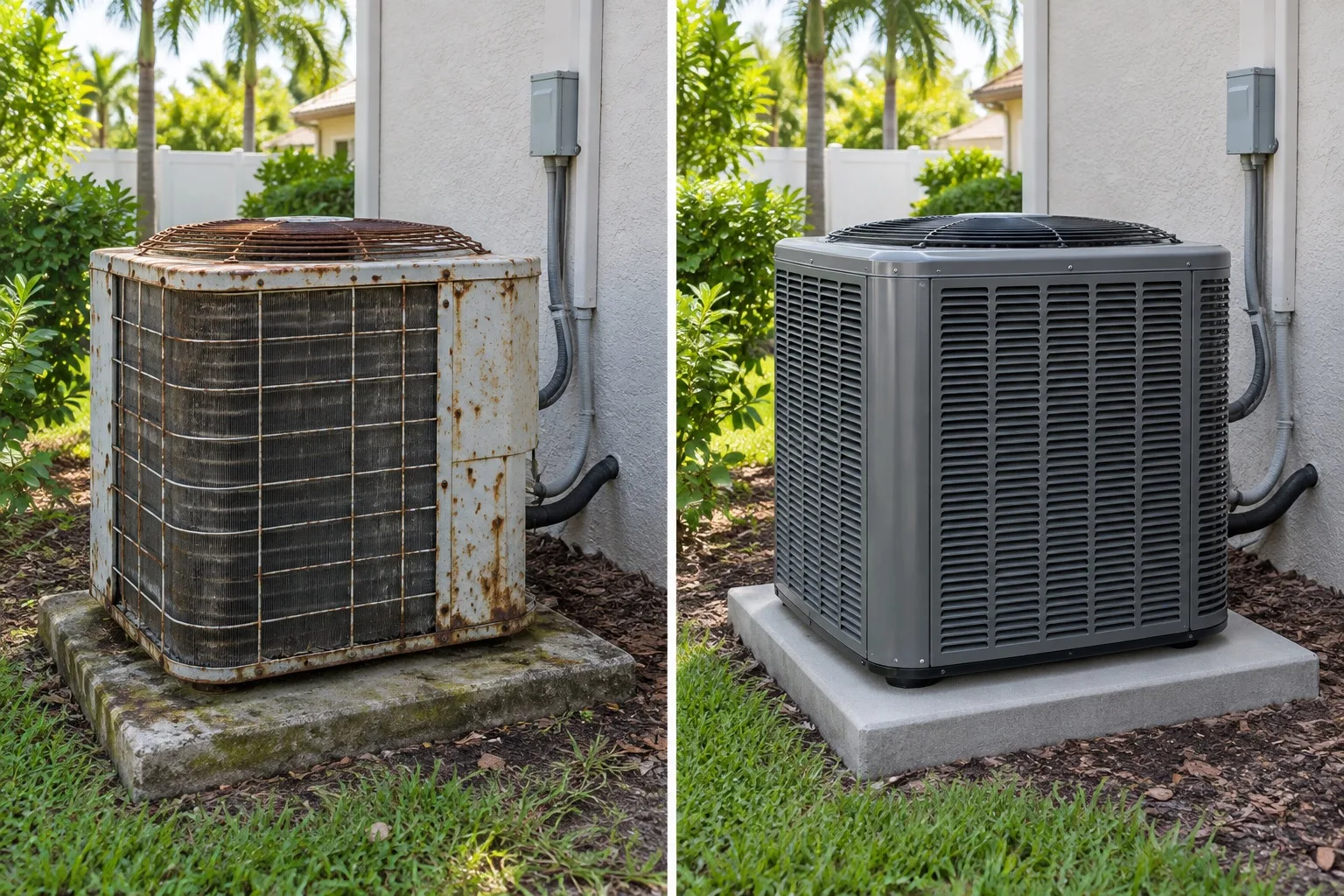
Carrier Reverse-Cycle Air Conditioning in St. Pete Beach
A Carrier heat pump that blows cool air while set to heat can have several possible causes. A brief change in airflow may be part of normal operation, while persistent cool air or a home that is not warming up calls for further attention. The symptom alone does not identify a failed part.
This guide covers safe observations you can make, what a technician may inspect, how emergency heat works, and what to expect when arranging service in St. Pete Beach.
What to Check When the System Blows Cool Air
Could it be the defrost cycle?
During a defrost cycle, a heat pump may temporarily change how it operates. The outdoor fan may stop, and you may see steam near the outdoor unit. These signs can occur during normal defrosting, but they do not confirm that the system is working properly. If cool air continues for an extended period, the cycle happens unusually often, or the home does not warm up, contact a technician.
What can I safely check myself?
Check that the thermostat is set to heat and that its set temperature is above the room temperature. If the thermostat uses batteries, check them according to its instructions. You can also look at the air filter and replace it if needed, following the equipment or filter instructions. These observations may help describe the problem, but they cannot establish its cause.
Do not open equipment panels, handle wiring, or work on refrigerant lines. If you notice smoke, sparking, or a burning smell, turn the system off if you can do so safely and contact a qualified professional. If there is immediate danger, contact emergency services.
Why might a heat pump run for a long time?
Heat pumps can run for longer periods depending on outdoor conditions, the home, and the system. A long run by itself does not prove a reversing-valve problem. If the system runs continuously and the home is not reaching the set temperature, arrange an evaluation.
Is cool air dangerous?
Cool air from a heat pump does not by itself identify a safety hazard or a failed component. However, losing heat can become a health concern for vulnerable occupants, especially during cold weather. If anyone in the home may be affected, arrange a suitable source of warmth and seek service promptly.
What a Technician May Inspect
Possible causes of inadequate heating include thermostat settings, airflow restrictions, control or electrical issues, defrost operation, refrigerant conditions, or a reversing-valve problem. A technician evaluates the system rather than assuming that one symptom identifies a particular part.
Depending on the equipment and findings, diagnosis may involve temperature measurements, electrical tests, and refrigerant-system checks. Refrigerant handling and internal electrical work are for qualified technicians, not DIY repairs. EPA-qualified technicians handle refrigerant in accordance with applicable requirements.
What does the repair involve?
The recommended repair depends on the diagnosis. The technician should explain the findings, the proposed work, and the pricing before an approved repair begins. Repair time depends on the fault, access, equipment condition, and parts availability; an inspection cannot guarantee a specific completion time.
Genuine Carrier parts may be used when appropriate and available. Service records and parts information can help with warranty questions, but warranty coverage depends on the specific manufacturer terms and is not guaranteed by a particular repair.
Emergency Heat and Operating Costs
Is emergency heat safe to use?
“Em Heat” or emergency heat is a thermostat setting on many heat-pump systems. It generally uses auxiliary heat instead of relying on the heat pump for heating. Follow the thermostat and equipment instructions, and contact a technician if you are unsure when to use it. Do not use the system if you notice smoke, sparking, or a burning smell; follow the safety guidance above.
Does emergency heat cost more?
Auxiliary electric heat may use more electricity than heat-pump operation, but actual costs depend on the equipment, how long it runs, and utility rates. If emergency heat remains on because the heat pump is not heating, arrange service rather than assuming the setting will resolve the underlying issue.
Maintenance and Carrier Equipment
Can maintenance prevent a reversing-valve problem?
Maintenance can help identify operating or airflow concerns, but it cannot guarantee that a specific component will not fail. A technician can inspect the system and discuss any findings; maintenance is not a substitute for diagnosis when the heat pump is already blowing persistent cool air.
What may a maintenance visit include?
Work depends on the model and condition of the equipment. A visit may include checking accessible components, airflow, controls, and system operation. Electrical measurements and refrigerant-system work are technician tasks. Ask what the service includes for your particular system.
Some Carrier systems include Infinity System controls and use Puron refrigerant; features vary by model. We service Carrier equipment with genuine Carrier components when appropriate and available, and our technicians follow EPA-qualified refrigerant-handling practices. Repairs are performed with warranty requirements in mind, subject to the applicable manufacturer terms.
Service Availability in St. Pete Beach
Velocity Air Conditioning offers 24/7 service availability, including nights and weekends. Same-day dispatch may be available; otherwise, dispatch is arranged for the next available appointment. Timing depends on scheduling and service conditions. There is no extra charge for nights or weekends.
When you call, describe the thermostat setting, how long the system has been blowing cool air, and any changes you have observed outdoors. Do not attempt internal electrical or refrigerant checks. A technician can assess the system, explain the recommended next steps, and provide pricing for any proposed repair.
Common Questions About Reverse-Cycle AC
Does cold air on heat mean the reversing valve has failed?
No. Cool air can have several causes, and the symptom alone does not prove a reversing-valve or solenoid failure. A technician needs to evaluate the system before identifying the cause.
Should I wait to see whether the system starts heating again?
If the system briefly changes operation during a defrost cycle, observe whether heating resumes. If cool air persists, the home is not warming, or occupants need heat, contact a technician rather than relying on a particular waiting time.
Can I test the valve or check refrigerant myself?
No. Valve diagnosis, electrical testing inside the equipment, and refrigerant checks require appropriate training and tools. Leave those tasks to a qualified technician.
Will a repair protect my manufacturer warranty?
Warranty terms vary by equipment and manufacturer. Ask for repair documentation and retain parts or service records; the manufacturer determines coverage under the applicable terms.
When can service be scheduled?
Service availability is 24/7, including nights and weekends. Same-day dispatch is available when scheduling permits; otherwise, the next available appointment can be arranged. There is no extra charge for nights or weekends.