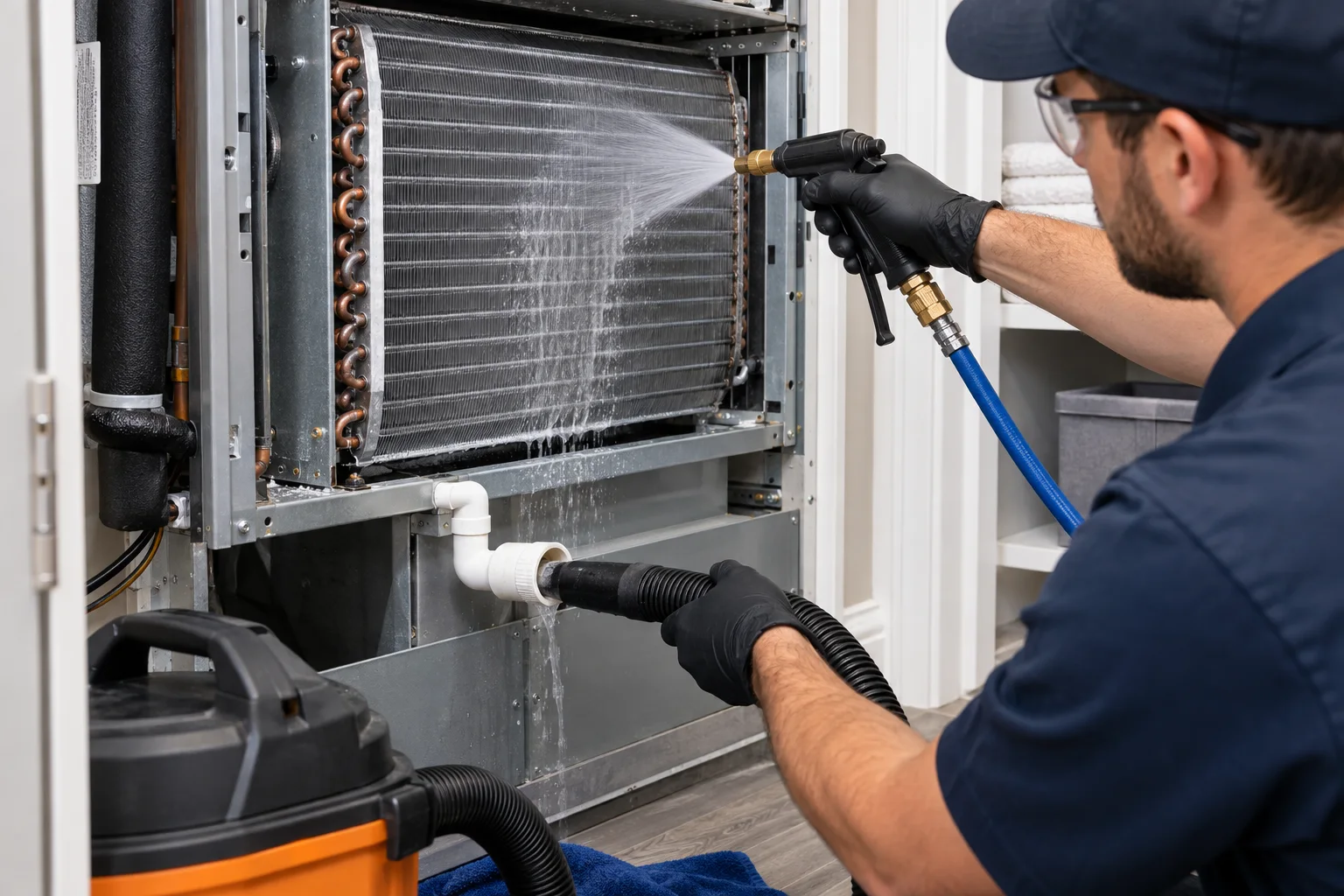
If your home has uneven heating in rooms, central heating service in Englewood South starts with understanding what that symptom can mean. Some rooms reach a comfortable temperature while others stay cool, and the cause can range from airflow and control issues to equipment faults that need a technician. This guide covers likely causes, safe checks you can make, what a technician evaluates, and what to gather before you book. It is general guidance, not a remote diagnosis.
What Uneven Heating in Rooms Can Indicate
Uneven heating usually points to a distribution problem, a control problem, or an equipment problem. Distribution issues include restricted airflow, closed or blocked registers, and duct leaks. Control issues include a thermostat that is not calling for heat correctly or a signal that does not reach the outdoor equipment. Equipment issues involve a component that is failing within the heating cycle. Because these causes look similar from inside the home, the most useful first step is a structured inspection rather than guessing at a part.
Why Switching Modes Matters
Many central systems rely on a reversing valve or a similar control to move between cooling and heating. When that switch does not work as intended, the system may stay in the wrong mode, run unevenly, or fail to deliver full heat to the home. A technician would check the operating mode, the valve or solenoid that controls it, and the electrical signals that drive it. This is one reason a single warm room does not confirm that the whole system is heating correctly.
Safe Checks to Try Before Booking
These checks are low-risk and do not require opening the equipment:
- Confirm the thermostat has fresh batteries, the heat mode is selected, and the setpoint is above the current room temperature.
- Check the air filter and make sure supply registers and return grilles are open and not blocked by furniture or rugs.
- Write down which rooms are affected, the time of day, and whether the problem appears on every heating call or only some of them.
- Look at the outdoor unit from a safe distance for debris, ice buildup, or blocked airflow. Do not touch moving parts or open access panels.
Is It a Defrost Cycle or a Real Fault?
During cold, damp weather, frost can form on an outdoor unit. Many systems respond with a short defrost cycle that briefly reverses operation to clear the ice. During that cycle the outdoor fan may pause, and steam or vapor may appear around the unit. That behavior can be normal. Cold air that keeps blowing for an extended period, or ice that stays on the outdoor unit, is a different pattern and should be checked by a technician rather than waited out.
What a Technician Would Evaluate
A central heating service visit should follow a sequence rather than a single guess. A technician would typically review:
- Thermostat and control signals, including whether the call for heat reaches the equipment and what voltage is present at the control board.
- Operating mode, reversing valve or solenoid function when the system uses one, and whether the unit responds properly to a mode change.
- Airflow across the indoor coil, blower operation, and how air is distributed to the affected rooms.
- Refrigerant pressures and temperature readings. When refrigerant work is performed, EPA-certified refrigerant handling practices apply.
- Electrical connections and components that can loosen or drift with vibration and heat.
Repair or Replace? How to Decide
A repair is often reasonable when one fault is isolated and the rest of the system is sound. Replacement deserves a closer look when the system is aging, has needed repeated repairs for related problems, has parts that are hard to source, or has operating costs that keep rising. Comfort problems in several rooms can also justify a full evaluation of airflow and equipment rather than a single fix.
If the system is under manufacturer warranty, ask how work will be handled before any repair is authorized. Warranty-aware repair practices may apply when manufacturer coverage remains active, but warranty terms vary, so confirm coverage first.
Scheduling Central Heating Service in Englewood South
Same-day dispatch may be available when a technician is available, so ask about timing when you call. To help the technician work efficiently, have the following ready:
- Model and serial number, if they are accessible.
- Recent repair or maintenance history, including any service from another company.
- Thermostat behavior and any displayed codes.
- The rooms affected, the times they change, and how long the problem has lasted.
Safety Limits for Homeowners
Do not open electrical panels, remove access covers, handle refrigerant, or bypass a safety control. Turn the system off and arrange qualified service if you notice a burning smell, a repeated breaker trip, an active water leak, or an unsafe temperature in the home.
Some systems include an emergency or auxiliary heat setting that uses electric heat instead of the primary heating path. It can warm the home, but it usually costs more to run. Treat it as a short-term option while you wait for service rather than a permanent fix.
Questions Homeowners Ask About Central Heating Service
How soon should I schedule central heating service for uneven heat?
Schedule promptly if rooms stay cold, the system shuts down repeatedly, or you notice a safety sign. Timing depends on the symptom and what the technician finds.
Can a thermostat cause uneven heating in rooms?
Yes. Dead batteries, the wrong mode, or a control signal problem can all affect heating. If heat mode is active but the affected rooms still do not warm, the control signal and board should be checked rather than assumed to be working.
Does the brand name identify the repair?
No. The model, the measured operating conditions, and the condition found during inspection matter more than the brand name. A technician should confirm the cause and compatibility of any part before it is installed.
Is a long run time in cold weather a problem?
Longer run times can be normal in cold weather. It is more concerning when the system runs nonstop while the home keeps cooling, or when cold air persists beyond a brief defrost period. Those patterns justify a service call.
Next step: Request an evaluation for central heating service in Englewood South and ask for the findings, repair options, and scope in writing before you approve any work.