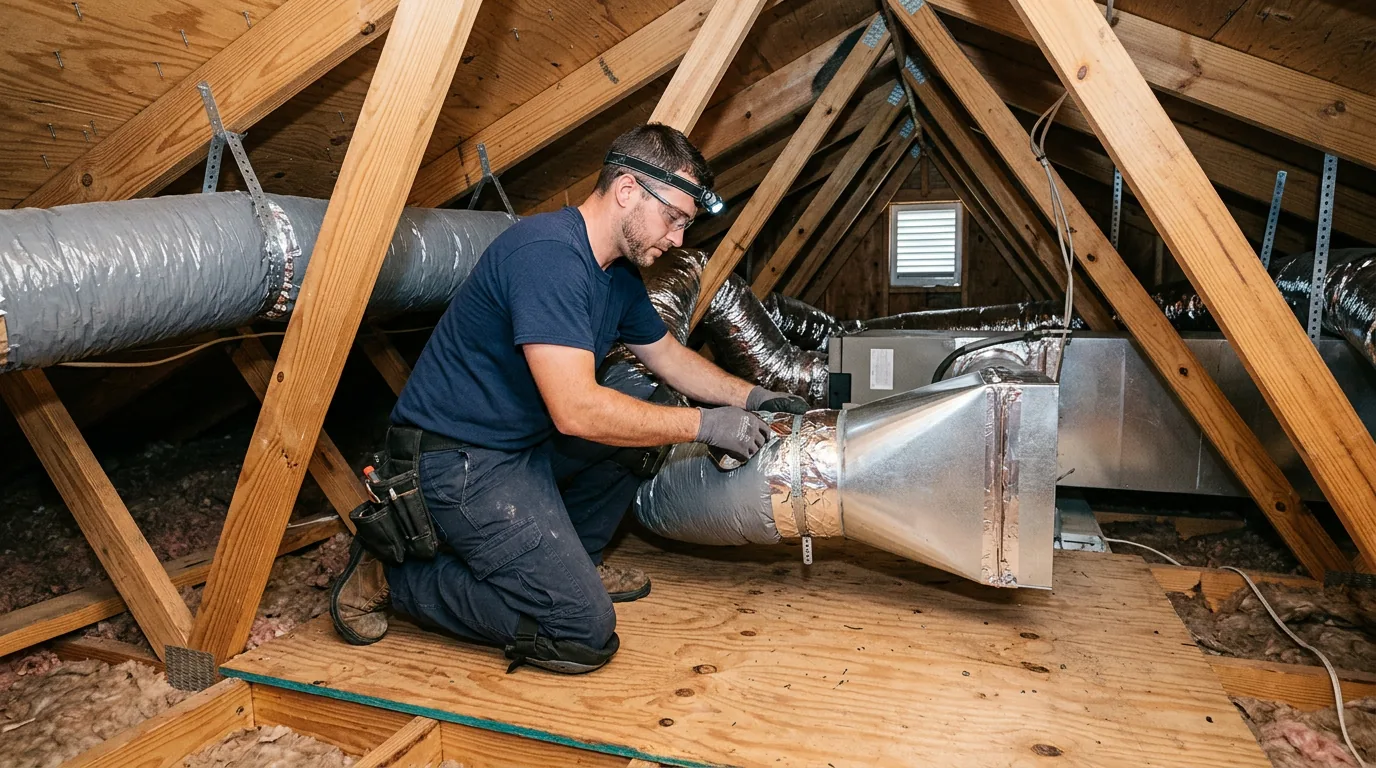
AC ductwork leaks in Florida: signs, inspection, and repair
A duct leak can keep heated or cooled air from reaching the rooms your air conditioning system is meant to serve. In Florida, ductwork may run through a hot attic or other unconditioned space, so damaged or poorly connected ducts can affect comfort and system operation. A warm room, weak airflow, or higher energy use can have several possible causes; none proves that a duct has a leak.
A useful ductwork repair visit identifies where air is escaping or entering, checks whether another airflow or equipment issue is involved, and explains the repair options. Here is what you can safely observe before scheduling and what to expect from a technician.
How a duct leak may affect comfort
Supply ducts carry conditioned air from the indoor equipment to the rooms. If a supply duct is disconnected, damaged, or poorly sealed, some of that air may escape before reaching its intended register. A return duct brings air back to the system. A leak on the return side can draw air from an attic, garage, or other surrounding area instead of from the home’s living space.
Depending on the duct location and the size and position of a leak, the result may include uneven room temperatures, less airflow at one or more registers, longer system run times, or dust and humidity concerns. These signs can also be caused by a dirty filter, closed or obstructed registers, duct design or balancing issues, a control problem, or the air-conditioning equipment itself. An inspection is needed to distinguish among them.
Safe observations homeowners can make
- Check whether the thermostat is set to the desired mode and temperature. Note when the comfort problem started and whether it affects particular rooms.
- Check the air filter and replace it if it is due, following the equipment instructions for the correct type and fit.
- Make sure supply registers are open and not blocked by furniture, rugs, or other objects. Compare airflow at accessible registers without inserting anything into the ducts.
- Look at duct sections that are plainly visible and safely reachable, such as an exposed run in a utility area. From outside the duct, note any visible separation, crushed section, damaged insulation, or unusual condensation.
- Write down changes in airflow, unusual sounds, room temperatures, or system cycling. This history can help the technician understand the complaint.
Do not enter an attic or crawlspace if access is unsafe, and do not climb on ductwork, remove panels, or reach into ducts. Avoid handling wiring or refrigerant components. Do not use ordinary cloth-backed “duct tape” as a repair; it may not be suitable for sealing HVAC duct joints. If you see a serious water leak, smell burning, or notice repeated breaker trips, turn the system off if it is safe to do so and arrange qualified service.
What a ductwork technician checks
The inspection should start with the reported comfort problem, not an assumption that a particular section needs sealing. A technician can compare airflow and operating conditions, inspect accessible supply and return ducts, and look for disconnected joints, damaged or compressed runs, unsuitable prior repairs, or gaps at connections. They may also check whether duct insulation is damaged or whether a duct is exposed to conditions that could contribute to condensation.
Measurements can help separate a duct issue from an equipment or airflow problem. Depending on the system and the complaint, a technician may evaluate static pressure, airflow, temperature differences, or duct leakage. Testing methods and the areas that can be accessed vary by home. The findings should explain what was checked, what was observed or measured, and which conclusions are supported by those results.
A duct leak is not the only possible explanation for weak cooling or uneven temperatures. Filter restriction, a blocked return, equipment condition, thermostat operation, or duct sizing and balancing may also matter. If refrigerant work is indicated, refrigerant should be handled by an EPA-qualified professional; a duct complaint by itself does not establish a refrigerant problem.
Repair options depend on the location and condition
The appropriate repair may involve reconnecting and sealing a separated joint, repairing a damaged section, replacing duct material that cannot be reliably repaired, or restoring insulation and support. The technician should identify the affected area and describe the proposed work rather than recommending a broad replacement without explaining why. A repair should use materials and methods suitable for the duct location and operating conditions.
In some homes, sealing a leak alone will not resolve the comfort problem if the system also has a restricted return, an obstructed run, or a balancing issue. Ask whether the proposed scope addresses the measured or observed cause, whether any related concern remains, and how the work will be checked when complete. If a recommendation includes replacing ducts, request an explanation of the affected sections and why repair is not appropriate for them.
Parts, warranties, and the repair decision
If a repair needs replacement parts, ask whether genuine parts are appropriate for the equipment and whether the work could affect an existing manufacturer warranty. Warranty terms and part requirements depend on the specific equipment and documentation, so have the technician explain what applies to your system. Compare the condition of the ductwork, the repair scope, and any remaining issues before deciding between a localized repair and a larger project.
Duct repairs may help deliver air more effectively when leakage is confirmed, but the amount of any energy or comfort change depends on the home, system, duct layout, and work performed. A responsible recommendation should not promise a specific savings amount based only on a symptom.
Scheduling ductwork service
For service requests that qualify, Velocity Air Conditioning offers 24/7 availability, including nights and weekends, and qualified same-day or next-available dispatch. There is no extra charge for nights or weekends. Availability and dispatch timing depend on the request and scheduling. When you call, describe which rooms are affected, what you have observed, and whether the system is still operating.
Before approving work, ask for the inspection findings, the proposed repair area and method, and any related work that is optional or still needs evaluation. That gives you a clearer basis for deciding whether ductwork repair is the appropriate next step.