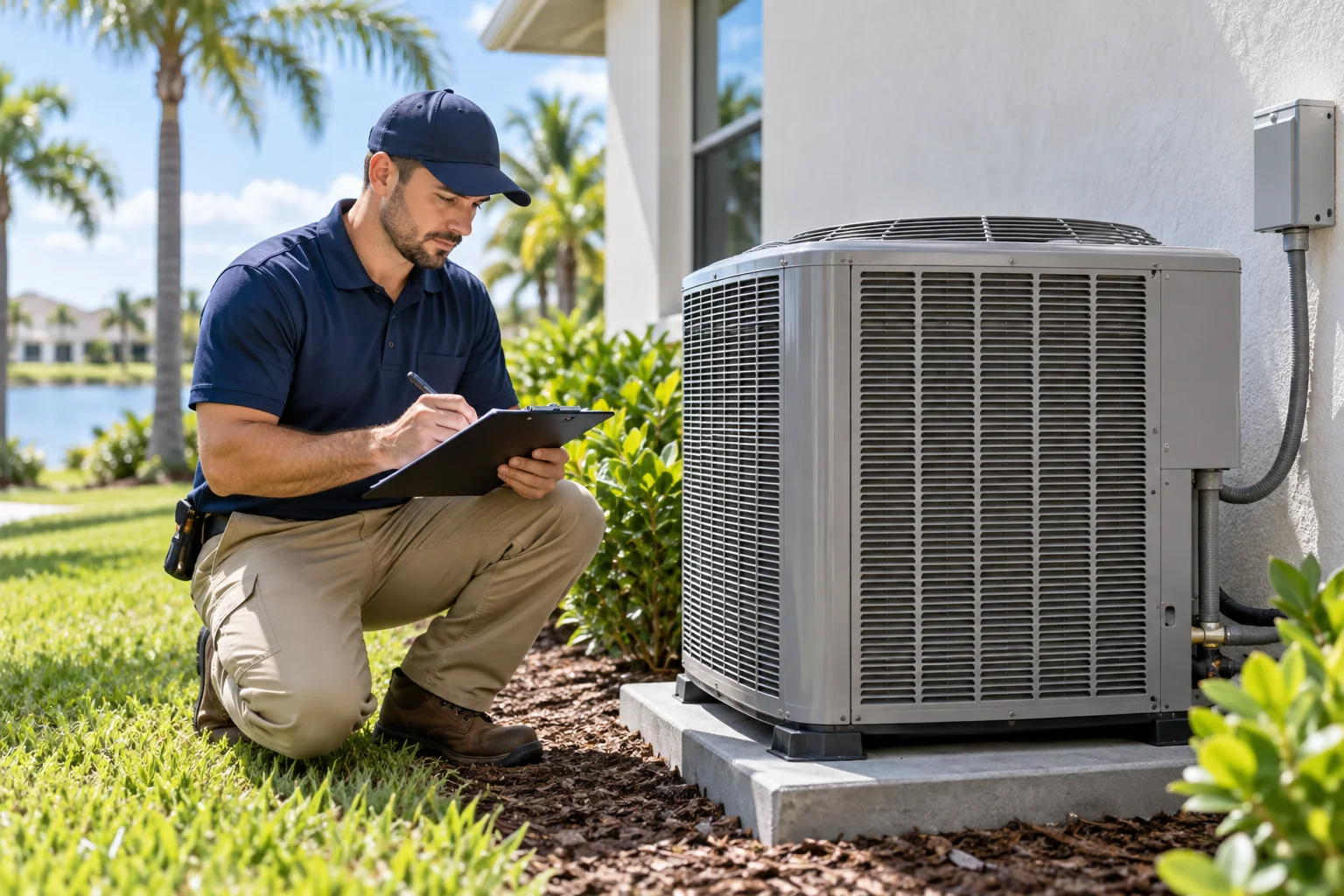
Gas Furnace Maintenance in Pinellas Park
Routine gas furnace maintenance is an opportunity to check how the system is operating, clean or adjust components where appropriate, and identify concerns that may need further diagnosis. It does not guarantee that a furnace will avoid breakdowns or that every potential problem will be found. A technician should explain what was inspected, what was observed, and whether any recommended work is separate from maintenance.
Because heating systems may run intermittently in Florida, homeowners may not notice a change in operation until they turn the furnace on. Follow the equipment manufacturer’s maintenance schedule; many homeowners arrange a visit before the heating season. Maintenance is also appropriate when operation changes, but a symptom alone does not establish which part is at fault.
What a Maintenance Visit Can Cover
The work depends on the furnace model, its condition, and the manufacturer’s instructions. A technician can review the equipment information and operating history, then inspect and service applicable components. This may include checking the thermostat and operating cycle, inspecting the accessible venting and combustion-air arrangements, and examining the burner, ignition system, blower, filter, and safety controls. On applicable high-efficiency models, the technician may also check the condensate drainage system.
Combustion and venting checks can help assess how the furnace is operating, but an inspection has limits. For example, a visual check alone may not settle every question about a heat exchanger. If a technician observes a concern, ask what test or additional evaluation is appropriate and what the result means. Do not assume a carbon monoxide concern proves a cracked heat exchanger, dirty burner, blocked vent, or any other specific failure.
Maintenance may include cleaning or adjustments when the equipment and findings call for them. Repairs, replacement components, and additional diagnostic work are not automatically included in a maintenance visit. The technician should describe the finding and obtain approval for additional work before proceeding.
Carbon Monoxide Concerns: What to Do
Carbon monoxide cannot be identified by smell. A working carbon monoxide alarm is an important household safety device, but furnace maintenance is not a substitute for alarms and does not guarantee that carbon monoxide will never be present. Follow the alarm manufacturer’s instructions and applicable local requirements for alarm placement, testing, and replacement.
If a carbon monoxide alarm sounds, or someone has symptoms that could be related to carbon monoxide exposure, leave the building and call 911 or the appropriate emergency service from outside. Do not re-enter until emergency personnel say it is safe. Do not try to diagnose the furnace, reset it, or locate the source yourself. If you smell gas, leave without operating switches or appliances and contact emergency services or the gas utility from a safe location.
When there is no immediate emergency but you notice unusual cycling, a change in heating, or an alarm history, note what happened and when. Share those observations with the technician. They can inspect the system and determine whether further testing or repair is warranted.
Safe Checks Between Visits
Homeowners can keep the area around the furnace and its air return clear, check the filter, and replace it when needed according to the filter and equipment instructions. If you are unsure which filter fits or how it should be installed, ask the technician rather than forcing it into place. You can also note thermostat settings, unusual sounds, and changes in how the furnace starts or runs.
- Test and maintain carbon monoxide alarms as directed by their manufacturers.
- Keep household items away from the furnace and do not block return-air grilles.
- Use the thermostat normally and record changes in operation for the service visit.
- Do not remove furnace panels, adjust gas controls, clean burner assemblies, or work on wiring.
Work involving gas connections, burners, ignition, internal electrical components, safety controls, combustion testing, or furnace venting belongs with a qualified technician. Do not bypass a safety control or keep restarting equipment that repeatedly shuts down.
Matching Equipment Claims to the System
A gas furnace produces heat by burning fuel. Modern high-efficiency scroll compressors are descriptors for certain air-conditioning and heat-pump equipment, not components of a gas furnace. Some HVAC systems also use ECM motors, but the motor type and applicable equipment details depend on the model. A technician should verify those details from the equipment information rather than assume that a feature applies to every system.
If maintenance or diagnosis involves connected air-conditioning or heat-pump equipment, refrigerant work is a separate matter from furnace maintenance. EPA-qualified refrigerant handling applies when refrigerant work is required; it is not part of a gas furnace inspection simply because the equipment is in the same home.
Parts, Records, and Warranty Awareness
When a part is needed, ask whether a genuine component is appropriate and available for your equipment. Genuine-parts language does not mean that every component will be replaced during maintenance. Keep the service record, including the date, observations, and any work performed. Warranty coverage and maintenance requirements vary by manufacturer and model, so check the actual warranty terms. A service record may help document maintenance, but it does not guarantee coverage or preserve every warranty.
Scheduling Gas Furnace Service in Pinellas Park
Qualified 24/7 availability includes nights and weekends. There is no extra charge for nights or weekends. Qualified same-day dispatch may be available; otherwise, dispatch is next available. Availability depends on the service request and scheduling. When you call, describe the equipment as a gas furnace, mention any alarm or safety concern, and have the model information available if you can access it safely.
For a routine visit, share the furnace’s age if known, recent service history, filter changes, and any changes in operation. If the concern involves an immediate alarm or suspected gas leak, follow emergency guidance first rather than waiting for a maintenance appointment. Clear information helps the service team determine the appropriate next step without treating a symptom as proof of a particular failed part.
Service, parts, and warranty notes
When replacement parts are needed, genuine manufacturer parts are used when appropriate and available to support compatibility and warranty-aware service.
Frequently Asked Questions
How often should a gas furnace be maintained?
Follow the maintenance schedule in the manufacturer’s instructions. Many homeowners arrange an annual check before the heating season, but the correct schedule can depend on the equipment and its use.
Does maintenance prevent carbon monoxide?
No maintenance visit can guarantee that carbon monoxide will never occur. Keep alarms maintained, follow emergency instructions if an alarm sounds, and have a technician inspect the furnace when you have an operational concern.
Does maintenance include repair or replacement?
Not necessarily. Maintenance is an inspection and service visit; a repair or replacement may be recommended if the technician finds a concern. Ask what is included and approve any additional work before it begins.
Can I clean the burner or adjust the gas valve myself?
No. Leave burner, gas-control, wiring, safety-control, and combustion work to a qualified technician. Homeowners can safely observe operation, maintain alarms, and check or replace an accessible filter according to its instructions.