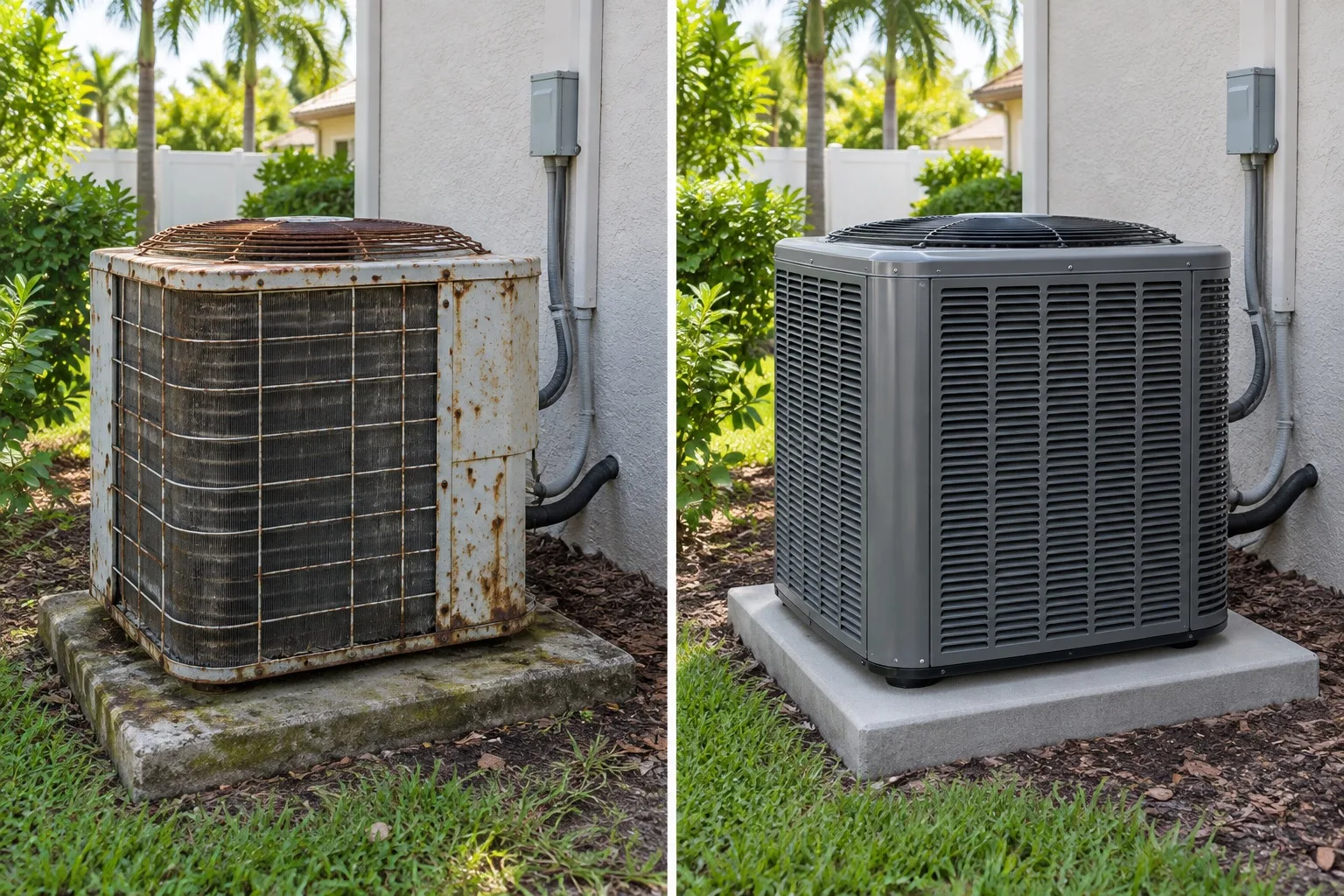
Component Spotlight: The Heat Exchanger
Worried about carbon monoxide from your gas furnace in Temple Terrace? The heat exchanger is an important part of the furnace’s combustion system, but an inspection cannot guarantee that a home is free of carbon monoxide or that a component will remain trouble-free. Here is what the heat exchanger does, what a technician may look for during maintenance, and what to do if you have a safety concern.
What It Is: The Barrier
The heat exchanger is a metal component that separates the combustion area, where gas burns, from the circulating air that is delivered through the home. The burner heats the exchanger, and the blower moves household air across its other side. Heat passes through the metal while combustion gases are directed toward the flue.
Repeated heating and cooling can stress metal over time. The exchanger is designed to withstand those temperature changes, but no inspection can establish that it will remain free of problems indefinitely. The condition a technician can observe also depends on the furnace’s design and which surfaces are accessible.
Why It Matters
A damaged or corroded heat exchanger may affect the separation between combustion gases and circulating air. Carbon monoxide concerns can also involve other parts of the furnace, venting problems, or sources outside the furnace. A carbon monoxide alarm or symptoms of possible exposure should be treated as an urgent safety issue, not as proof that a particular furnace part has failed.
The exchanger also transfers heat. Soot or corrosion can affect its condition, but a maintenance visit cannot promise a particular efficiency level or rule out every developing problem.
How a Heat Exchanger Can Become Damaged
Possible causes of damage include repeated expansion and contraction during heating cycles, corrosion, and defects in manufacturing or installation. A concern might involve a crack, corrosion, a perforation, or a separation. These conditions are not always visible, and symptoms such as unusual sounds, odors, or changes in furnace performance do not by themselves identify a failed heat exchanger.
Homeowners can note changes in operation and tell a technician what they observed. Do not remove furnace panels or try to inspect, test, or repair the heat exchanger yourself.
What a Maintenance Inspection Can Find
A technician may visually examine accessible areas of the heat exchanger and look for signs such as corrosion, soot, or visible damage. Depending on the furnace design and the concern, the technician may use additional diagnostic methods. The inspection’s scope and limitations vary; not every surface is necessarily accessible, and no routine inspection can guarantee that every crack or defect will be detected.
The technician can report what was observed, explain any concerns, and recommend next steps. A finding may be reassuring, may warrant monitoring or further evaluation, or may point to a safety concern. A report of no visible damage is not a guarantee that the exchanger is defect-free or that carbon monoxide cannot be present.
What to Do About a Safety Concern
If a qualified technician identifies a suspected or confirmed breach in the heat exchanger, follow the technician’s safety recommendations. Do not continue operating the furnace if you have been advised to shut it off; have the issue evaluated before using it again. A technician can explain whether repair or furnace replacement is appropriate based on the findings, equipment condition, and costs.
If a carbon monoxide alarm sounds, get everyone outside immediately and call emergency services from outside. Do not re-enter until responders say it is safe. After the home is cleared, leave the furnace off until a qualified technician has evaluated it.
Protecting the Furnace
Regular maintenance can help identify some concerns and keep the furnace operating as intended, but it cannot guarantee that a heat exchanger will not develop a problem. Helpful steps include:
- Schedule maintenance. Arrange a furnace inspection each year, or follow the schedule in the manufacturer’s instructions. The visit is an opportunity to assess accessible components and discuss any concerns, not a guarantee of future condition.
- Keep airflow clear. Check and replace the filter as directed by its manufacturer, and keep supply registers and return-air grilles unobstructed. Do not open the furnace cabinet to reach internal components.
- Leave internal work to a technician. Burner cleaning, gas-pressure checks, and inspection or testing of furnace components should be handled by a qualified professional.
- Report changes. Tell a technician about unusual smells, sounds, or changes in performance. These observations can help guide an evaluation, but they do not establish which part, if any, has failed.
Some modern HVAC equipment uses high-efficiency scroll compressors and ECM motor standards. Those equipment features do not replace appropriate maintenance of a gas furnace or prove the condition of its heat exchanger.
Furnace Maintenance in Temple Terrace
Velocity Air Conditioning provides furnace maintenance in Temple Terrace. Service is available 24/7, including nights and weekends, with no extra charge for nights or weekends. Same-day dispatch is available when scheduling allows; otherwise, service is scheduled for the next available appointment. A technician can explain the inspection and its limitations before recommending any work.
Frequently Asked Questions
Does a cracked heat exchanger mean the furnace must be replaced?
Not necessarily. A qualified technician can explain the findings and compare appropriate repair and replacement options based on the furnace’s age, condition, and cost. If a breach is suspected or confirmed, follow the technician’s safety advice and do not operate the furnace if advised to leave it off.
How long does a heat exchanger inspection take?
The inspection is part of the furnace maintenance visit, which often takes about one to two hours. The actual time varies with the equipment and the work needed. Ask when booking if you need an estimate for your appointment.
What should I do if the carbon monoxide detector is sounding?
Get everyone outside immediately, call emergency services from outside, and do not re-enter until responders clear the home. After the all-clear, leave the furnace off until a qualified technician has evaluated it.
What does furnace maintenance cost?
The price is quoted before booking for the scheduled inspection. If the technician finds an issue that may need repair, the scope and price are presented separately for your approval. Call for the current rate.
How often should the heat exchanger be inspected?
Annual furnace maintenance is a common schedule; follow the furnace manufacturer’s instructions and your technician’s recommendations. An inspection can identify some visible or detectable concerns, but it cannot guarantee that the exchanger is defect-free or prevent future damage.