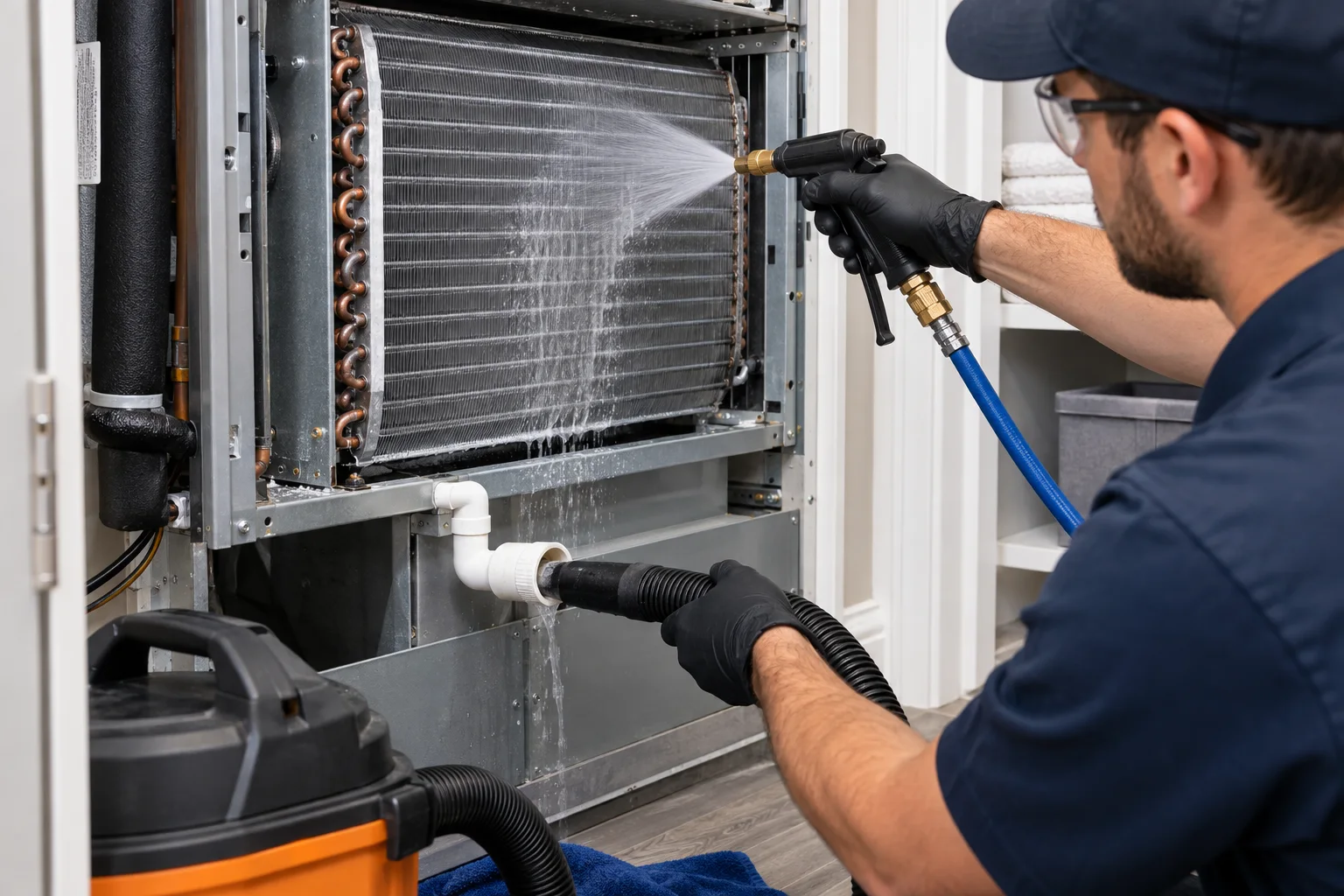
Goodman gas furnace maintenance in Dunedin
Routine maintenance helps keep a gas furnace ready for the heating season and gives a technician an opportunity to identify concerns before they become urgent. It is not a guarantee against breakdowns, and a Goodman name alone does not determine what service a particular furnace needs. The model, installation, operating condition, and inspection findings all matter.
In Dunedin, a furnace may go through long stretches with little heating use. Before relying on it, arrange a maintenance visit and mention any unusual noises, odors, uneven heating, or repeated shutdowns. Those details help the technician distinguish routine service from a diagnostic visit; a symptom by itself does not establish that a particular part has failed.
What homeowners can safely check
Before the appointment, you can make a few observations without opening the furnace cabinet or handling gas or electrical components:
- Check the air filter and replace it if it is dirty, using the size and type specified for the system. If you are unsure which filter is correct, ask the technician rather than forcing one into place.
- Make sure supply registers and return grilles are not blocked by furniture, rugs, or stored items.
- Note when a problem occurs: during startup, while the furnace is running, or after it shuts off. Record any displayed error code without removing a panel.
- Look from outside the equipment for visible water, damaged vent piping, or debris around an accessible termination. Do not climb, dismantle piping, or put anything into an opening.
- Have the furnace model and serial number available if they can be read safely from an exterior label.
Do not open electrical compartments, adjust gas pressure, clean internal burners, bypass a safety switch, or attempt combustion testing. Those tasks require appropriate training and instruments. If the furnace has a maintenance or filter reminder, follow the manufacturer’s instructions, but do not treat a reset as a substitute for finding the cause of a problem.
What a technician may inspect
The maintenance scope should reflect the furnace model and its condition. A technician can explain which checks apply and what the findings mean. Depending on the equipment, a visit may include:
- Reviewing the model information, service history, thermostat operation, and the concern you reported.
- Inspecting accessible wiring, electrical connections, ignition components, and safety controls for signs of wear or an operating issue.
- Checking the burner area and flame operation, and assessing combustion and venting with suitable instruments and procedures.
- Examining the heat exchanger and vent system using methods appropriate to the furnace. A visual check has limits; ask what was inspected and whether any concern requires further evaluation.
- Checking the blower, accessible airflow path, filter fit, and duct connections where they can be reached, since restricted airflow can affect comfort and operation.
- For a condensing model, checking applicable condensate components and drainage. Not every Goodman furnace has the same configuration.
- Running the furnace through an operating cycle and explaining any readings or conditions that need attention.
Maintenance does not mean replacing parts automatically. If a check suggests a concern, ask what test or observation supports the finding, what other causes were considered, and whether the condition affects safe operation. A clear explanation should distinguish completed maintenance from recommended diagnostic or repair work.
Keep the service specific to your furnace
Goodman gas furnaces vary by model, age, configuration, and installation. A brand name does not identify the correct filter, operating readings, replacement component, or warranty status. If a part is recommended, ask how compatibility was confirmed. Where a replacement is appropriate, ask whether a genuine Goodman part is available and suitable for that model.
Before approving parts or additional work, review any applicable warranty terms and ask whether they affect the process. Warranty coverage depends on the equipment and its terms; it should be checked rather than assumed. If a proposed repair is outside routine maintenance, request the diagnosis and scope separately so you can understand what is included.
A gas furnace maintenance visit is not a general inspection of every part of a home’s HVAC system. If you also want work on an air conditioner or heat pump, clarify that when scheduling. If the visit includes refrigerant work on cooling equipment, refrigerant handling must be performed by EPA-qualified personnel. The furnace itself does not use refrigerant as its heat source.
When to stop using the furnace
A dusty odor at the start of a heating cycle can have more than one explanation, and an odor alone does not identify a failed component. If a smell is strong, persistent, or seems electrical, turn the furnace off if you can do so safely and arrange qualified service. Do not remove panels or continue repeated restart attempts.
If you smell gas, leave the building without operating switches or using a phone inside. From a safe location, contact the gas utility or emergency services. If a carbon monoxide alarm sounds, leave the building and call emergency services; do not re-enter until the space is cleared. A furnace that repeatedly shuts down, trips a breaker, or makes a new loud noise should be assessed rather than repeatedly reset.
Scheduling maintenance in Dunedin
When requesting service, describe the furnace as a Goodman gas furnace and explain whether you want routine maintenance, have noticed a change in operation, or both. Share any safely observed error code and the equipment model if available. Ask what the appointment includes and whether a reported symptom will require separate diagnosis.
Qualified 24/7 availability includes nights and weekends. Qualified same-day or next-available dispatch may be available, depending on scheduling and the service need. There is no extra charge for nights or weekends. Confirm the appointment timing and the work being requested when arranging service.
After the maintenance visit
Keep the service findings with the furnace records, including any readings, maintenance performed, and items to monitor. Follow the filter instructions for your specific system and keep registers clear. If the same symptom returns, report when it happens and what the furnace displays; do not assume the earlier maintenance identified or resolved every possible cause.
Regular, model-appropriate maintenance can support reliable operation, but it cannot prevent every failure or replace prompt attention to a safety concern. Ask the technician what was checked, what remains uncertain, and what next step is appropriate before authorizing additional work.