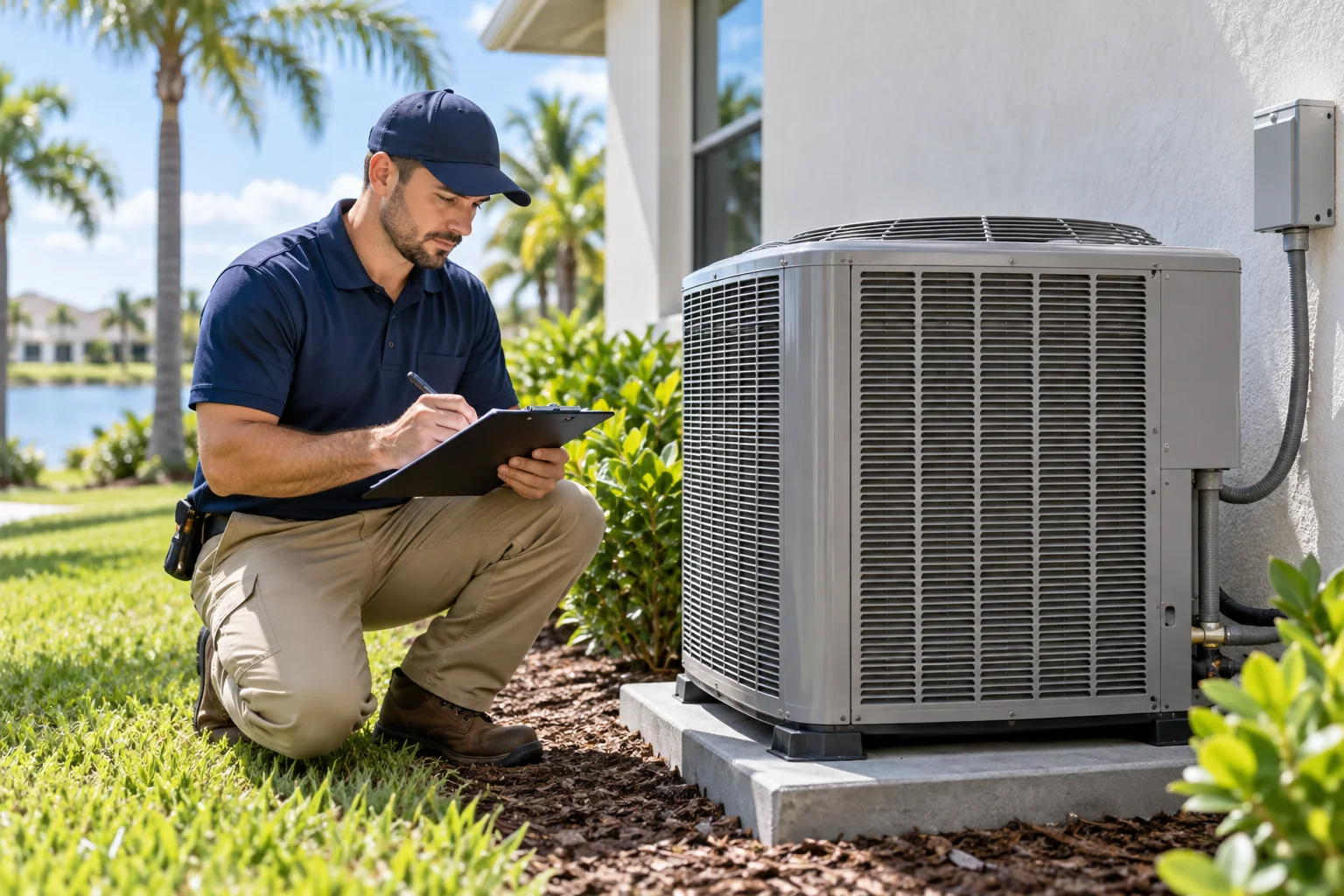
Goodman heat strip replacement in Largo
Heat strips provide electric backup or supplemental heat in some heat pump systems. If your Goodman system is not heating as expected, a heat strip may be one possibility, but a symptom alone does not confirm that a strip has failed. Thermostat settings, airflow, controls, wiring, safety switches, and other equipment conditions can also affect heating.
A replacement should match the air handler and its approved configuration, not just the Goodman name. A qualified technician can identify the equipment, test the heating circuit, and explain whether replacement is appropriate. This guide covers what a homeowner can safely observe and what to expect from an evaluation in Largo.
What heat strips do in a Goodman heat pump system
A heat pump moves heat rather than producing all heat through electric resistance. In some systems, electric heat strips in the indoor air handler provide supplemental heat when additional heat is needed, or backup heat when the heat pump cannot meet demand. Their operation depends on the system’s controls and configuration; the exact arrangement varies by model and installation.
When strips operate, they draw substantial electrical current. That makes correct sizing, wiring, circuit protection, and compatibility important. Installing an unsuitable strip kit or changing wiring without verifying the equipment can create safety and performance problems. A replacement recommendation should identify the part that fits the air handler and explain what was tested.
Signs that warrant an evaluation
Consider scheduling service if the system produces little heat, takes unusually long to warm the home, repeatedly changes modes, or shows a fault indication. A breaker that trips, a burning or electrical odor, or repeated system shutdowns calls for prompt attention. These observations can help describe the problem, but none proves that the heat strips themselves have failed.
Some heat pump systems use supplemental electric heat in certain operating conditions. A change in sound or a difference in the air temperature at a register is not enough to identify the cause. A technician should assess the system’s sequence of operation and measurements rather than infer a failed part from a single symptom.
What homeowners can safely check
Before the appointment, note when the issue occurs, what the thermostat displays, and whether the indoor and outdoor units appear to run. You can also check that the thermostat is set to a heating mode and that accessible supply registers are open. If the air filter is easy to reach and the manufacturer’s instructions allow homeowner replacement, check whether it needs attention.
- Write down any thermostat message or fault code without resetting repeatedly.
- Note whether the problem affects the whole home or particular rooms.
- Tell the technician if a breaker has tripped, and do not keep resetting it.
- Keep furniture and other obstructions clear of accessible return grilles.
Do not remove air-handler panels, touch wiring, test electrical terminals, bypass a safety control, or attempt to replace a heat strip. If you notice smoke, a burning smell, or another immediate safety concern, turn the system off if you can do so safely and seek qualified guidance. Repeated breaker trips or unsafe indoor temperatures also deserve prompt attention.
What a technician checks before recommending replacement
The technician first identifies the Goodman air handler and heat pump, including the model and serial information where accessible, and checks the installed configuration. The evaluation may include thermostat calls, control sequence, electrical connections, protective devices, and the heating elements. Measurements help distinguish a heat strip problem from a control, power-supply, airflow, or other system issue.
Airflow matters because a restriction can affect comfort and equipment operation even if an electrical component is also in question. The technician may inspect the filter, blower operation, accessible coil condition, duct connections, and other relevant parts of the air-distribution system. Findings should connect the measured equipment condition to the homeowner’s reported symptoms.
If replacement is indicated, the technician should verify that the proposed heat strip kit is compatible with the air handler and intended system configuration. The work may require checking circuit capacity, wiring, overcurrent protection, mounting, and the operation of associated controls and safety limits. These are technician-only tasks involving electrical equipment.
After installation, the technician should verify operation using appropriate checks and confirm that the equipment responds as intended. If symptoms remain, the next step may be additional diagnosis rather than assuming that another part needs replacement.
Goodman parts, warranty, and the work scope
Ask which component or kit is proposed, how the technician confirmed compatibility, and what the quoted scope includes. Genuine parts may be appropriate when available and compatible. Warranty coverage can depend on the equipment, part, installation, and applicable terms, so ask what documentation is needed and whether the proposed work affects any existing coverage. Do not assume that a part or labor is covered without confirmation.
A clear scope should describe the findings, recommended repair, included work, and any conditions that could require further evaluation. If the technician finds a separate airflow or electrical issue, ask how it relates to the heating complaint and whether it must be addressed before the system can be safely tested.
Arranging Goodman heat strip service in Largo
When requesting service, share the Goodman model information if it is safely visible, the thermostat message, what you observed, and whether the breaker has tripped. Mention whether the air handler is in a closet, attic, or another location, along with any access constraints. This helps the service team plan for the actual equipment and property without treating access details as a diagnosis.
Qualified 24/7 availability includes nights and weekends. Qualified same-day or next-available dispatch may be available depending on scheduling and the service need. There is no extra charge for nights or weekends. Confirm the applicable availability and timing when arranging the visit.
Heat strip replacement is electrical work. Refrigerant handling is not part of replacing a heat strip; if a separate heat pump issue requires refrigerant work, that work should be handled by EPA-qualified personnel. Ask the technician to explain any separate recommendation before authorizing it.
Questions homeowners often ask
Does weak heat mean the Goodman heat strip has failed?
No. Weak heat can have several causes, including settings, airflow, controls, or other equipment conditions. Testing is needed to determine whether a heat strip is faulty and whether replacement is the right repair.
Can any Goodman heat strip fit my system?
No. Compatibility depends on the specific air handler and system configuration. The technician should verify the approved kit and electrical requirements before recommending installation.
Should I use emergency heat while waiting?
Follow the thermostat and equipment instructions for your system. Emergency heat settings can change how a heat pump operates and may use electric backup heat. If you are unsure, ask a qualified technician rather than changing settings repeatedly or opening equipment.
Make the next decision from the findings
Request an evaluation that identifies what was tested, whether the heat strip is compatible with your Goodman air handler, and what the replacement scope includes. A measured diagnosis helps distinguish a heat strip replacement from another repair and gives you a practical basis for deciding how to proceed.