High Electric Bills? Check Airflow Before Blaming Your Goodman Heat Strips
An Osprey homeowner opens the electric bill and it has doubled — nothing in the house changed. The heat strips get the blame, and sometimes they deserve it. But on Goodman systems we regularly find the real culprit is airflow: electric heat strips cannot do their job without a full stream of air moving across them, and when airflow drops, the symptoms look exactly like a strip failure — high bills, weak heat, tripped limits.
Heat strips are electric resistance elements — nichrome coils in the indoor air handler that glow hot while the blower pushes air across them, staged on and off by a sequencer. They are simple devices living or dying by airflow. This guide explains the airflow-first approach: how restricted air mimics strip failure, what to check, and when the strips themselves truly need replacement.
Why Airflow Decides Everything for Heat Strips
An electric element converts current to heat regardless of airflow — but without enough air moving across it, that heat has nowhere to go. The element overheats, the high-temperature limit trips and shuts the strips down, the house cools, the thermostat calls again, and the cycle repeats. Each short cycle wastes energy on startup, extends total runtime, and bakes the elements. The homeowner experiences lukewarm air and a climbing bill — and assumes the strips are bad. Often the strips are fine; they are suffocating.
The Airflow Suspects, in Order of Likelihood
- Clogged air filter. The number one cause, by far. A matted filter can cut airflow dramatically, and it sits upstream of everything.
- Closed or blocked vents. Shutting vents in unused rooms — or furniture piled against returns — raises static pressure across the whole system.
- Blower issues. A blower running at the wrong speed, a failing capacitor, or a worn motor moves less air than the strips were sized for.
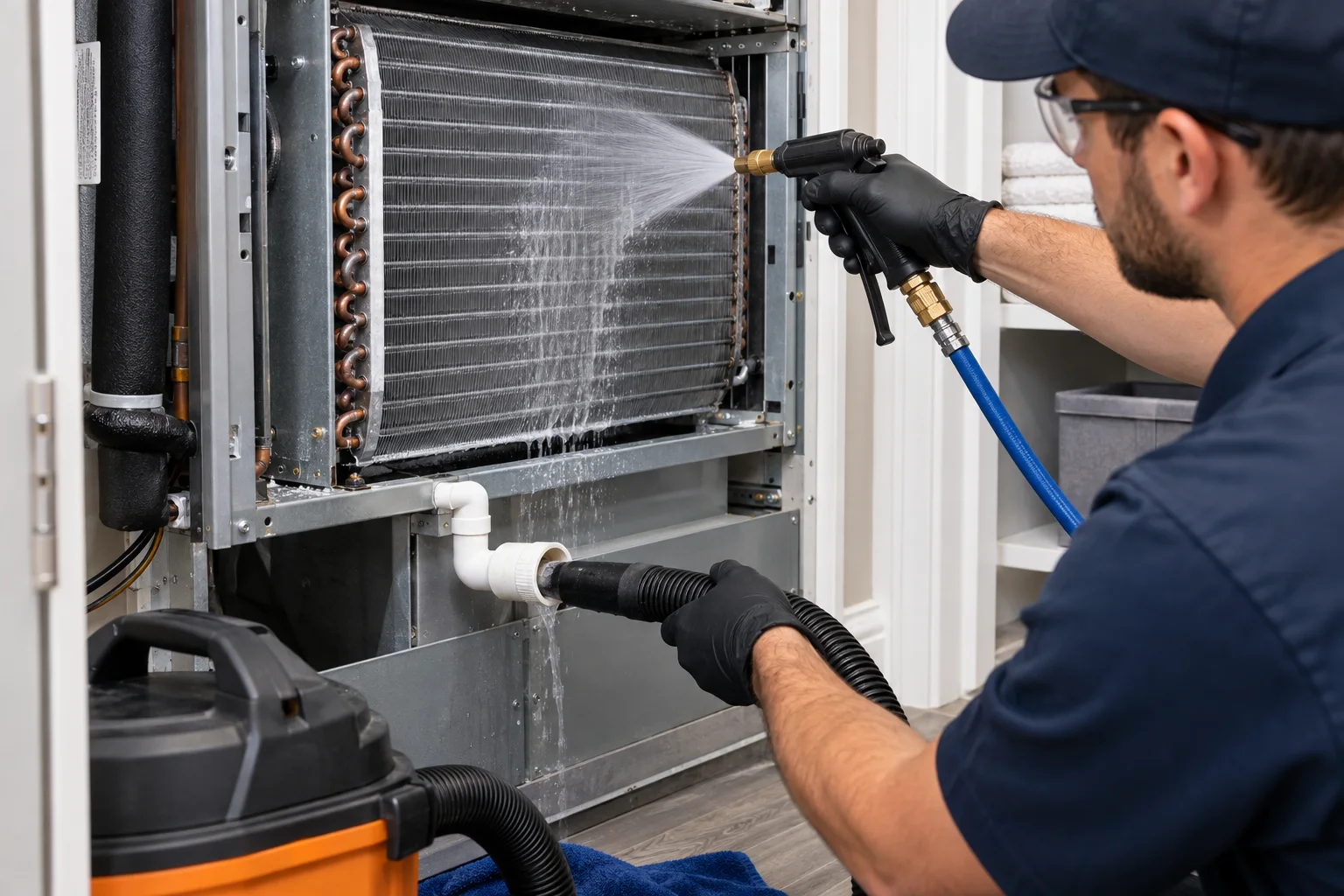
- Dirty indoor coil. Goodman’s AlumaFin7 coil design moves heat efficiently only when its fins are clean; a fouled coil chokes airflow just like a bad filter.
- Duct restrictions. Crushed flex duct, disconnected runs, or undersized returns starve the air handler no matter how clean the filter is.
How Airflow Faults Mimic Strip Failures
Learn to tell the two apart before paying for parts. Airflow problems produce a distinctive signature: heat that starts strong then fades as limits trip, frequent on-off cycling of the auxiliary heat, some rooms warm while others stay cold, and a system that behaves better right after you change the filter. Genuine strip failures look different: the auxiliary heat indicator on constantly with steady (not cycling) operation, specific element banks dead on amperage testing, or a sequencer that never opens. If new-filter day fixes it temporarily, you had an airflow problem wearing a strip-failure costume.
The Technician’s Airflow-First Sequence
A proper heat-strip service call on a Goodman system checks air before electricity. The technician verifies the filter and visible ductwork, measures temperature rise across the air handler against the manufacturer’s specification — too high a rise means too little air — checks static pressure to quantify the restriction, confirms blower speed and capacitor health, and only then measures amperage draw on each element bank and tests sequencer staging. This order matters: replacing strips into a system with choked airflow burns out the new elements the same way.
When It Really Is the Strips
Sometimes the elements and controls genuinely failed. The signatures are clear on testing: a sequencer welded closed keeping banks energized around the clock, one or more element banks open (dead) on the ammeter, contactors pitted from arcing, or wiring with heat damage at the terminals. Replacement then means Goodman-compatible element banks at the correct kilowatt rating for the air handler, a sequencer with proper staging, and fresh high-temperature wiring where needed — plus correcting whatever airflow issue contributed, so the new parts survive.
Replacement Done Right: Strips Plus Airflow
The complete job has two halves. The electrical half: matched kilowatt-rated elements, correct sequencer, verified staging logic at the thermostat, and documented amperage readings. The airflow half: clean filter, verified blower performance, clear coil, and open, unobstructed ductwork. A shop that replaces strips without checking airflow is selling you a repeat visit. The invoice should document both halves — parts and readings on the electrical side, temperature rise and static pressure on the airflow side. That documentation is also your warranty protection, since uncertified work can jeopardize manufacturer coverage.
Keeping the System Breathing
After the fix, airflow maintenance is what keeps bills down in your Osprey home: replace filters on schedule (monthly during heavy use), keep supply vents and return grilles open and unblocked, and have temperature rise and strip amperage checked during annual maintenance. ComfortBridge™-equipped Goodman systems can flag abnormal auxiliary-heat behavior — treat those alerts as early warnings, not nuisances. Elements that breathe last longer and cost less to run.
Goodman Heat Strip FAQs for Osprey Homeowners
Can a dirty filter really double my electric bill?
It can drive it sharply upward. Restricted airflow forces heat strips into limit-tripping short cycles with extended total runtime — the most expensive way to heat a home.
How do I know if it’s airflow or bad elements?
Heat that fades after starting strong, cycling auxiliary heat, and improvement right after a filter change point to airflow. Constant auxiliary operation with steady output points to the strips or sequencer. A technician confirms with temperature-rise and amperage measurements.
Should I close vents in unused rooms to save money?
No — closing vents raises system static pressure, reduces airflow across the heat strips, and typically increases costs while stressing the equipment. Keep vents open.
How long does the service visit take?
About an hour for the airflow-first diagnosis; strip replacement usually completes the same visit. Same-day dispatch is available in Osprey, with 24/7 emergency service.
Will this repair void my Goodman warranty?
No — when done with Goodman-compatible parts, proper electrical procedures, and a documented invoice. Unlicensed electrical work is what puts coverage at risk.
What should I check before calling?
Replace the filter, open all vents and returns, and note whether the auxiliary heat indicator runs constantly or cycles. Those three observations focus the entire visit.
Heat strips don’t fail in a vacuum — they fail in an airstream, and the airstream is usually the story. Osprey homeowners can call any time: 24/7 emergency service, same-day dispatch, and technicians who check the air before they condemn the elements.