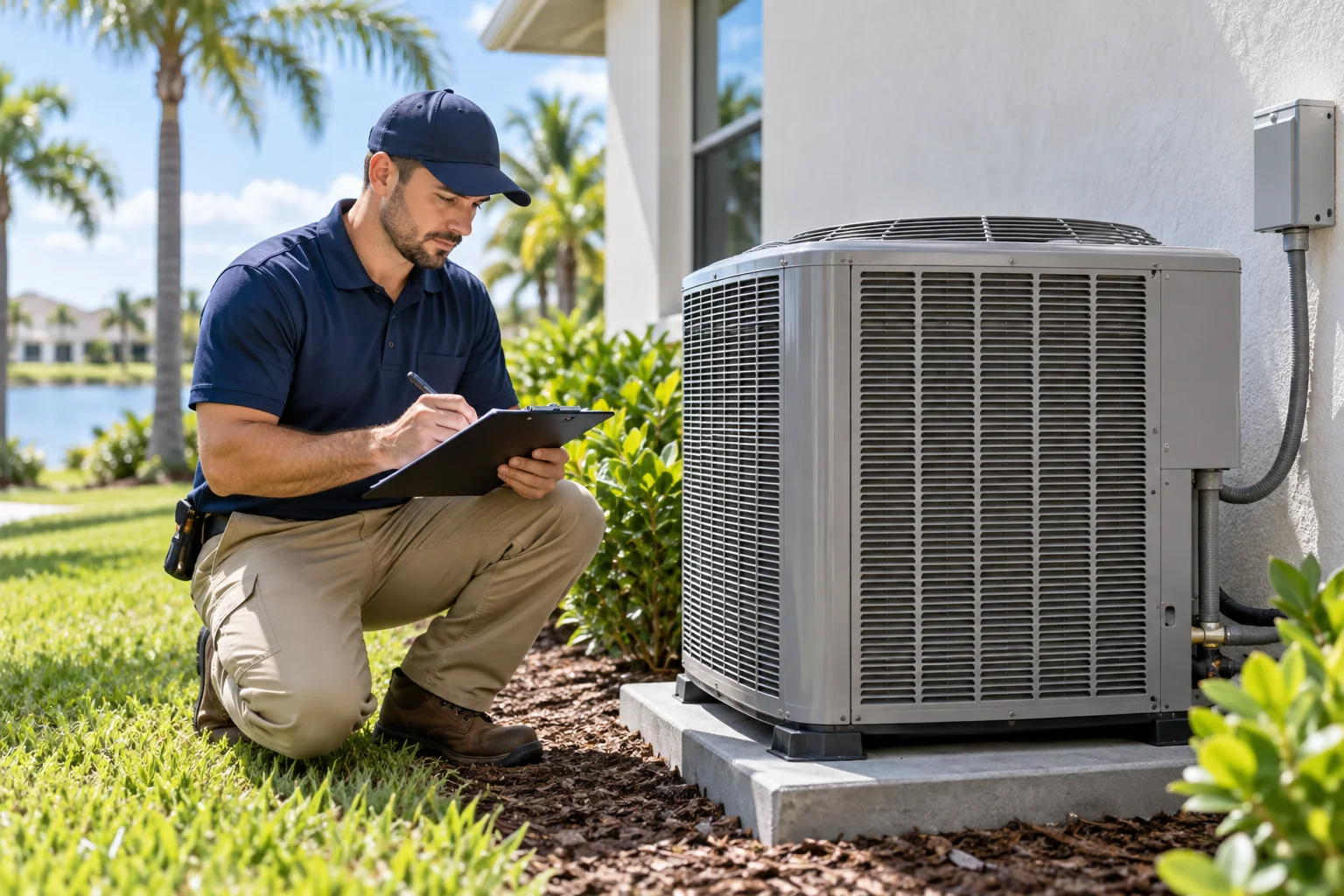
Heat strip replacement in Clearwater: understand the equipment first
Heat strips are electric resistance heating elements installed in some heat-pump air handlers. They can provide supplemental heat when the heat pump needs help meeting the thermostat setting, and may provide heat in an emergency-heat mode. They are different from the heat pump’s outdoor heating components, so a heating problem does not automatically mean the strips need replacement.
If your system is not keeping the home comfortable, the cause could involve a heat strip element, but it could also involve the thermostat signal, a relay or sequencer, a safety limit, wiring, airflow, or the heat pump itself. These are possibilities, not a remote diagnosis. A technician should verify the equipment and measurements before recommending replacement.
Signs that justify an evaluation
Consider arranging an inspection if the system produces less heat than expected, takes unusually long to recover after a thermostat change, or displays an auxiliary-heat indicator more often than you expect. A breaker that trips while the system is heating or a persistent burning smell also deserves attention. None of these symptoms proves that a heat strip has failed; several faults can produce similar behavior.
Auxiliary heat can operate as part of normal heat-pump operation under certain conditions. Emergency heat is a control setting, not a test result. If you are unsure how your thermostat setting works, check its owner’s instructions or ask a technician rather than repeatedly changing modes to diagnose the system.
Safe observations before service
- Note the thermostat setting, displayed mode, and any warning or auxiliary-heat indicator. Record when the symptom occurs and whether it is consistent.
- Check that the thermostat is set to heat and that the set temperature is above the room temperature. Avoid rapid, repeated adjustments while observing the system.
- From outside the equipment, look for blocked return grilles or supply registers and make sure the air filter is not visibly clogged. Follow the equipment instructions for filter access and replacement.
- Write down whether a breaker has tripped, but do not remove an electrical panel cover or repeatedly reset a breaker that trips again.
Do not open the air handler, touch wiring or heating elements, bypass a safety control, or attempt electrical testing. Turn the system off and arrange qualified service if you notice a burning smell, repeated breaker trips, or another immediate safety concern.
What a technician should check before recommending replacement
A useful evaluation starts by identifying the indoor and outdoor equipment, the thermostat call, and the heating mode in which the problem appears. The technician can then inspect and test the relevant electrical components using appropriate procedures. Depending on the system, that may include checking heat-strip operation and electrical readings, controls such as relays or sequencers, safety limits, wiring connections, thermostat signals, and airflow conditions.
That broader check matters because replacing an element alone may not address a control fault, an airflow restriction, or a problem elsewhere in the heat pump. The findings should connect the observed symptom to the proposed work. Ask which component failed, what test or measurement supports that conclusion, and whether any related condition needs attention before the system is returned to service.
Matching a replacement to the air handler
Heat strips are not universal parts. The replacement must be suitable for the specific air handler and its electrical and control configuration. The technician should confirm the applicable capacity, voltage, circuit and wiring requirements, staging or control compatibility, and required safety protections. The installation also needs to suit the system’s airflow and manufacturer requirements.
Ask whether the recommendation is to replace an individual element, a strip assembly, or another component, and why that scope is appropriate. A recommendation to replace the complete air handler or heat pump should be explained separately; a heat-strip symptom by itself does not establish that the whole system needs replacement. Compare the equipment condition, repair history, parts availability, and proposed scope before making a larger decision.
Replacement work and verification
Heat-strip replacement involves hazardous electrical components and should be performed by a qualified technician, not as a homeowner project. The technician should isolate power using appropriate procedures, confirm the equipment configuration, and complete the replacement with compatible parts. Afterward, ask what operational checks were performed, including confirmation that the heating stages and controls operate as intended and that relevant safety protections remain in place.
Ask for the written scope to identify the parts being replaced, any additional work, and the testing performed. Genuine parts and warranty-aware service can help keep the repair aligned with equipment requirements. Confirm which parts are proposed, whether they are genuine or an appropriate compatible part, and what warranty terms apply to the part and labor. Do not assume a particular warranty applies; have the provider explain the terms for your equipment and repair.
Heat-strip work is electrical. If diagnosis also identifies a refrigerant-system issue, refrigerant handling should be performed by EPA-qualified personnel. Refrigerant work is not automatically part of a heat-strip replacement, and the technician should explain any separate findings and scope.
Scheduling heat strip service in Clearwater
When you contact a service provider, describe the symptom, thermostat indication, and any breaker or safety concern. Share the equipment model information if it is readily visible without opening a panel. Ask what the visit will assess and request the findings and options before authorizing replacement.
Qualified 24/7 availability includes nights and weekends. Qualified same-day or next-available dispatch may be available depending on scheduling and service needs. There is no extra charge for nights or weekends. Confirm the available appointment timing when arranging service.
Questions homeowners ask
Does an auxiliary-heat indicator mean the strips have failed?
No. It indicates a system operating mode or call, depending on the thermostat and equipment. Heat strips may be operating normally, or a separate issue may be affecting comfort. The equipment needs to be checked before drawing a conclusion.
Can I keep resetting a tripped breaker?
No. A breaker that trips again can indicate an electrical or equipment problem. Do not keep resetting it or open the electrical compartment. Leave the system off and arrange qualified service.
Should I replace the heat pump if the strips need replacement?
Not necessarily. A heat-strip finding does not, by itself, establish that the heat pump or air handler should be replaced. Ask for the test results, the repair options, and the reason for any broader replacement recommendation.
Next step: Request an evaluation for your Clearwater system and ask the technician to explain the confirmed cause, compatible replacement options, and post-repair checks before work is approved.