Prepare your Clearwater heating system for cooler weather
A heating-system tune-up is preventive maintenance: a technician checks how the equipment is operating, looks for conditions that may need attention, and explains any recommended work. It is not a guarantee that a system will avoid future repairs, and a tune-up should not be treated as a diagnosis of an unreported problem.
In Clearwater, heating may be used less often than cooling, but equipment still needs to be ready when temperatures drop. A seasonal visit is a chance to check heating operation before you rely on it, review maintenance needs, and ask questions about your particular system. The right inspection depends on the equipment installed, its condition, and the manufacturer’s maintenance guidance.
What a heating tune-up may include
Start by asking which equipment the visit covers and what the technician plans to inspect. A central system that heats and cools may need checks in both operating modes. For a heat pump, the heating cycle and related controls should be assessed; a furnace or another type of heater requires checks suited to that equipment. Not every item applies to every system.
- Operating performance: The technician can run the system and assess whether it responds to the thermostat and operates as expected. Measurements and observations help establish its condition; they do not, by themselves, mean a particular part has failed.
- Airflow and filter condition: The technician can check the filter and consider whether airflow concerns warrant further inspection. A dirty filter, obstructed return, or duct issue can affect performance, but symptoms alone do not identify the cause.
- Electrical and control components: A technician can inspect accessible system components and controls using appropriate safety procedures. Electrical testing and opening equipment panels are not homeowner tasks.
- Heat-pump operation, when applicable: The technician can check heating-mode operation and relevant controls, including the system’s response when conditions call for a change in operation. The inspection should match the heat-pump model and manufacturer guidance.
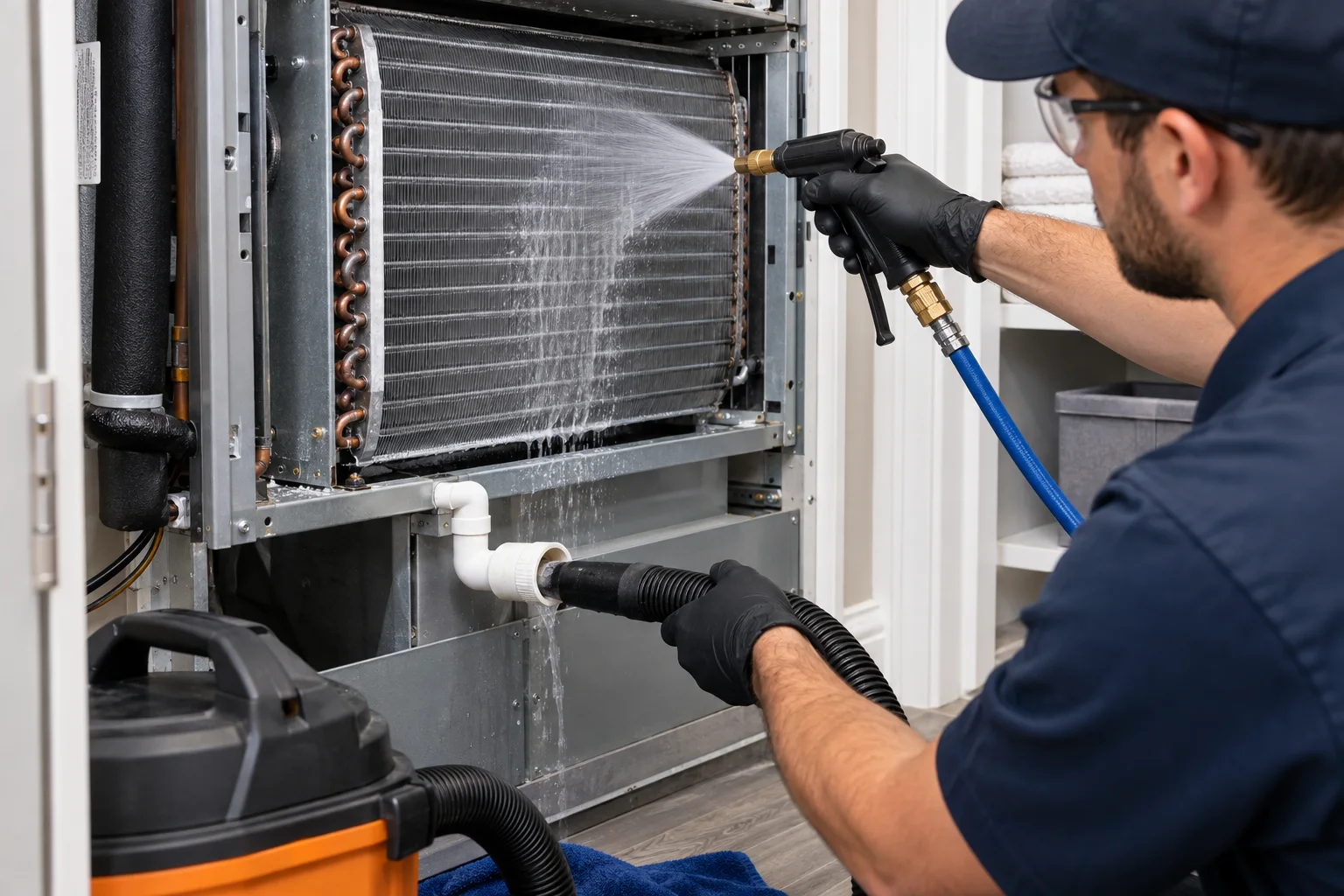
- Drainage, coils, and visible condition: Where applicable, the technician can look for conditions that may affect operation or require cleaning or repair. A finding should be explained before additional work is authorized.
- Ductwork and air delivery: If comfort or airflow is a concern, the technician can discuss visible duct conditions and whether more investigation is appropriate. A tune-up does not automatically include duct repairs or modifications.
Ask for a summary of what was checked, any relevant readings or observations, and what the technician recommends next. If the visit identifies a separate repair need, ask what evidence supports the recommendation and whether the work is distinct from routine maintenance.
Safe checks homeowners can make
Before the appointment, you can gather useful observations without opening the equipment. Note which rooms feel uncomfortable, whether the system starts and stops normally, and whether the thermostat displays a message. If the heating has not been used recently, tell the technician how it behaved when you last ran it.
- Check the thermostat setting and confirm it is calling for heat. If you are unsure how to change settings, consult its user instructions.
- Look at the air filter and replace it only if the manufacturer’s instructions and filter size are clear. A filter that is difficult to access should be left for the technician.
- Keep supply registers and return grilles unobstructed. From a safe position, look for obvious objects blocking airflow.
- From the ground, check that the outdoor unit is not visibly blocked by items you can move safely. Do not reach into the unit or remove panels.
- Write down unusual sounds, odors, error messages, or changes in comfort, including when they occur. These details help guide inspection but do not prove which component, if any, needs repair.
Do not open electrical panels, handle refrigerant, reach into equipment, or bypass a safety control. If you notice a burning smell, repeated breaker trips, or another immediate safety concern, stop operating the system if you can do so safely and arrange qualified service. Do not keep resetting a tripped breaker.
When to schedule winter preparation
Consider arranging a tune-up before the first stretch of weather when you expect to use heat regularly. Scheduling ahead gives you time to discuss findings and make an informed decision if maintenance or repair is recommended. If your heating system is already not working as expected, describe that issue when booking; a tune-up appointment may need to be handled as a diagnostic service instead.
Velocity Air Conditioning has qualified 24/7 availability, including nights and weekends. Qualified same-day or next-available dispatch may be available depending on scheduling and service needs. There is no extra charge for nights or weekends.
Understanding recommendations and parts
A useful service explanation separates what the technician observed from what they recommend. Ask which test, measurement, or inspection supports the recommendation, what the work includes, and what result it is intended to address. If there are multiple possible causes, ask what further inspection would distinguish between them. No single symptom should be treated as proof that a specific part has failed.
If a repair is proposed, ask whether a genuine part is available and appropriate for your equipment. Check whether the work or part may affect an existing warranty, and ask what warranty terms apply to the proposed repair. Warranty coverage depends on the equipment and the applicable terms; confirm them before authorizing work.
Maintenance and repair are different scopes. A tune-up may identify a condition that needs separate attention, but that does not mean every repair is included in the maintenance visit. Review the proposed work and any related charges before approving it. If the recommended scope is unclear, ask for a written summary.
Questions to ask at your appointment
- Which heating equipment and operating modes are included in this tune-up?
- What did you inspect, and what readings or observations support your assessment?
- Is any recommended work routine maintenance, or is it a separate repair?
- Could another condition cause the same symptom, and what inspection would clarify it?
- If a part is recommended, is a genuine part appropriate, and what warranty conditions should I review?
- What maintenance should I perform between professional visits, and what should I leave to a technician?
What to expect from a Clearwater heating tune-up
A well-explained visit gives you a clearer picture of your system’s current condition and practical next steps—not a promise that the equipment will never need service. Share your comfort concerns, ask for findings in plain language, and approve only the work you understand. For a heat pump or other heating system in Clearwater, a tune-up can help you prepare for cooler weather while keeping safety and equipment-specific recommendations in view.