Is the Tune-Up a Scam? The Honest Answer
It is a fair question, and the industry earned it. Too many homeowners have paid for a “tune-up” that was twenty minutes, a filter glance, and a high-pressure pitch for a new system — then wondered what exactly they bought. So let’s answer directly: a legitimate heating tune-up is real maintenance with measurable effects. A fake one is a sales call with a service fee. The difference is not subtle once you know what to look for, and this guide exists to make sure you never pay for the wrong one.
For Englewood homeowners weighing whether a heating system tune-up is worth booking, here is the skeptic’s guide: why the distrust exists, what real maintenance includes, how to tell the difference, and the honest cases for and against.
Why the Skepticism Exists
The skepticism has specific, legitimate roots. The twenty-minute “tune-up”: a technician in and out before the coffee cools, having done little a homeowner could not do. The upsell visit: maintenance as a pretext for manufacturing urgency about parts that are merely aging. The vague report: “system looks good” with no measurements, no checklist, nothing verifiable. Each of these is a real industry practice, and each teaches the customer that tune-ups are theater.
There is also the invisibility problem: unlike a repair, where something broken becomes fixed, maintenance prevents things you never see. The capacitor replaced before it failed, the leak found before it starved the compressor — these are non-events, and non-events are hard to value. Skepticism is the rational response to paying for prevention from an industry that sometimes sells the appearance of it.
What a Legitimate Tune-Up Actually Includes
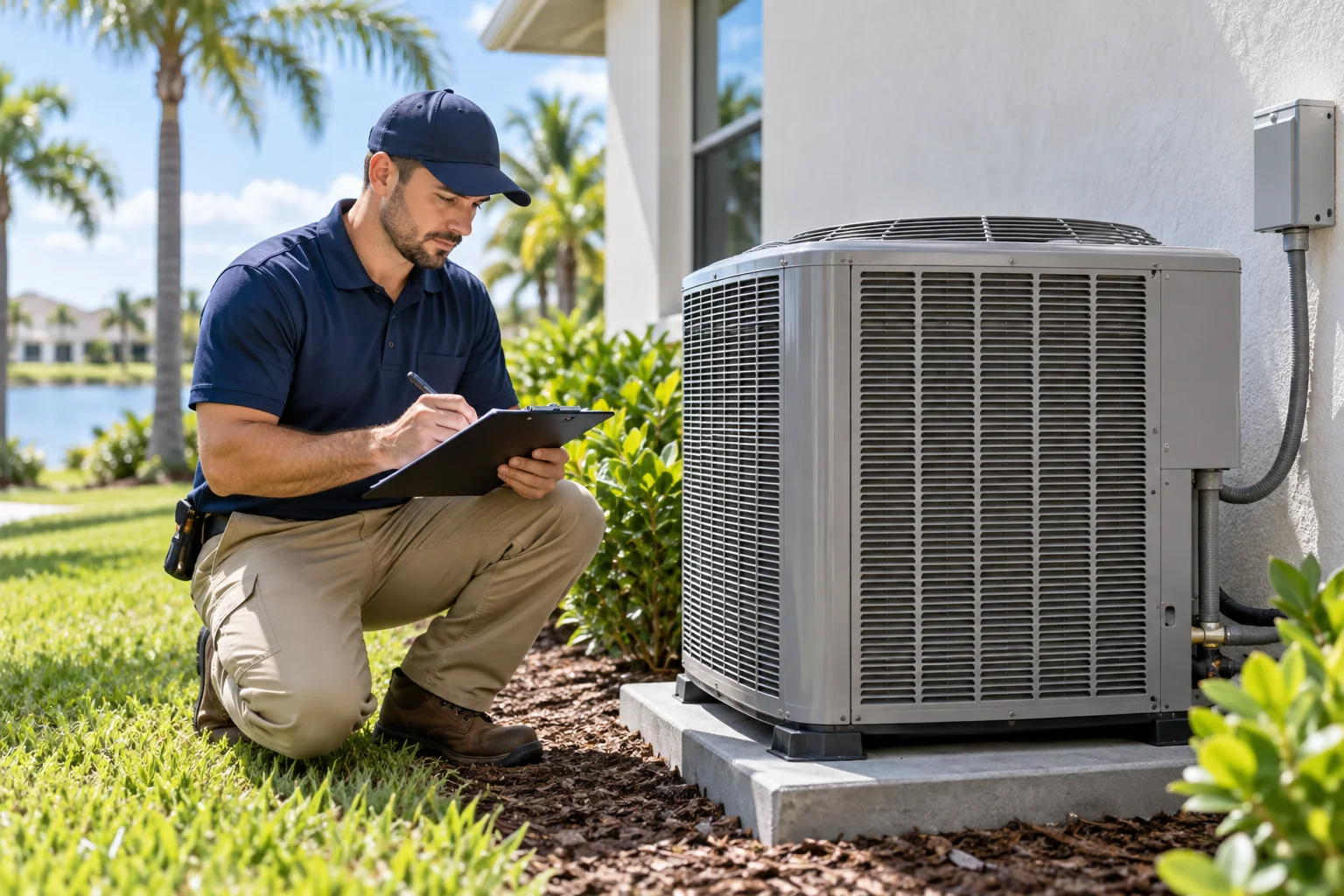
Here is the reality check: a real heating tune-up on a heat pump is a substantial service visit, typically an hour or more, with a specific checklist. Outdoor unit: coil cleaning, fan and motor inspection, electrical connection tightening, capacitor testing under load, contactor inspection, refrigerant charge verification. Heating-specific: reversing valve cycling, defrost cycle testing end to end, auxiliary heat strip energizing and measurement, thermostat heating configuration.
Indoors: blower inspection, filter service, drain clearing, airflow verification, and a full heating-cycle test with temperatures and electrical draw observed. The visit ends with a written report: what was done, what was measured, what is healthy, what is wearing, and what needs attention. If that is not what you received, you did not receive a tune-up.
How to Tell the Difference
Green flags: the visit takes real time; the technician uses instruments (meters, gauges, thermometers), not just eyes; you receive a written checklist with readings; findings are specific (“capacitor reading 32 of 35 microfarads — monitor”) rather than vague; recommendations come with explanations, not pressure. Red flags: in-and-out in under half an hour; no measurements taken; a report that says only “looks good”; immediate high-pressure replacement pitches; parts condemned without readings to support it.
The single best test: ask what the tune-up includes before booking, and compare the answer to the checklist above. A provider describing real maintenance will match it closely; a provider describing a sales visit will be vague, rushed, or defensive. You are allowed — encouraged — to interview the service before the service.
The Evidence: What Maintenance Demonstrably Does
Strip away the marketing and the case for maintenance rests on failure modes, not promises. Weak capacitors found during tune-ups are capacitors that would have failed on cold mornings — this is not theory; it is the most common no-heat cause in the field. Refrigerant leaks found early are compressors saved; found late, they are compressors replaced. Fouled coils cleaned are efficiency and lifespan recovered measurably. Pitted contactors replaced are motors protected.
The evidence is also negative: ask any technician what neglected systems look like inside, and the description is consistent — the same short list of preventable failures, visit after visit. Maintenance does not promise your system will never fail. It removes the failures that were never supposed to happen.
When to Skip the Tune-Up
Honesty cuts both ways, so here are the cases against. If your system was professionally serviced weeks ago, another visit adds nothing — annual means annual. If the system is currently broken, book a repair visit, not a tune-up; maintenance on a failed system is the wrong service. And if a provider cannot describe what their tune-up includes to your satisfaction, skip that provider, not the concept — the problem is the vendor, not the maintenance.
What is never a good reason to skip: “it’s running fine.” Running fine is the condition maintenance preserves, not evidence it is unnecessary. The systems that run fine for decades are the maintained ones; the inference runs the other way.
Heating System Tune-Up in Englewood
Skepticism is healthy — aim it at the provider, not the practice. A legitimate heating tune-up in Englewood means the full checklist above, real measurements, a written report, and findings you can verify: the kind of visit that answers skepticism with evidence. Velocity Air Conditioning performs heating tune-ups across Englewood for all major brands with the documented thoroughness skeptics should demand, and offers 24/7 service for the failures no maintenance could foresee. Book before the heating season; the best answer to “is it worth it?” is a visit that proves it.
How long should a real tune-up take?
A thorough heating tune-up on a heat pump typically takes an hour or more — there is simply too much to inspect, measure, and test for less. A visit completed in twenty minutes did not perform the checklist, whatever it was called.
What should the written report include?
What was inspected and serviced, measured readings where applicable, parts replaced, the condition of wearing components with specifics, and findings sorted by urgency. Vague reassurance (“looks good”) is not a report.
How do I avoid the upsell trap?
Ask for measurements behind every recommendation, get a second opinion on major ones, and remember that “monitor” is a legitimate finding — not everything wearing needs replacing today. Pressure is a red flag; explanation is a green one.
Is annual maintenance really necessary?
For warranty compliance, usually yes — most manufacturers require it. For reliability, the failure modes it intercepts (capacitors, charge, contactors, coils) are the field’s most common no-heat causes. Annual is the interval the engineering assumes.
Can I just do the maintenance myself?
Part of it: filters, clearances, attention to new symptoms. The rest — refrigerant, high-voltage electrical, sealed-system diagnostics, calibrated measurements — requires certification, instruments, and training. The boundary is real and worth respecting.
Do I need to be home for the tune-up?
Yes — for equipment access and for the findings walkthrough. The walkthrough is where skepticism gets its answers: what was found, what it means, and what the measurements show.