The Tune-Up as Diagnosis: Heating in St. Pete Beach
The annual tune-up is the year’s most valuable diagnostic visit: the technician’s findings become the system’s care plan, and the care plan becomes the repair-vs-replace decision made with evidence instead of fear. This is the diagnostic-decision angle on heating system tune-up in St. Pete Beach: what the visit finds, what the findings mean, and how the decision gets made.
What the Visit Finds
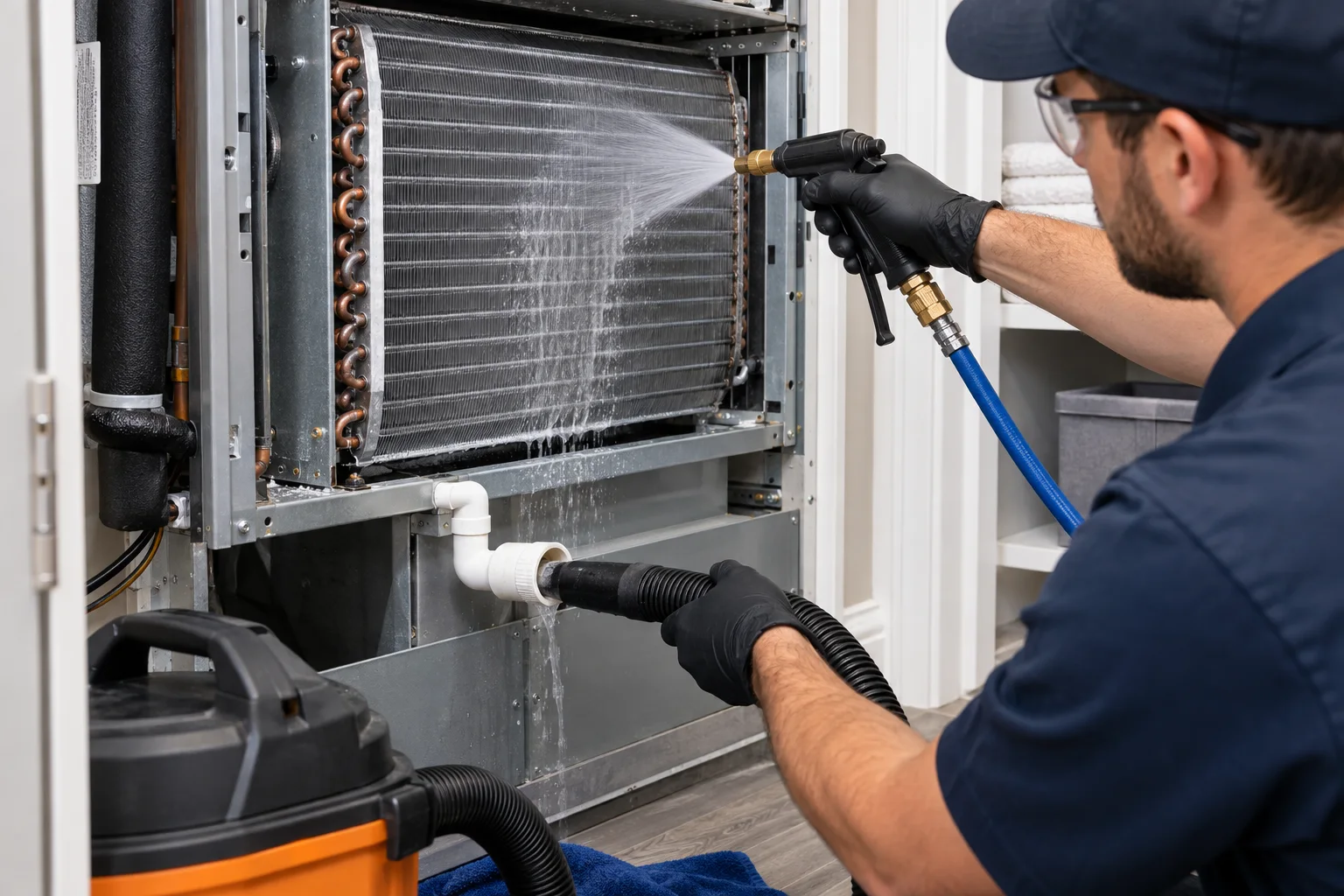
The heating cycle: the full heating operation observed — the system started in heat mode, the cycles timed, the temperature rise measured, the reversing operation proven. The valve and solenoid: the reversing valve’s shifting tested — the heating’s brain verified, the cold-air failure caught at the test bench. The refrigerant charge: the pressures measured, the charge verified against specification — the slow leak found while it’s the small repair. The defrost logic: the defrost cycle’s controls verified — the iced coil that thaws on schedule, the heat unblocked at the source. The electrical: the connections torqued, the capacitor tested, the contactor inspected, the voltage confirmed — the power path secured. The coils and airflow: the coils cleaned, the airflow measured and balanced — the heat transfer the efficiency depends on. The thermostat: the calibration checked, the heat call’s signal confirmed — the controls’ accuracy proven. The drains and safeties: the condensate cleared, the safety switches tested, the emergency shutoffs confirmed. The visit: the system’s condition documented — the evidence the decision needs.
What the Findings Mean
The maintenance finding: the clean-and-tighten class — the coils cleaned, the connections torqued, the charge exact, the system returned to specification. The repair finding: the worn component named — the capacitor, the contactor, the solenoid, the thermostat — with the transparent quote before the decision. The watch finding: the aging component documented — the trend started, the next visit’s baseline set, the replacement’s timeline estimated. The replace finding: the system’s condition against its age — the honest assessment when the economics favor the new system. The safety finding: the electrical or refrigerant hazard — the immediate action, the system secured, the home protected. The St. Pete Beach scheduling: the fall visits filling — the early booking, the findings made before the season. What the findings mean: the spectrum from maintenance to replacement — the evidence, named and priced.
How the Decision Gets Made
The repair-vs-replace math: the repair’s cost against the system’s age, the efficiency, the remaining life — the honest calculation, not the sales pressure. The system’s age: the years against the design life — the maintained system’s decades versus the neglected system’s decline. The efficiency’s trend: the bills and the performance — the data the documented visits provide, year over year. The comfort’s testimony: the even heat, the quiet operation — the lived quality the tuned system delivers daily. The warranty’s status: the documented annual service — the coverage the maintenance protects, the claim’s proof ready. The genuine standard: the factory components when the decision is repair — the parts the system was designed around. The EPA protocol: the refrigerant handled per the certified procedure — the exact charge the system demands. The next step: the fall tune-up booked — the diagnostic visit that starts every good decision, the evidence that ends every bad surprise. How the decision gets made: the tune-up as the evidence — the system diagnosed, the decision owned.
Heating Equipment Notes
Heating systems are engineered for efficient, reliable performance — including modern high-efficiency scroll compressors and ECM motor standards — with the advancing technology that the diagnostic tune-up evaluates and the annual program protects. We service heating equipment with genuine manufacturer components, our technicians follow strict EPA refrigerant-handling procedure, and tune-ups are performed to protect your manufacturer warranty.
Questions About Heating Tune-Ups in St. Pete Beach
Is the tune-up also a diagnostic visit?
It’s the year’s most valuable one: the 21-point inspection documents the system’s condition — the evidence every repair-vs-replace decision needs.
What happens if the visit finds a repair?
The finding comes with the transparent quote: the component named, the scope, the pricing — all before the decision. The small fall repair is the winter emergency avoided.
When does repair become replacement?
The honest calculation: the repair’s cost against the system’s age, the efficiency’s trend, the remaining life. The documented visits provide the data; the decision stays yours.
Does the tune-up protect my warranty?
The documented annual service satisfies the manufacturer warranty’s maintenance requirement — the coverage intact, the proof on paper.
When should I schedule?
Every fall before the heating season — the early booking avoids the rush. The spring cooling tune-up completes the year’s program.
How do I know the technician’s recommendation is honest?
The evidence: the findings documented, the quote transparent, the alternatives named — the diagnostic visit’s output is the checkable record. The good recommendation survives the second opinion.
For heating system tune-up in St. Pete Beach — the tune-up as diagnosis — scheduling is available with professional service and the annual program. The visit that finds, the evidence that decides, every single year, season after season, decade after decade.