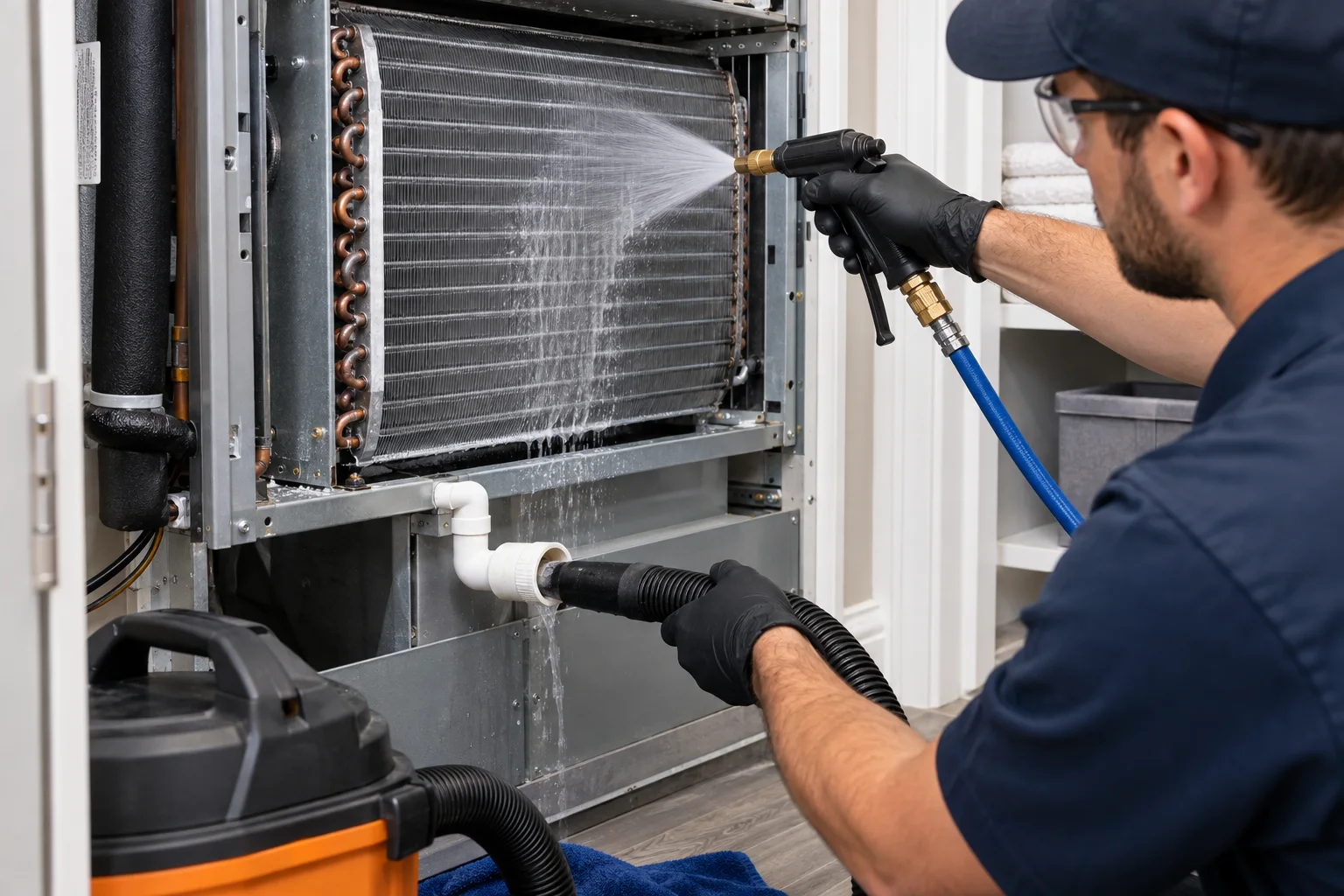
Burning smell from a Heil electric heater in St. Petersburg
A burning smell when your heater runs can have several causes. A brief dusty odor after a long period without heat may clear quickly, but a sharp electrical, plastic, or persistently hot smell deserves attention. Odor alone cannot identify a failed part, so do not assume the heater is safe—or that a particular component has failed—without an inspection.
This guide covers safe steps for St. Petersburg homeowners and what a technician may check on a Heil electric heating system. The exact inspection depends on the model and whether your home has an electric furnace, a heat pump, or another configuration.
When to stop using the heater
If you see smoke, sparks, or flames, or the smell is strong and getting worse, leave the area and contact emergency services if there may be a fire. Do not touch a hot, sparking, or smoking unit or electrical panel.
For a persistent burning or electrical odor without visible smoke or fire, turn the system off at the thermostat. If you can safely identify and reach the system’s dedicated breaker without approaching a hot or damaged panel, you may switch it off. Do not open the panel, remove equipment covers, or repeatedly reset a breaker that trips. Arrange qualified service before running the heater again.
If the odor appears to come from an outlet, switch, or panel rather than the heater, keep away from that area and seek appropriate electrical help. A heater technician should not be asked to investigate an unrelated electrical hazard.
What you can safely observe
Without taking anything apart, note when the smell begins and whether it fades, stays constant, or becomes stronger. Record whether it occurs at startup, only while the system is heating, or after the system shuts off. If you can do so without approaching a suspected hazard, note whether the odor seems strongest near a supply vent, the indoor unit, or another room.
- Describe the odor in ordinary terms, such as dusty, rubber-like, or electrical. Do not deliberately sniff close to equipment.
- Note whether the system has been unused, whether the odor returns on each cycle, and whether airflow or heating has changed.
- Tell the service provider about a tripped breaker, unusual sounds, visible smoke, or a recent change to the system.
- Have the Heil model information available if it is easy to read from an exterior label. Do not remove a panel to find it.
A faint dusty odor that clears soon after seasonal startup may be different from a persistent or sharp odor, but that observation cannot confirm the cause. If the smell continues or returns, leave the system off until it has been assessed.
Possible causes are not a diagnosis
Depending on the equipment and what an inspection finds, an odor might be associated with dust warming on a heat source, debris near a component, restricted airflow, a motor or control problem, or an electrical connection or wire that is overheating. These are possibilities, not conclusions based on smell alone. A heat pump and an electric resistance heater also have different components and operating sequences, so the model and system type matter.
A breaker trip, reduced airflow, or a smell from one vent can provide useful clues, but none proves that a specific part has failed. Avoid replacing a fuse, bypassing a safety control, or restarting the system to see whether the symptom repeats. Repeated operation can worsen some conditions and does not provide a reliable diagnosis.
What a technician may inspect
A qualified technician can identify the equipment configuration and Heil model, ask about the odor and when it occurs, and inspect the system before recommending a repair. Depending on the findings, technician-only checks may include the electrical connections, wiring, controls, blower operation, airflow, and relevant heating components. The technician can use appropriate measurements and equipment tests to distinguish a fault from other possible causes.
Leave electrical testing, opening equipment panels, and work on internal components to qualified personnel. If the system is a heat pump and the issue involves its refrigerant circuit, refrigerant handling should be performed by EPA-qualified personnel. The technician should explain what was tested, what the findings show, and which proposed work addresses those findings.
Heil is a brand, not a diagnosis. A model number and inspection findings are needed to assess part compatibility, warranty status, and the right repair. When parts are needed, ask whether genuine parts are available and appropriate for the equipment, and have warranty terms checked before authorizing work.
Service availability in St. Petersburg
Qualified service availability is 24/7, including nights and weekends. Qualified same-day dispatch may be available; otherwise, dispatch is for the next available appointment. Availability depends on the circumstances and scheduling. There is no extra charge for nights or weekends.
When requesting service, explain that the concern is a burning smell from a Heil electric heater and whether you have turned the system off. Mention smoke, a tripped breaker, or another immediate safety concern. Do not run the unit to reproduce the symptom while waiting for an appointment.
Deciding whether to repair or replace
First establish the cause and the scope of a safe repair. Then compare the system’s age and condition, repair history, parts availability, comfort, and operating costs. Replacement may be worth discussing if problems recur, parts are difficult to obtain, or comfort and operating costs have worsened, but a burning smell by itself does not establish that replacement is needed.
Ask for the diagnosis, proposed work, relevant safety checks, parts and labor, and warranty terms to be explained before approval. If the system is a heat pump, make sure any proposed replacement or repair is compatible with the complete system—not selected from the Heil name alone.
Common questions
Can a heater smell dusty when it starts?
A temporary dusty odor can occur after heating has been unused, but it should not be treated as an explanation for every burning smell. Turn the system off and arrange an inspection if the odor is sharp, persistent, worsening, or accompanied by smoke, a breaker trip, or a change in operation.
Does a burning smell mean a part has failed?
No. It is a symptom with multiple possible causes. The equipment type, model, timing, and inspection results are needed to determine what is happening.
Should I reset the breaker?
Do not repeatedly reset a breaker that trips. Leave the heater off and have the condition assessed; do not open the electrical panel or equipment cabinet.
What should I ask before approving a repair?
Ask what test supports the diagnosis, whether another condition could cause the symptom, whether the part is compatible, and how warranty coverage applies. Request the proposed scope in writing so you can understand the work before authorizing it.
Next step: If a burning smell persists or returns, keep the heater off and request a qualified evaluation. Share what you observed and ask the technician to explain the findings and repair options before work begins.