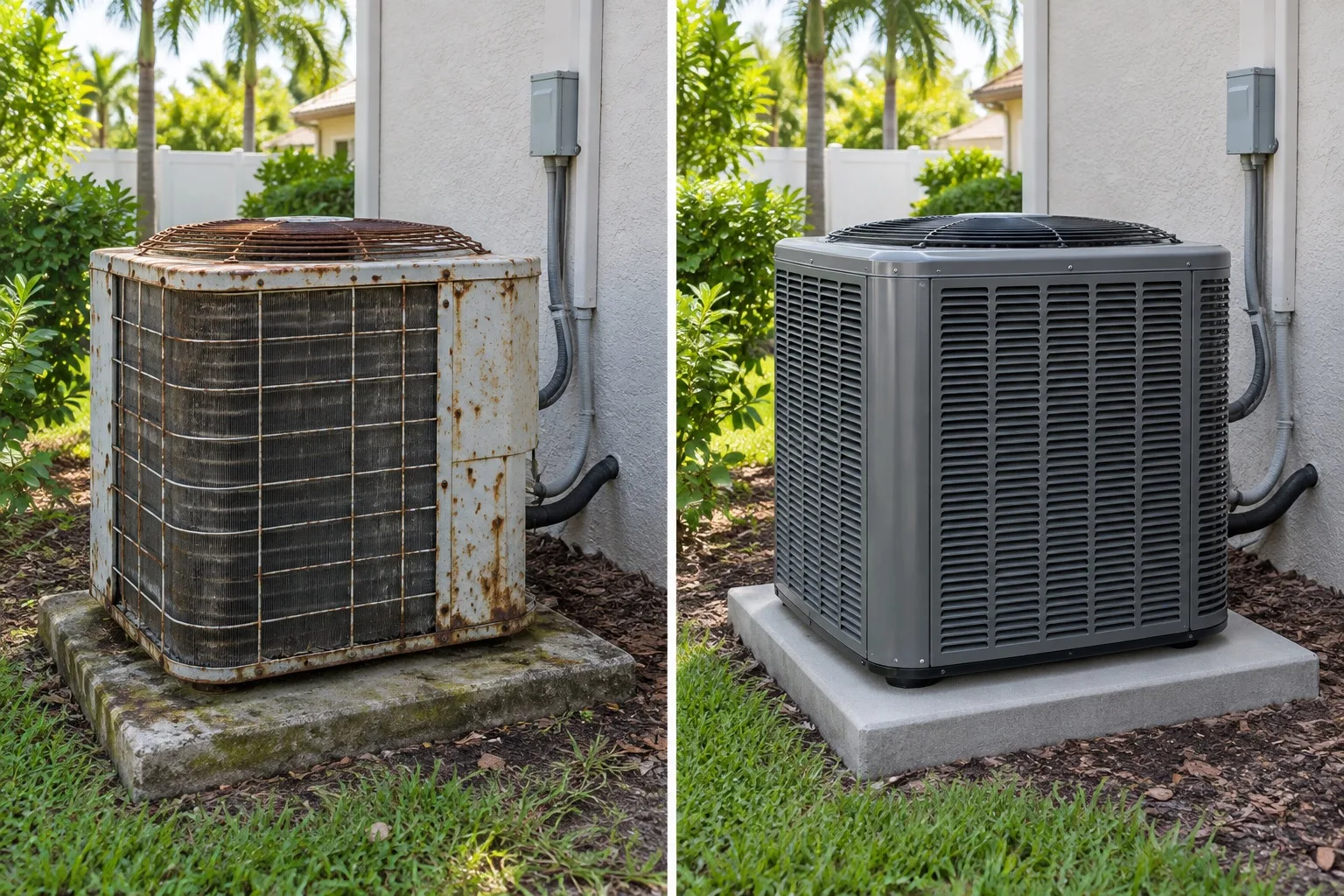
Planning a Heil Heat Pump Installation in Pinellas Park
A heat pump can provide both cooling and heating, but replacing an older system is not simply a matter of choosing a model with the same capacity. The equipment needs to suit the home, its ductwork and electrical setup, and the way the household uses heating and cooling. A proper installation starts with an assessment, then a clear explanation of equipment options and work involved.
If your current system struggles during a cold spell, runs for long periods, or leaves some rooms uncomfortable, those observations are useful starting points—not proof that the heat pump has failed or that replacement is the only answer. A technician should inspect the system and discuss whether repair or replacement makes sense for its condition and your needs.
What to consider before replacing a heat pump
Repeated service needs, uneven temperatures, unusual sounds, and changes in utility use can all be reasons to arrange an evaluation. Each can have several possible causes. For example, airflow restrictions, duct leakage, thermostat settings, or a component issue may affect comfort or operation. The symptom alone does not identify the cause.
During an installation consultation, the technician can review the existing equipment, its condition, the home’s comfort concerns, and the ductwork and electrical connections that a replacement would use. Sizing should be based on the home’s heating and cooling requirements, not simply copied from the old unit. A load calculation helps inform equipment capacity; selecting a larger system without assessing the home is not a substitute for that process.
Repair may remain a reasonable option when inspection finds a repairable problem and the existing system otherwise suits the home. Replacement may be worth discussing when repair needs recur, the equipment no longer meets household needs, or the cost and condition make continued service less suitable. The decision should follow the inspection and a comparison of the available options—not the assumption that one cold night proves the system is beyond repair.
What a Heil heat pump installation involves
Once you choose equipment, installation planning should cover the indoor and outdoor units, system capacity, duct connections, electrical requirements, condensate drainage, and thermostat or control compatibility. The installer should explain any work needed to adapt existing connections and identify questions that need to be resolved before the job proceeds.
- Assess the home and existing system. Review the equipment, comfort concerns, ducts, controls, and relevant installation conditions.
- Confirm equipment fit. Select a suitable system based on the home’s calculated load and discuss compatible controls and other equipment requirements.
- Remove and install equipment. The installation work includes the necessary connections and setup for the selected indoor and outdoor components.
- Test and explain operation. The technician checks system operation and controls, and explains homeowner tasks and any maintenance recommendations.
A heat pump changes operating mode to provide heating or cooling. The reversing valve is part of that process, but a homeowner should not try to diagnose or adjust it. If the system does not provide the expected mode, note the thermostat setting and what the equipment is doing, then arrange an inspection. A technician can assess the reversing valve and other possible causes.
Homeowner observations and technician-only work
Homeowners can check that the thermostat is set to the intended mode, look for a dirty or obstructed filter, and keep the area around the outdoor unit clear of loose debris. Follow the filter instructions for the installed equipment, and do not remove access panels to investigate a suspected fault. If the system is making an unusual sound, icing, or not heating or cooling as expected, record what you observe and contact a professional rather than attempting internal repairs.
Electrical diagnosis, opening sealed equipment, testing internal components, and working on the refrigerant circuit are technician tasks. Refrigerant handling should be performed by EPA-qualified personnel. Do not attempt to add refrigerant, adjust the reversing valve, or troubleshoot wiring yourself. A technician may inspect the compressor, defrost operation, refrigerant circuit, and other components when the symptoms and equipment condition warrant it; none of those components should be presumed faulty based on a symptom alone.
Equipment features, parts, and warranty-aware installation
Heil heat pump features vary by product line and model. The equipment description references Observer communicating control system integration; confirm that this feature applies to the particular Heil product line and model under consideration. Control compatibility should be checked as part of equipment selection rather than assumed from the brand name.
Installation can use genuine Heil parts, with the work planned and documented with applicable manufacturer warranty requirements in mind. Warranty coverage depends on the manufacturer’s terms and the requirements for the specific equipment. Ask what documentation will be provided and what registration or maintenance steps, if any, apply to your model. Documentation is useful for keeping a record of the equipment and the work performed; it should not be treated as a promise that every condition of coverage has been met.
After installation: simple care and follow-up
Routine homeowner care is limited to tasks described in the equipment instructions, such as checking the filter and keeping the outdoor unit’s surroundings clear. Avoid spraying, opening, or attempting to repair the equipment. If comfort changes or a warning appears, note the conditions and contact a technician for diagnosis.
Maintenance visits can help assess system operation and identify developing concerns, but they do not guarantee that a part will never fail. Keep the installation paperwork and service records together, and follow the manufacturer’s directions for the selected equipment. If ductwork, airflow, or control settings were part of the original comfort concern, raise those issues during follow-up rather than assuming a new unit alone will resolve them.
Scheduling service in Pinellas Park
Installation timing depends on equipment selection, the home assessment, and scheduling. For service needs, qualified 24/7 availability includes nights and weekends. Qualified calls may receive same-day dispatch or next-available dispatch, depending on the circumstances and scheduling. There is no extra charge for nights or weekends. This service availability does not mean that a complete installation can necessarily be assessed or performed at any hour; ask what can be arranged for your specific request.
Questions about Heil heat pump installation
How do I know whether to repair or replace my heat pump?
Arrange an inspection and discuss the system’s condition, repair needs, comfort performance, and suitability for the home. A cold snap or a single symptom does not by itself establish that replacement is necessary.
How is the right heat pump size determined?
The technician should assess the home’s heating and cooling requirements and use a load calculation to inform capacity. The old system’s size alone does not establish the right size for a replacement.
What should I do if the heat pump will not switch modes?
Check the thermostat setting and note what the system does. If it still does not operate as expected, arrange a professional inspection. Several issues may cause similar symptoms, and internal components such as the reversing valve require technician assessment.
Will a new installation preserve my Heil warranty?
Warranty coverage depends on the manufacturer’s terms and requirements for the selected model. Ask about genuine Heil parts, installation documentation, and any applicable registration or maintenance steps; do not assume that installation alone determines coverage.