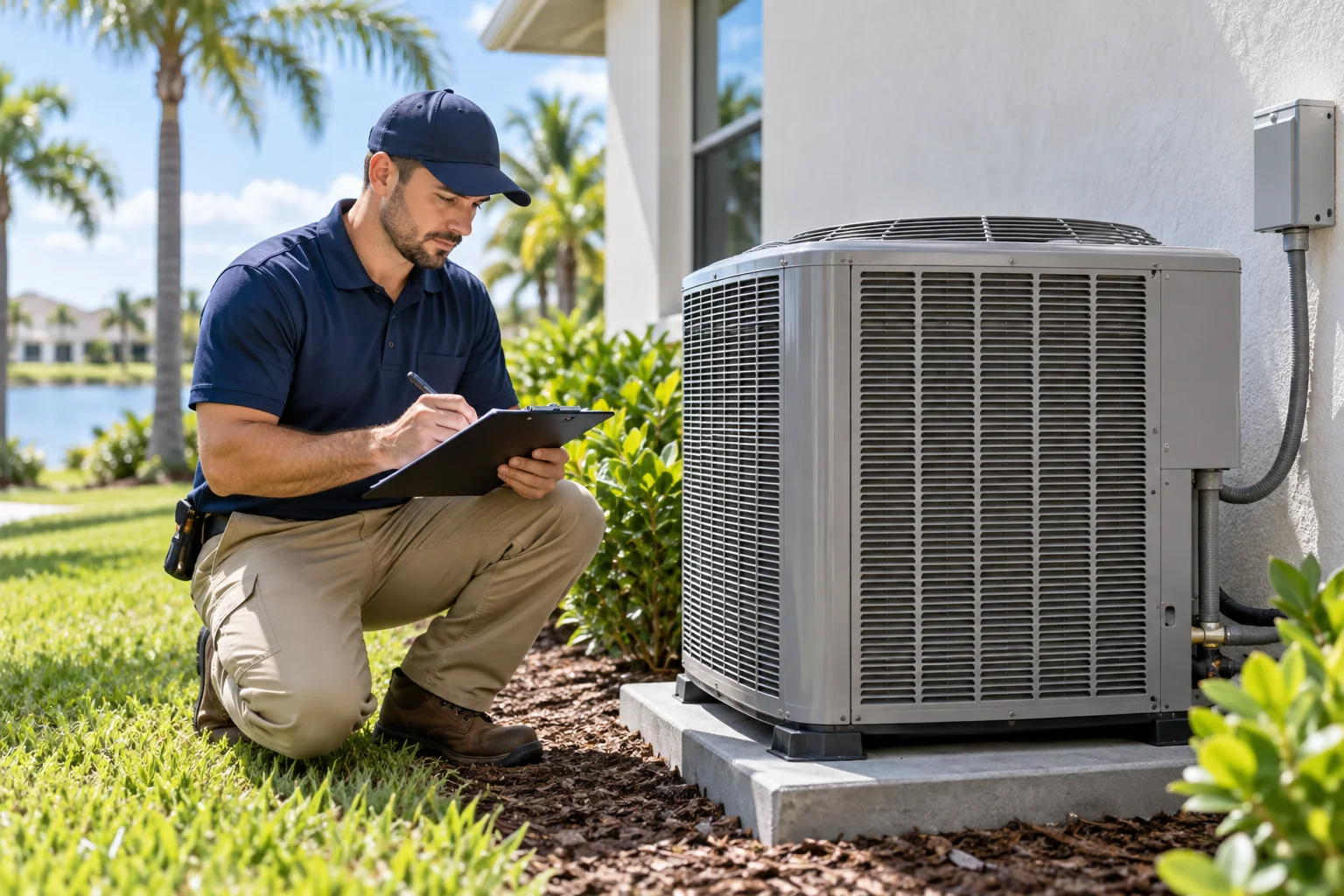
Lennox Heat Pump Repair in St. Pete Beach
A Lennox heat pump that is not heating or cooling as expected needs a diagnosis based on its symptoms and model—not an assumption that one particular part has failed. In St. Pete Beach, a technician can inspect the equipment, identify whether the issue is with airflow, controls, the refrigerant circuit, or another component, and explain the repair options before work begins.
Service availability is 24/7, including nights and weekends. Same-day or next-available dispatch may be available depending on scheduling and technician availability; dispatch timing is not guaranteed. There is no extra charge for service at night or on weekends. When arranging service, describe whether the problem is affecting heating, cooling, or both, and share the model information if it is accessible without opening the equipment.
Symptoms That May Need a Diagnosis
Some symptoms have several possible explanations. For example, air that feels cool during a heating call may relate to the thermostat setting, airflow, the outdoor unit, a defrost cycle, a control issue, or a refrigerant-system problem. The symptom alone does not establish that the reversing valve, its solenoid, or any other part has failed.
- Little or no airflow: A restricted filter, blocked return or supply, blower issue, or control problem may be involved.
- Uneven comfort: Airflow, ductwork, thermostat location or settings, and system operation may all be relevant.
- Unexpected outdoor-unit sounds or operation: Note when the sound occurs and whether it continues, but do not open the unit or reach inside.
- Ice or frost: Some frost during operation may clear during a defrost cycle. Persistent or heavy ice, or ice that returns, warrants an inspection rather than scraping or melting it with tools.
- Water near indoor equipment: This may involve condensate drainage or another issue. If water is close to electrical components, avoid contact and request service.
Safe Checks Before Calling
Homeowners can make a few observations without removing panels or handling wiring. Check that the thermostat is set to the intended mode and temperature, and replace its batteries if needed. Confirm that the air filter is clean and correctly fitted; replace it with the appropriate size if it is dirty. Make sure supply registers and return-air grilles are not intentionally blocked by furniture or other objects.
Look at the equipment from the outside for obvious obstructions, but do not reach through the grille, remove a panel, or chip ice from the coil. If a breaker has tripped, do not repeatedly reset it. Note what the thermostat displays, when the symptom began, whether the indoor fan runs, and whether the outdoor unit appears to operate. These observations can help a technician narrow the inspection.
If the system has an emergency-heat setting, use it only as described in the equipment instructions and consider it a temporary measure while arranging diagnosis. Do not attempt to repair wiring, test a capacitor, open the refrigerant circuit, or adjust the reversing valve. Refrigerant handling and electrical testing belong to qualified service personnel.
What a Technician May Inspect
Diagnosis starts with the reported symptom and the equipment’s operating conditions. A technician may check thermostat calls, system controls, electrical connections, airflow, the indoor and outdoor coils, and the defrost operation. The inspection can help distinguish a control or airflow issue from a component fault; no individual symptom or initial reading should be treated as proof of a failed part.
If the system does not change between heating and cooling as expected, the reversing valve and its control circuit may be among the items considered. A technician can test whether the system is receiving the correct call and whether the valve and associated components respond. If performance suggests a refrigerant problem, the technician may investigate for a leak and assess the system before recommending any refrigerant work. A low reading alone is not a complete diagnosis or a reason to add refrigerant without investigating the cause.
Repair recommendations depend on inspection results and the specific Lennox model. They may involve correcting an airflow restriction, addressing a control or electrical issue, repairing a confirmed leak, or replacing a component that has been tested and found faulty. Refrigerant work is performed by EPA-qualified personnel. The technician should explain the findings and proposed work so the homeowner can make an informed decision.
Lennox Model and Warranty Considerations
Have the model and serial number available if you can read the equipment label safely, but do not remove a cabinet panel to find it. Lennox equipment and features vary by model. The source equipment information associates Precise Comfort technology and Quantum Coil durability with Lennox, but those descriptions should not be assumed to apply to every system. A technician can check the specific model and configuration rather than infer a feature from the brand alone.
Where appropriate and available, genuine Lennox parts may be considered for a repair. Parts selection should take the model, the diagnosed fault, and availability into account. Warranty coverage depends on the equipment’s terms and circumstances; it should not be assumed that a particular repair is covered. Ask what documentation will be provided and whether the equipment’s warranty terms or service history should be checked before authorizing work.
Maintenance and Early Warning
Routine care can help identify developing issues, but it cannot guarantee that a heat pump will avoid a breakdown. Keep up with filter changes at the interval suited to the filter and household conditions, keep registers open, and pay attention to changes in comfort, sound, or operating patterns. Arrange professional maintenance appropriate to the system and manufacturer guidance. A technician can inspect the equipment and discuss any observed concerns; maintenance is not a substitute for diagnosing an active fault.
During heating operation, a heat pump may periodically defrost the outdoor coil. A temporary change in operation or visible vapor can occur during a defrost cycle. If the unit remains iced, repeatedly stops heating, or does not return to normal operation, note what you observe and arrange an inspection instead of trying to force the cycle or remove ice yourself.
Scheduling Lennox Heat Pump Repair
When requesting Lennox heat pump repair in St. Pete Beach, describe the symptom, the operating mode, and any recent changes you have observed. Share the equipment model if readily available. Service is available 24/7, including nights and weekends; same-day or next-available dispatch depends on scheduling and technician availability. There is no extra charge for service at night or on weekends. A careful inspection can determine which repair, if any, is appropriate for your particular heat pump.