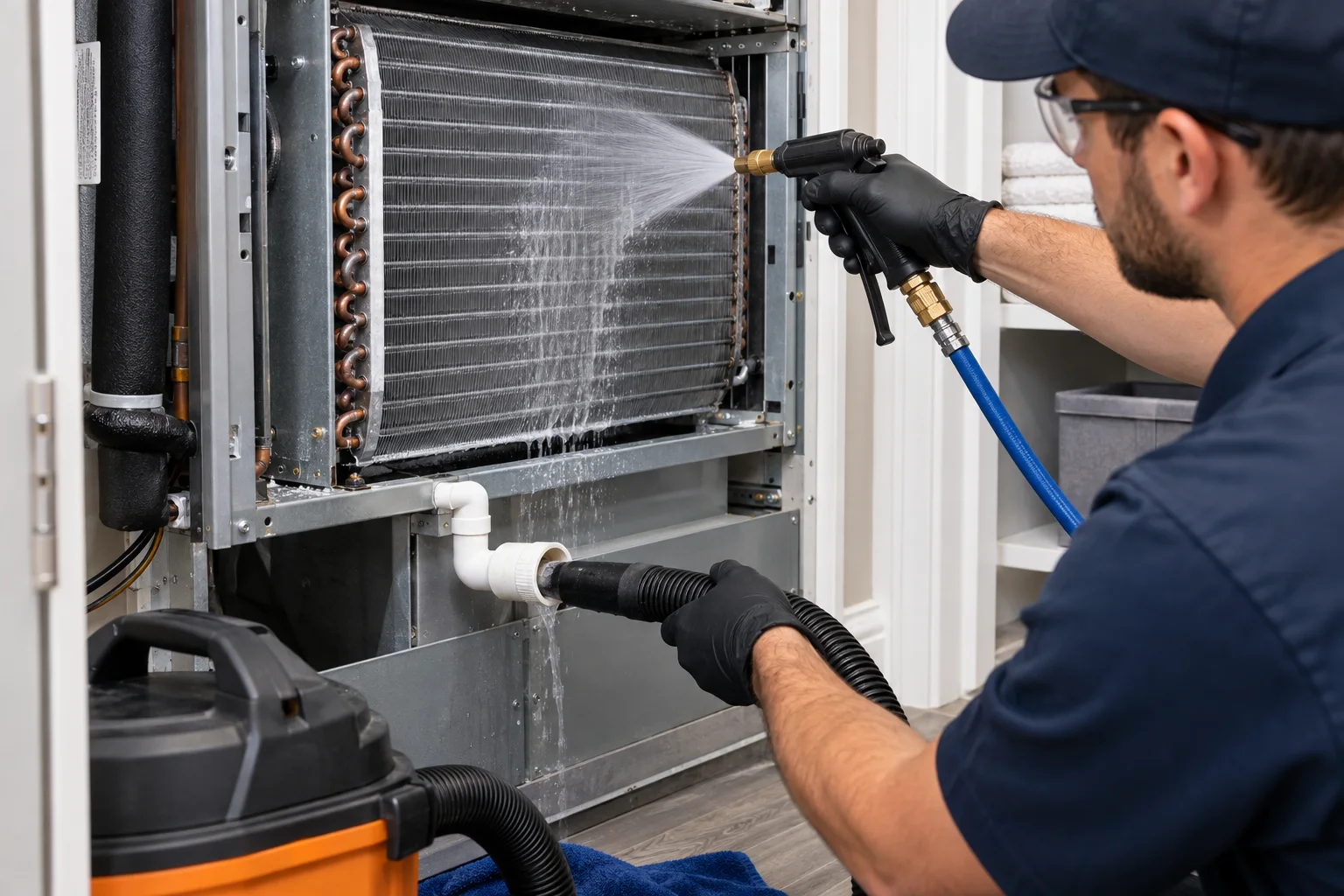
Mitsubishi Electric heat strip replacement in Parrish
If your Mitsubishi Electric system is not heating as expected, a heat strip may be one possible cause—but not every system has one, and a symptom alone does not confirm a failed part. Heat strips are electric resistance heaters used as supplemental or backup heat in some system configurations. Many Mitsubishi Electric ductless systems do not use a conventional heat strip. The equipment’s model, indoor-unit configuration, and installed accessories determine what applies to your home.
Before arranging replacement, have the equipment identified and the heating problem inspected. The goal is to establish whether a heat strip is installed, whether it has failed, and whether another control, airflow, electrical, or heat-pump issue better explains the symptoms.
First confirm that your system has a heat strip
A Mitsubishi Electric brand name by itself does not establish that an electric heater is present. Some applications use an auxiliary electric heater with a compatible indoor unit; others rely on the heat pump without a conventional strip. Model and serial information for the indoor and outdoor equipment, along with any heater-kit information, can help a technician determine the system configuration.
If you can read the equipment labels without removing a panel or reaching into the equipment, note the model and serial numbers. You can also tell the technician which controller you use and what happens when you request heat. Do not remove an electrical cover to look for a heater kit or attempt to identify wiring yourself.
Symptoms that merit an inspection
Uneven heating, air that feels cooler than expected, a system that runs for a long time, or a change in comfort may warrant assessment. These observations can have several explanations, including normal operating behavior, a control setting, restricted airflow, a heat-pump issue, or a problem in an installed auxiliary heater. They do not prove that a heat strip has failed.
Heat-pump operation can include changes in sound or airflow during a cycle. Tell the technician when the behavior occurs, how long it lasts, and whether the controller displays a message or code. A description of the pattern is useful, but diagnosis requires checking the specific equipment and operating conditions.
What to expect during diagnosis
A technician should first confirm the system configuration and the reported heating call. Depending on the equipment and symptoms, the inspection may include checking controller settings, filters and accessible airflow conditions, electrical connections, heater controls and safety limits, and the heat pump’s operation. The technician can then explain which findings support a heat-strip fault, which other causes remain possible, and whether testing is needed before recommending work.
Electrical testing and access to internal components are technician-only tasks. A qualified technician should use the manufacturer’s model-specific information to assess the heater circuit and confirm that any proposed replacement is suitable. If the heat strip is not the cause, replacing it would not resolve the underlying problem; the findings should guide the next step.
What heat strip replacement may involve
If testing confirms a failed heater and the system is equipped for one, replacement generally requires identifying the correct heater assembly or component for that specific indoor unit and installation. The technician should verify compatibility rather than choosing a part based on the brand name alone. Wiring, controls, electrical capacity, safety devices, and the unit’s airflow requirements all matter to a safe repair.
After replacing a confirmed failed component, the technician should check the relevant connections and controls and test the system’s heating operation. The work scope depends on what the inspection finds. Ask what was tested, what is being replaced, and how the technician will confirm that the repaired system operates as intended.
Genuine Mitsubishi Electric parts may be an option where available and appropriate for the model. Ask whether the proposed part is genuine and compatible, and whether the work has warranty implications. Warranty coverage and terms depend on the equipment and applicable documentation; they should be checked rather than assumed.
Safe observations before service
- Note the displayed mode, set temperature, any message or code, and when the heating behavior occurs.
- Check whether the air filter appears due for routine cleaning or replacement, following the equipment instructions.
- Look for an obvious obstruction around accessible supply or return openings without removing grilles or reaching into the equipment.
- Record model information from labels that are safely visible. Do not open an equipment panel to find it.
Do not open electrical compartments, touch heater wiring, bypass a safety control, or attempt to test or replace an element. If you notice a burning smell, visible electrical damage, repeated breaker trips, or another immediate safety concern, stop operating the system if it is safe to do so and arrange qualified service. Do not repeatedly reset a tripping breaker.
Timing and service availability
Velocity Air Conditioning offers qualified 24/7 availability, including nights and weekends. Qualified same-day or next-available dispatch depends on scheduling and service needs; an appointment does not guarantee that replacement can be completed that day. The technician must identify the equipment, confirm the cause, and check suitable part availability before a replacement plan can be confirmed. There is no extra charge for nights or weekends.
A heat-strip repair itself does not normally require refrigerant handling. If inspection identifies a separate issue involving refrigerant, that work should be handled by an EPA-qualified technician. The technician can explain whether refrigerant service is relevant to the findings rather than treating it as part of every heat-strip replacement.
Questions to ask before approving replacement
- Does this exact system have an installed auxiliary heat strip, and what model information confirms it?
- What test results support replacing the heater rather than addressing another cause?
- Is the proposed part compatible with the indoor unit and its controls?
- What checks will be performed after the repair?
- Are genuine-part options available, and have applicable warranty terms been reviewed?
For a Mitsubishi Electric heat strip concern in Parrish, start with the model information and a clear description of the symptoms. An equipment-specific inspection can establish whether a strip is present, identify the actual cause, and provide a repair scope based on findings—not assumptions.