Mitsubishi Electric reverse-cycle air conditioning and heat-pump service is often needed when a system stays in cooling mode or fails to produce heat in cold weather. This guide is written for homeowners in Punta Gorda, Florida who are weighing that symptom. It explains what the behavior can point to, which checks are safe to do yourself, what a technician would evaluate, and what to gather before service. It is general guidance, not a remote diagnosis.
What a stuck-in-cooling symptom can point to
A reverse-cycle heat pump moves heat in both directions. In cooling, it moves heat from indoors to outdoors. In heating, the refrigerant circuit changes direction so heat is drawn from outdoor air and delivered inside. A reversing valve, typically shifted by a solenoid under control-board command, makes that change possible. When a Mitsubishi Electric system stays in cooling mode no matter how the thermostat is set, the cause may involve the reversing valve, its solenoid, the control signal or wiring, or refrigerant conditions that prevent the cycle from changing. Those possibilities can only be separated by testing.
Defrost cycle or real fault?
Heat pumps briefly reverse toward cooling to melt frost from the outdoor coil. During a defrost cycle the outdoor fan usually pauses, and steam or vapor may rise from the unit. That is normal on cold, humid mornings. Cold air that continues well beyond a brief defrost period, or cold air when there is no frost or defrost activity on the outdoor coil, is a reason to have the system evaluated rather than waiting it out.
Check the thermostat before assuming a fault
Start with the controls. Confirm the thermostat display is on, the batteries are fresh if it uses them, and the mode is set to heat with a setpoint above the current indoor temperature. Low or unstable power to a thermostat can cause display or signal problems, so note any flickering or resets. If the mode is correct and the outdoor unit still runs in cooling, the control signal may not be reaching the equipment. That points toward wiring, the control board, or the reversing valve solenoid, and it should be checked by a technician rather than by opening the unit.
Safe checks before you call for service
- Record the symptom. Note when it started, whether the thermostat mode was recently changed, and how long the cooling-mode air lasts.
- Check the air filter and registers. Replace a clogged filter and make sure supply and return registers are not blocked.
- Check the area around the outdoor unit. Clear leaves and debris from around it, and do not touch the fan, coil fins, or internal parts.
- Note any breaker trips. Record whether a breaker has tripped, but do not repeatedly reset it.
Do not open electrical panels or the outdoor unit cabinet, handle refrigerant, or bypass a safety control. If you smell something burning, see water reaching finished areas, or notice a repeated breaker trip, turn the system off and arrange qualified service.
What a technician evaluates on a Mitsubishi Electric heat-pump system
A technician should confirm the exact model and its compatible service information before drawing conclusions, then follow the heating circuit and control path rather than replacing parts by guesswork. A typical evaluation includes:
- Control signal and voltage: thermostat wiring, control board inputs, and the reversing valve solenoid circuit.
- Reversing valve operation: whether the valve shifts when the system calls for heat.
- Operating conditions: refrigerant pressures and temperature differential, compared against the unit’s expected cycle.
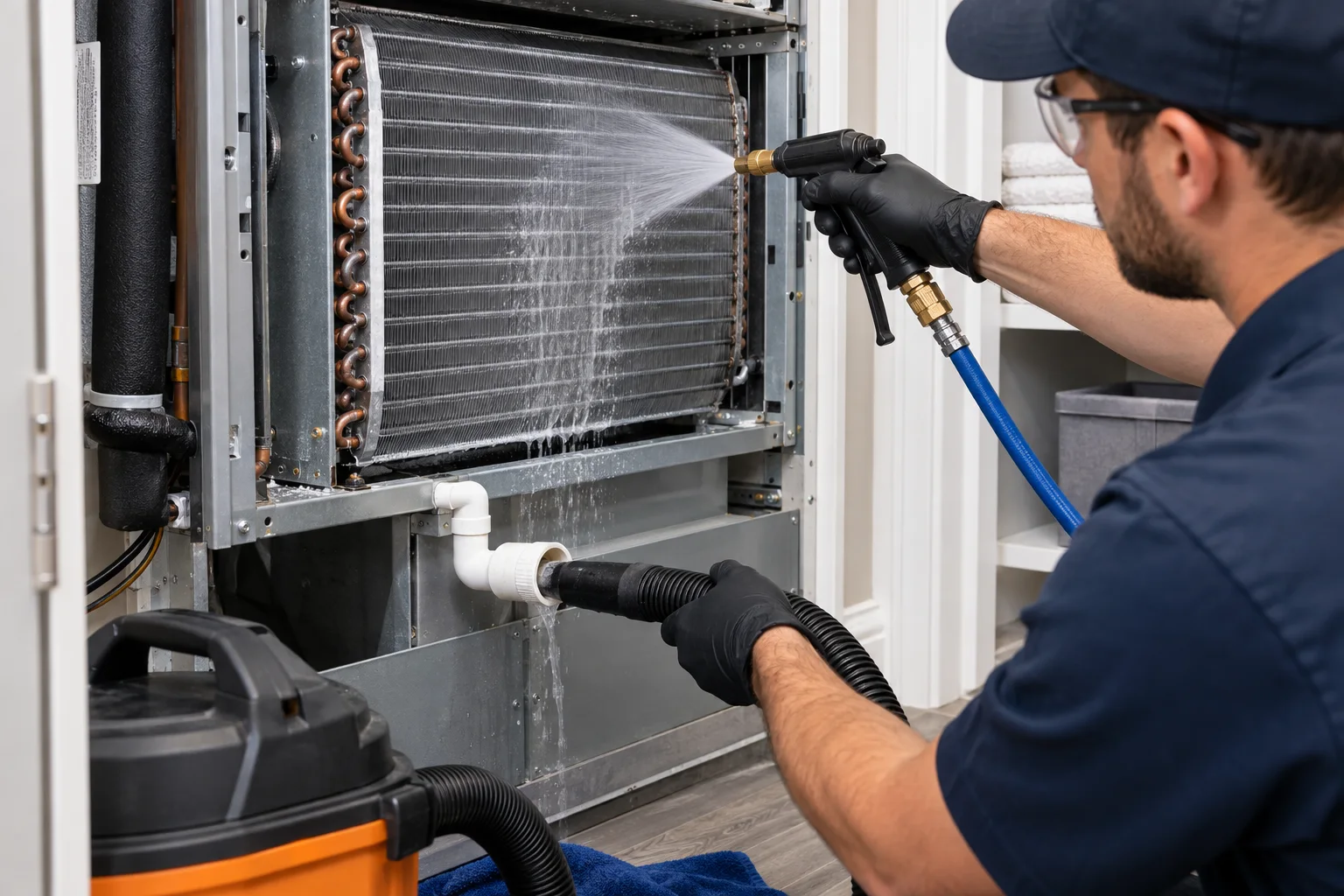
- Coil and airflow condition: frost behavior, airflow restriction, and buildup on indoor and outdoor coils. On homes near the coast, salt residue on the outdoor coil is worth inspecting because buildup can reduce heat transfer and raise operating pressure.
- Refrigerant work: when refrigerant work is performed, EPA-certified refrigerant handling practices apply.
A valve or control repair may not restore comfort if airflow is restricted or the ductwork leaks. A complete evaluation should connect equipment performance to what the home is actually experiencing.
Repair or replace: where the decision changes
A single failed component, such as a solenoid or control board, is evaluated differently from a system showing repeated valve, compressor, or refrigerant problems. Before choosing, compare the repair quote with the system’s age, repair history, parts availability, operating cost, and how well it heats and cools the home. Ask the technician which findings support each option and what the risks are if the repair is delayed.
Warranty-safe or warranty-aware repair language may apply when manufacturer coverage remains active. Keep the original warranty paperwork, installation date, and prior service records available before work is approved, so coverage can be checked against the findings.
What to gather before the visit
- Indoor and outdoor model and serial numbers, from the equipment labels.
- Installation date and any prior repair invoices.
- Thermostat make, model, current mode, and setpoint.
- A short timeline of the cooling-mode behavior, including whether it follows defrost periods or a power interruption.
- Notes on frost, steam, water, odors, or breaker trips.
- Warranty documents and any service agreement.
Same-day dispatch may be available when a technician is available, so describe the symptom and your timeline clearly when you call. Ask for the findings, options, and scope in writing so you can make an informed decision.
Common questions about reverse-cycle service
How long does a valve or control evaluation take? The visit length depends on equipment access, the condition found, and whether parts must be obtained. The technician can give an estimate after the initial check.
Is a defrost cycle the same as a failure? No. A brief defrost cycle with steam from the outdoor unit is normal on cold, humid mornings. Extended cold air or no defrost activity on the outdoor coil warrants an evaluation.
Why does my heat pump run for long periods? Heat pumps can run for long stretches in cold weather while working toward the setpoint. Continuous running without the home reaching the setpoint, or running in cooling mode when heat is requested, points to a control, valve, or refrigerant issue that should be checked.
Is emergency or auxiliary heat safe to use? Emergency heat typically uses electric resistance heat, which can warm the home while the heat pump is out of service but usually costs more to run. Use it only as a short-term measure and follow your thermostat instructions.
Does the Mitsubishi Electric brand identify the repair? No. The model, measured operating conditions, and technician findings determine the cause and the compatible parts.
Next step: If the system is still stuck in cooling mode after the checks above, request a Mitsubishi Electric reverse-cycle air conditioning or heat-pump evaluation in Punta Gorda, and ask for the findings, options, and scope in writing.