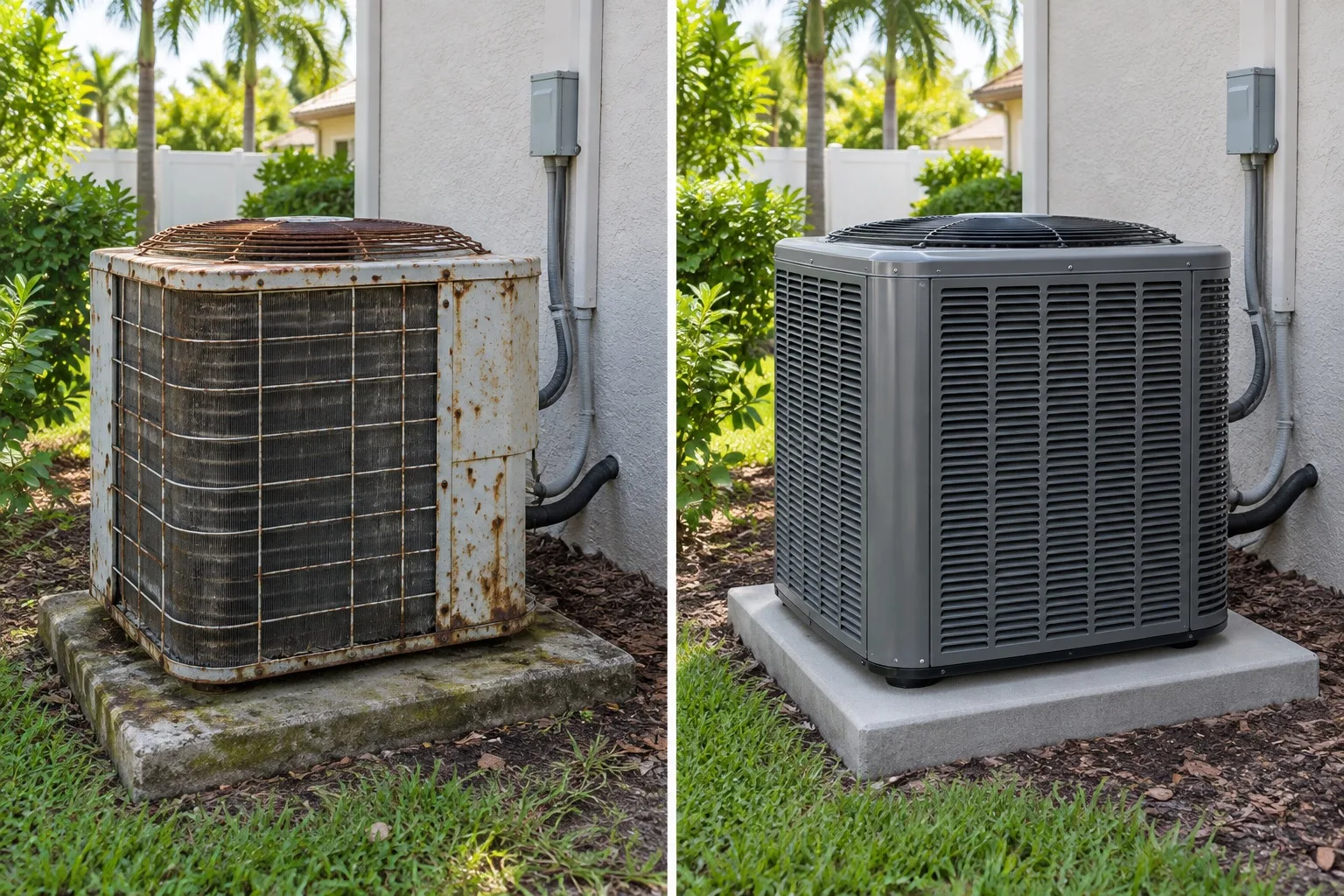
Payne Electric Heater Repair in Safety Harbor
A burning odor when the heat comes on can be unsettling, but the smell alone does not identify a failed part or show whether the heater is unsafe. Dust warming on equipment after a period without heating is one possible cause; an electrical or airflow problem is another. If an odor persists, returns, or smells sharply like burning plastic or wiring, stop using the system and arrange an inspection.
Payne systems vary by model and setup. An electric furnace or air handler may use resistance heat, while a heat pump system may also have electric auxiliary heat. A technician should identify which equipment and heating stage are operating before recommending a repair.
What to do if you notice a burning smell
- If you see smoke or flames, or the smell is strong and worsening, leave the area and contact emergency services. Do not approach or open the equipment.
- If there is no immediate emergency but an electrical-burning odor continues, turn the system off at the thermostat. If the correct breaker is clearly identified and it is safe to reach, switch it off; do not touch a hot, wet, damaged, or sparking panel.
- Do not repeatedly reset a tripped breaker. A breaker that trips again needs evaluation, not repeated attempts to restore power.
- Once the equipment is off and safe to approach, you can check whether a return-air grille is blocked and whether the filter is visibly dirty. Replace a filter only with the correct size and type, following the equipment instructions.
Do not remove access panels, handle heater wiring, test electrical parts, or reach into the unit. Those tasks involve energized circuits and should be left to a qualified technician. A thermostat setting, dirty filter, or tripped breaker may be useful information to report, but none by itself establishes the cause of an odor.
What a technician may inspect
After confirming the Payne model and the type of heat in use, a technician can inspect the system and test it using appropriate electrical safety procedures. Depending on the symptoms and equipment, the inspection may include resistance heating elements, relays or sequencers that control heating stages, wiring connections, blower operation, airflow, and the condition of the circuit and breaker. These are possible inspection points, not a diagnosis based on the smell.
The technician can also check whether a filter or blocked airflow is contributing to overheating, and whether the thermostat is calling for the intended heating mode. Electrical measurements, opening the equipment, and deciding whether a component needs repair or replacement are technician-only work. The findings should guide the recommendation; a burning odor alone should not.
On a Payne heat pump system, electric auxiliary heat and the refrigerant circuit are separate parts of the overall heating system. If an inspection finds that refrigerant work is needed, refrigerant handling should be performed by an EPA-qualified technician. A suspected electrical-heater problem does not, by itself, mean the refrigerant circuit needs service.
Repair, replacement, and warranty considerations
Repair may be appropriate when inspection identifies a serviceable component and the system can be returned to safe operation. Replacement may be considered if testing finds extensive damage, repeated problems, or other conditions that make repair unsuitable. The technician should explain the observed condition, the proposed work, and any relevant limitations before work proceeds; no single odor determines the answer.
Where suitable and available, genuine Payne parts can be used for repairs. Service should be warranty-aware, with the specific warranty terms checked for the equipment and repair in question. A part choice or service visit does not guarantee manufacturer coverage; keep applicable service records and ask what documentation is provided.
Payne equipment and model differences
Payne product descriptions may refer to features such as high-efficiency fan motors or corrosion-resistant plating, but features depend on the model and component. Do not assume that a particular electric heater has either feature from the brand name alone. The unit’s model information and product documentation are the appropriate references.
If you can safely read the equipment label without removing a panel, note the model number for the service request. Also note when the odor occurs, whether the system recently started heating, whether airflow changed, and whether a breaker tripped. These observations can help focus the inspection without requiring you to diagnose or handle the equipment.
Service scheduling in Safety Harbor
Payne electric heater repair service is available in Safety Harbor. 24/7 availability includes nights and weekends. Qualified same-day dispatch may be available; otherwise, service is scheduled for the next available appointment. There is no extra charge for nights or weekends.
When requesting service, describe the odor, when it began, and any changes in heating or airflow. Mention smoke, a breaker trip, or a system that will not turn on. If there is smoke, active sparking, or another immediate hazard, do not wait for a routine service visit.
Questions about Payne electric heater repair
Does a burning smell mean an element has failed?
No. Dust, restricted airflow, wiring, a control component, or another issue may be involved, and an odor cannot confirm which one. Turn off the system if the electrical-burning smell persists or is strong, and have a technician inspect it.
Can I reset the breaker?
If a breaker trips, do not keep resetting it. Report the trip when requesting service. A technician can assess the equipment and circuit to determine why it occurred.
Can I keep using the heater if the smell fades?
A brief odor after a long period without heating can have a different cause from a persistent or recurring electrical-burning smell. If the odor is strong, returns, or comes with smoke, unusual noise, reduced airflow, or a breaker trip, stop using the system and arrange an inspection.
What should I do between service visits?
Follow the equipment instructions for filter checks and replacement, keep return and supply grilles unobstructed, and use the thermostat normally. Do not open the heater, work on wiring, or inspect the electrical panel internally. Contact a qualified technician if the system develops a recurring odor or other concerning change.