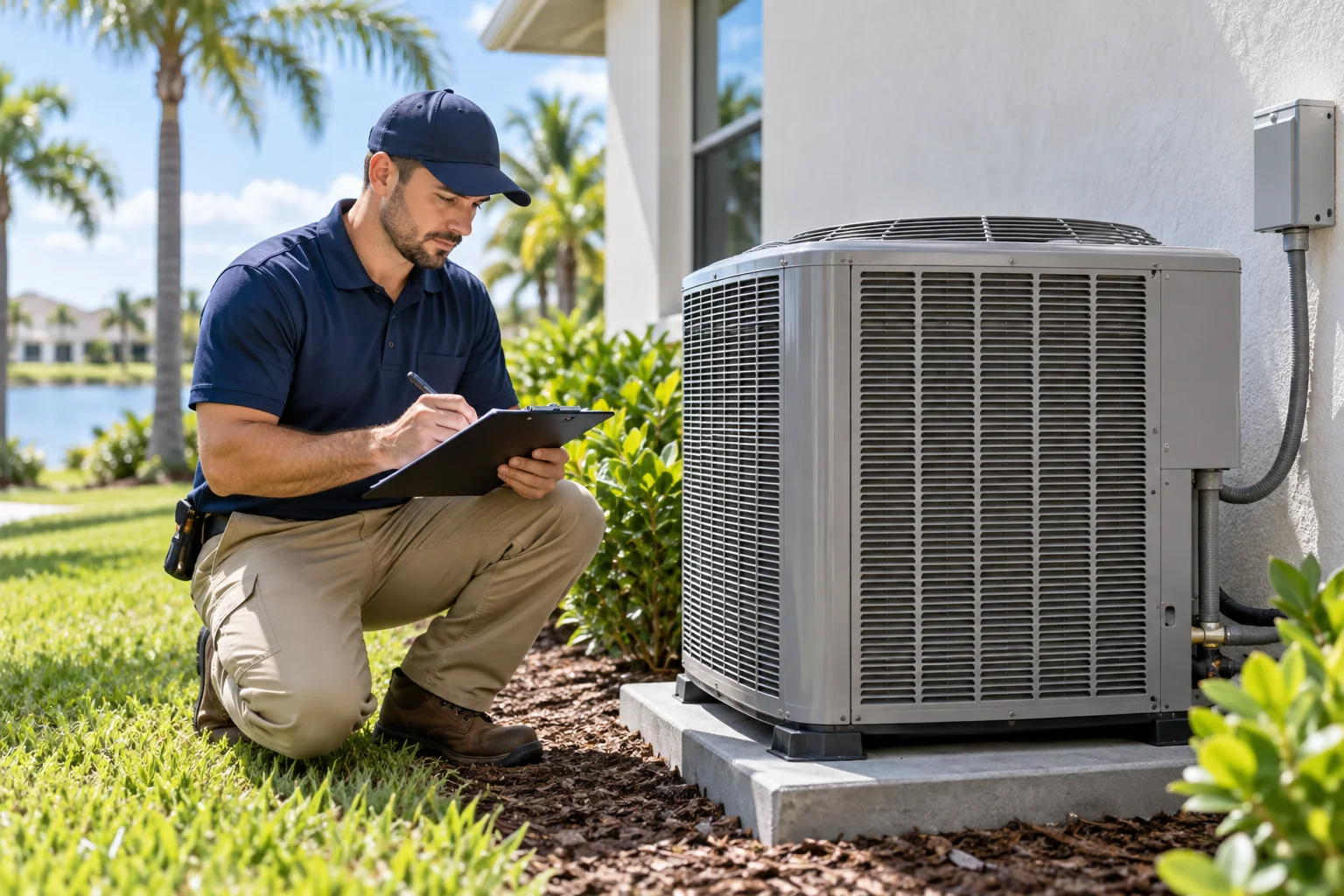
Choosing Your Payne Heat Pump Installation in Brandon
A heat pump is the hardest-working appliance you’ll buy — it heats and cools your Brandon home year-round, and the installation determines how well it does both for the next 15 years. The equipment matters, but the installation matters more: the best heat pump installed poorly performs worse than a mid-range unit installed right. This buyer’s guide covers Payne heat pump installation in Brandon: how to choose the equipment, what proper installation includes, and how to choose the installer.
Why a Heat Pump in Brandon
Brandon’s climate is heat pump country: long cooling seasons where the heat pump runs as a high-efficiency air conditioner, and mild winters where it heats at a fraction of the cost of electric resistance or gas. A modern heat pump moves heat rather than making it — delivering several units of warmth for each unit of electricity in mild weather, with electric backup heat covering the coldest mornings. The reversing valve at the heart of the system switches it between cooling and heating modes; when you understand that one component, you understand the whole machine. For most Brandon homes, the heat pump is the single most cost-effective comfort investment available.
Sizing: The Decision That Determines Everything
An oversized heat pump short-cycles — starting and stopping constantly, never dehumidifying properly, wearing itself out early. An undersized one runs constantly and can’t keep up on the hottest or coldest days. Correct sizing comes from a Manual J load calculation: the installer measures your home’s actual heating and cooling loads accounting for square footage, insulation, windows, orientation, and air leakage — not from the size of the old unit, not from square-footage rules of thumb. Any installer who quotes equipment size without a load calculation is guessing with your money. Ask for the calculation; it’s the foundation everything else stands on.
Efficiency Ratings: Reading SEER2 and HSPF2
Heat pumps carry two efficiency ratings: SEER2 for cooling, HSPF2 for heating. Higher numbers mean lower operating costs — but the payback math depends on your usage, your rates, and how long you’ll own the home. The right question isn’t “what’s the highest rating available” but “which rating pays for itself in my situation.” A good installer runs that math with you instead of defaulting to the premium unit. Note that real-world efficiency depends heavily on installation quality: correct refrigerant charge, proper airflow, and sealed ductwork matter as much as the rating on the box — a high-SEER2 unit with a bad charge performs like a cheap one.
What Proper Installation Includes
- Load calculation. Manual J sizing — the non-negotiable foundation.
- Ductwork evaluation. The existing ducts are inspected, tested, and sealed or modified as needed — new equipment on bad ducts is money wasted.
- Correct placement. The outdoor unit sited for airflow, service access, drainage, and noise — not just wherever it’s easiest to set.
- Refrigerant precision. Lines evacuated properly, charge weighed in to the specification — verified, not eyeballed. EPA-certified handling throughout.
- Electrical and controls. Correct circuit sizing, thermostat properly configured for heat pump operation (including auxiliary heat lockout settings that save real money).
- Commissioning. The system started up, tested in both modes, airflow verified, refrigerant charge confirmed, and the reversing valve operation checked — with the readings documented.
Choosing the Installer
The installer matters more than the brand on the box. Look for: licensing and insurance verified; load calculations performed as standard practice (not as an upsell); written scope including the ductwork plan and commissioning checklist; genuine Payne equipment and parts; warranty terms explained in writing (equipment and labor separately); and references from heat pump installations specifically — not just AC changeouts. The cheapest bid that skips the load calculation and the ductwork evaluation isn’t cheaper; it’s just less complete, and you’ll pay the difference in energy bills for 15 years.
Timing Your Installation
The best time to install is before you need it: spring and fall offer scheduling flexibility, comfortable weather during the changeout, and time to compare bids without pressure. Emergency summer or mid-winter replacements cost more and decide faster — the same equipment, installed under worse conditions, for more money. If your current system is aging, the fall evaluation (while it still runs) is how you move the decision to your schedule instead of the equipment’s.
Payne Equipment Notes
Payne heat pumps are engineered for dependable, efficient year-round comfort — including high-efficiency fan motors and corrosion-resistant plating on applicable models, with SEER2 high-efficiency design across the line — offering strong value in the segment: reliable performance without the premium-brand price. We install Payne equipment with genuine Payne components, our technicians are EPA certified for refrigerant handling, and installations are performed to protect your manufacturer warranty, since improper installation can void it.
Questions About Heat Pump Installation in Brandon
How do I know what size heat pump I need?
A Manual J load calculation performed by the installer — accounting for your home’s size, insulation, windows, orientation, and leakage. Never accept square-footage rules of thumb or “same size as the old one” as sizing.
What’s more important: the brand or the installer?
The installer. Correct sizing, ductwork, refrigerant charge, and commissioning determine real-world performance more than the badge on the unit. Choose the installer first, the equipment second.
How long does installation take?
A standard changeout typically takes one to two days including commissioning and testing. Ductwork modifications, electrical upgrades, or difficult access extend the timeline — all of which should be in the written scope upfront.
Will a heat pump handle Brandon winters?
Yes — modern heat pumps heat efficiently in mild winter weather, with electric backup covering the coldest mornings. The reversing valve switches modes automatically; the thermostat manages the backup heat staging.
What should the quote include?
Equipment model numbers, the load calculation summary, ductwork scope, electrical scope, thermostat, commissioning checklist, warranty terms (equipment and labor), and total price. Vague quotes produce vague installations.
For Payne heat pump installation in Brandon — sized right, installed right, commissioned right — scheduling is available with same-day dispatch and 24/7 emergency service. The installation is the product.