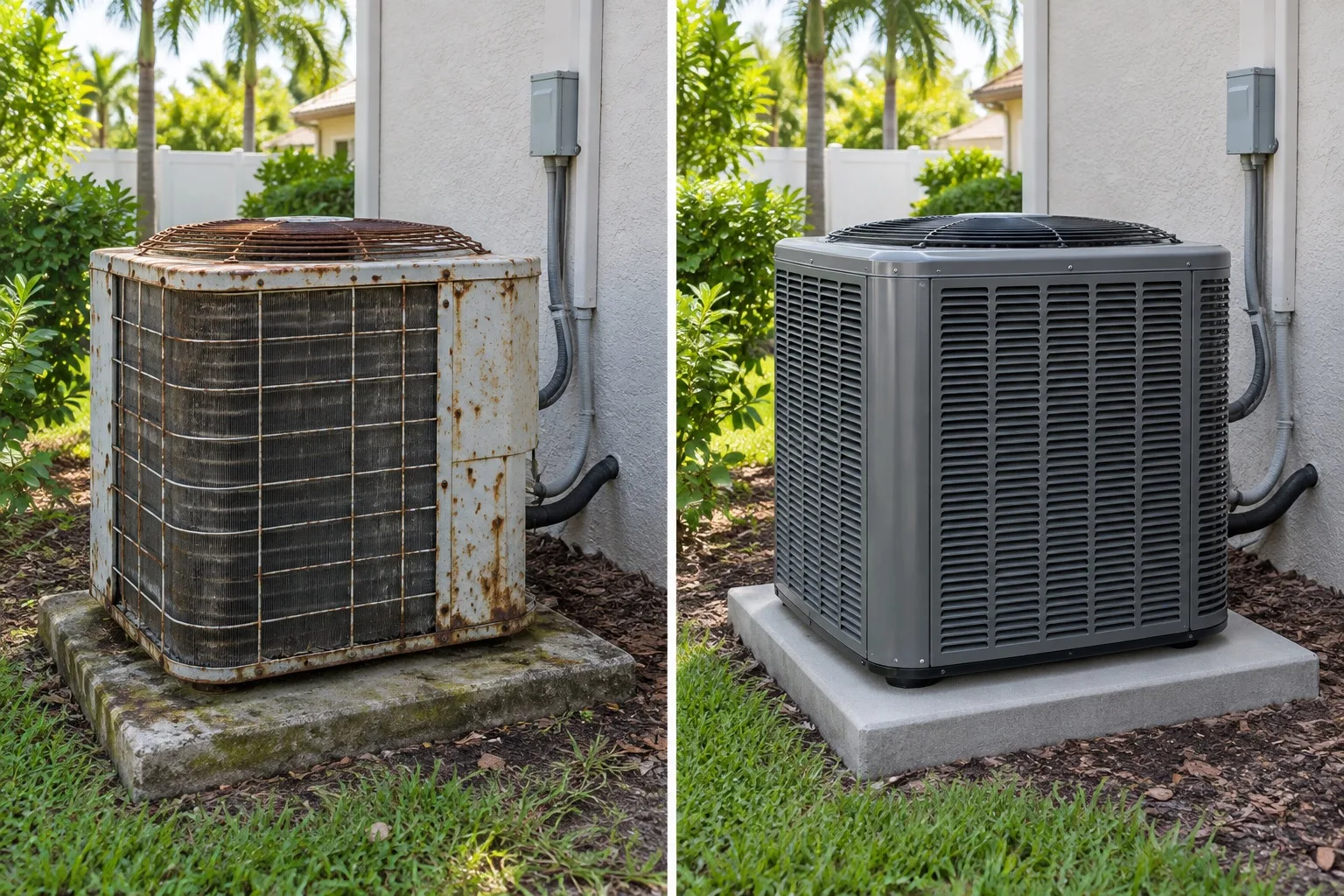
Rheem heat pump repair in Palm Harbor: start with the symptom
A heat pump that stops heating, blows air that feels cool, runs for long periods, or shuts off unexpectedly needs a diagnosis—not an assumption about which part has failed. Several controls, airflow conditions, electrical components, refrigerant-circuit issues, or operating conditions can produce similar symptoms. The right repair depends on inspection and measurements at the equipment.
Velocity Air Conditioning provides heat pump repair service in Palm Harbor. When arranging service, describe what the system is doing, when it began, and whether the problem occurs in heating, cooling, or both. If you know the Rheem model, have that information available; the brand alone does not establish the cause or determine which repair is appropriate.
Common heat pump problems and what they may mean
Air feels cool in heating mode. Heat pumps do not always deliver air that feels as hot as air from some other heating systems. However, a noticeable change in comfort, persistent cool airflow, or a home that cannot reach the thermostat setting warrants evaluation. The thermostat mode, outdoor conditions, airflow, controls, and equipment operation can all matter.
The system runs continuously or cycles frequently. A large indoor-outdoor temperature difference, a thermostat setting change, restricted airflow, or a system fault can affect run time. Frequent starts and stops can also have several explanations. Note how long the system runs and whether it reaches the set temperature, rather than treating run time alone as proof of a failed component.
The outdoor unit is frosted or the system changes sound. Some frost can occur during heating, and a heat pump may periodically change operation to manage outdoor-coil frost. Heavy or persistent ice, repeated interruptions, unusual noise, or a loss of heating should be checked. Do not chip ice away, pour hot water on the unit, or reach through the grille.
Water appears near the indoor equipment. Water may relate to drainage, condensation, or another condition, and its location and amount matter. If water is actively leaking near electrical equipment, turn the system off if it is safe to do so and arrange service. Do not open the cabinet to investigate.
Safe observations before the technician arrives
Homeowners can collect useful information without opening equipment or handling wiring. If there is no immediate safety concern, check that the thermostat is set to the desired mode and temperature, and note any displayed message or error code. Record when the issue occurs and whether the indoor blower and outdoor unit appear to run. Observations are helpful, but they do not confirm a particular failure.
- Check whether supply and return vents are open and unobstructed.
- If the air filter is accessible, inspect it and replace it only with the correct type and size, following the equipment instructions.
- Look from a safe distance for visible debris around the outdoor unit. Do not remove panels or reach inside.
- Note unusual smells, sounds, visible ice, water, breaker activity, and changes in comfort.
Do not open electrical panels or equipment cabinets, test live components, handle refrigerant, bypass a safety control, or repeatedly reset a tripping breaker. Turn the system off and seek qualified service if you notice a burning smell, repeated breaker trips, an active leak near electrical equipment, or another immediate safety concern.
What a heat pump repair visit should establish
A technician should first confirm the reported symptom and identify the equipment and operating mode. Depending on what is found, diagnosis may include checking thermostat calls and controls, airflow and filter condition, indoor and outdoor operation, electrical connections and components, drainage, and the refrigerant circuit. Not every check applies to every complaint; the measurements and inspection should guide the next step.
Refrigerant work is technician-only. Refrigerant should not be released or handled by a homeowner. If refrigerant-circuit work is indicated, it should be performed by an EPA-qualified technician using appropriate procedures. A refrigerant concern should be supported by inspection and testing rather than inferred from cool air, ice, or a long run time alone.
Before approving work, ask the technician to explain what was observed, which test or measurement supports the recommendation, and what alternatives remain if the cause is uncertain. The proposed repair should identify the work and parts involved, any relevant limitations, and the testing that will be performed afterward. If the findings do not explain the symptom, ask what additional diagnostic step is needed.
Repair options, parts, and warranty questions
A repair recommendation should fit the confirmed condition and the equipment, rather than relying on a generic parts list. Ask whether a genuine Rheem part is appropriate and available for the proposed repair. Parts selection can depend on the model and the actual fault; a brand name by itself does not establish compatibility or prove a part has failed.
Before work begins, check whether the equipment or a component may be covered by an applicable warranty and ask how the proposed repair affects that coverage. Warranty terms and eligibility depend on the specific equipment and applicable documentation. Keep the written diagnosis, repair details, and any relevant equipment records.
Repair-versus-replacement decisions should follow diagnosis, not substitute for it. If replacement is raised, ask why repair is not suitable and compare the equipment condition, repair history, parts availability, comfort needs, and the full replacement scope. You can request the findings and options in writing before deciding.
Scheduling repair in Palm Harbor
Velocity Air Conditioning offers 24/7 availability, including nights and weekends, with no extra charge for nights or weekends. Ask about qualified same-day or next-available dispatch; timing depends on dispatch availability and the service need. When you call, provide the address in Palm Harbor, the thermostat mode, the main symptom, and any safety concern so the request can be routed appropriately.
If the system is still operating, explain whether it is maintaining a safe and comfortable indoor temperature. If it has stopped, is repeatedly shutting down, or shows a safety concern, say so when requesting service. Do not continue running equipment that presents an immediate hazard.
Questions homeowners ask
Does cool air in heating mode mean the heat pump needs a specific part?
No. The sensation of the air and the system’s operating sequence can have multiple explanations. A technician should check the thermostat call, airflow, equipment operation, and relevant controls before identifying a cause or recommending a part.
Should I keep running a heat pump that has ice on it?
Do not try to remove ice yourself. If ice is heavy or persistent, heating has declined, or the system is behaving unusually, turn it off if needed for safety and arrange an inspection. A technician can determine whether operation, defrost controls, airflow, or another condition needs attention.
What information should I have ready?
Share the model information if available, the mode in use, when the problem began, what you have observed, and any displayed code. You do not need to open the equipment to find this information. Ask for the diagnosis, proposed repair, parts, and post-repair checks to be explained before approving work.