The best heating tune-up is the one that happens before you need heat. This guide lays out a pre-season preparation timeline for your Rheem heating system in Port Charlotte — what to do in early fall, what the technician checks with winter in mind, which Rheem-specific features deserve attention, and how to beat the first-cold-night rush when every neglected system in town calls at once.
The pre-season timeline
Think of tune-up season in three phases. In early fall, schedule the professional visit. Appointment windows are wide, technicians are unhurried, and any parts that need ordering arrive before they matter. In late fall, handle the homeowner side: change filters, clear the area around indoor and outdoor equipment, and test-run the heat on a mild evening while a failure is still an inconvenience. On the first genuinely cold night, you simply confirm the system responds — because everything else was already handled weeks ago.
Most people invert this timeline. They wait until the system struggles, then compete for emergency slots with every other deferred tune-up in Port Charlotte. The preparation costs the same either way; only the stress level differs.
What the technician checks with winter in mind
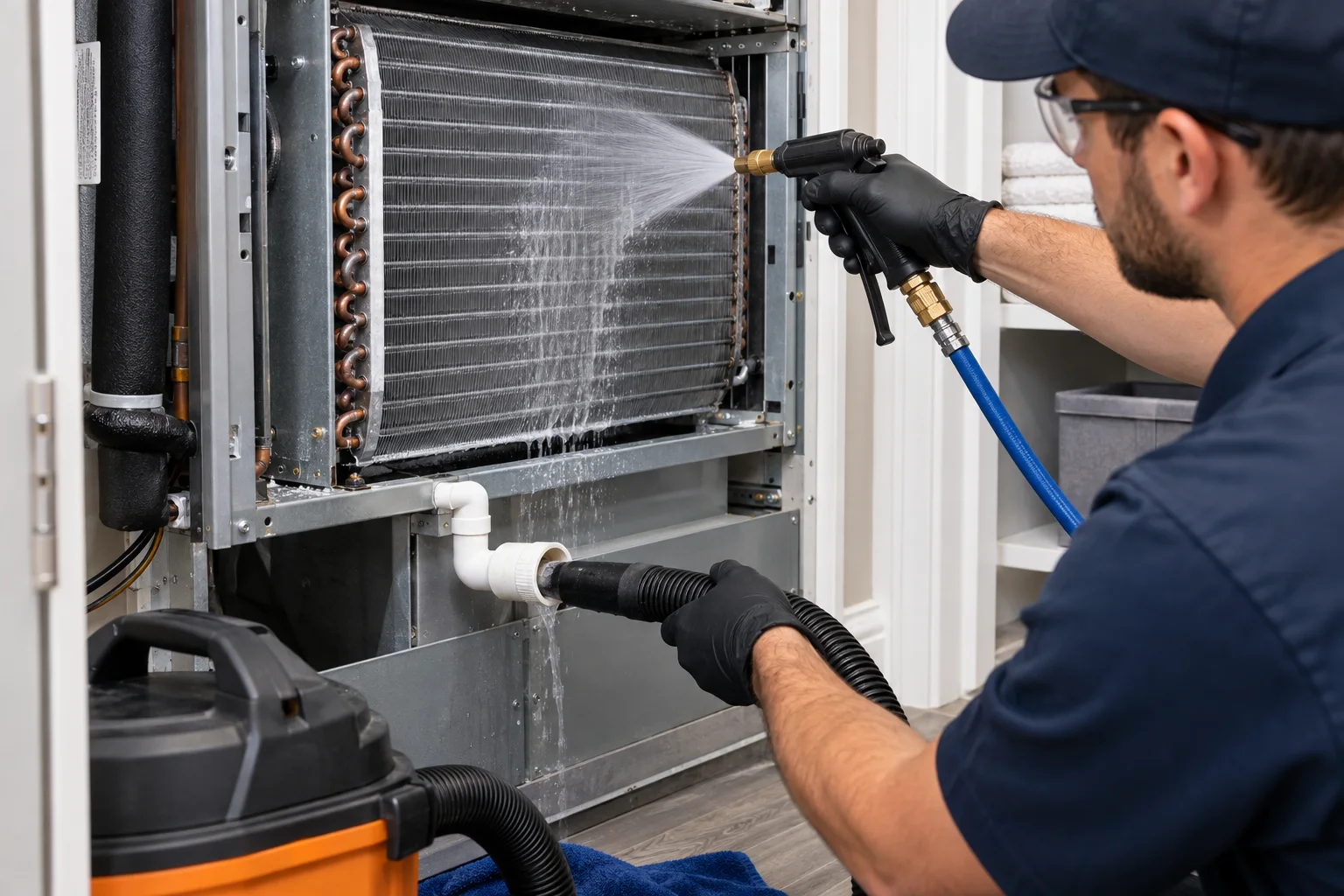
A pre-season tune-up weights the inspection toward heating-specific concerns. Electrical connections get tightened before months of heat cycling loosen them further. Controls and safety switches are verified while there is time to replace a failing part without urgency. The thermostat’s heat call is tested, airflow is confirmed through every supply path, coils are inspected, condensate drains are cleared, and operating measurements are taken as a baseline for the season.
The point of doing this in fall rather than January is simple: a worn contactor found in October is a scheduled part replacement. The same contactor found on a cold night in January is an emergency call.
Rheem-specific winter readiness
Rheem builds its heating equipment around durability features that a pre-season visit should verify. Scroll compressor efficiency depends on correct refrigerant charge and clean coils — both measurable during a tune-up. PlusOne® Ignition systems are designed for reliable starts, but ignition components still wear and deserve inspection before the season of daily cycling begins.
It also matters who performs the check. General contractors often do not have the proprietary Rheem diagnostic software that reads the system’s fault history and operating data, so a Rheem-familiar technician sees more in the same hour. Where the visit turns up parts needing replacement, genuine Rheem parts matter — aftermarket parts frequently fail to sync with variable-speed motors or the unit’s advanced control logic, and hiring uncertified workers can affect manufacturer warranty coverage.
What you can do before the visit
The homeowner’s pre-season list is short but useful. Replace the air filter if it is overdue — restricted airflow is the single most common efficiency thief. Make sure supply vents and return grilles are open and unblocked by furniture or rugs. Clear leaves and debris from around the outdoor unit. Then run the heat for twenty minutes on a mild evening and note what you observe: does every room warm evenly, are there new noises, does anything smell wrong in the first minutes of operation?
Write those observations down and hand them to the technician. A symptom noted in October is a clue; the same symptom discovered in January is a crisis.
Beating the rush in Port Charlotte
Heating companies in Port Charlotte see the same pattern every year: a quiet fall, then a flood of no-heat calls on the first cold stretch. Scheduling your Rheem tune-up in early fall puts you ahead of that wave — wider appointment choice, unhurried technicians, and no competition for parts. The visit takes about an hour. Same-day dispatch may be available when a technician is available, and service runs 24/7 with no extra charge for nights or weekends.
EPA-certified refrigerant handling applies whenever refrigerant work is performed during the visit, and any findings should come to you in writing: what was measured, what is out of specification, and what the options are.
Common questions about Rheem heating tune-ups
When is the best time to schedule a heating tune-up?
Early fall, before the heating season. You get the widest choice of appointment times, and any issues found can be resolved without urgency. Late fall still works; mid-winter means competing with emergency calls.
What makes a Rheem tune-up different?
Rheem’s Scroll compressor design, PlusOne® Ignition systems, and proprietary diagnostics reward brand familiarity. A technician with Rheem-specific diagnostic tools can read fault histories and operating data that generic checks miss.
Should I run the heat before the technician arrives?
Yes — a twenty-minute test run on a mild evening is useful. Note uneven heating, new noises, or unusual smells in the first minutes, and share those observations at the visit.
Will the tune-up itself fix anything?
A tune-up is inspection and light maintenance, not repair. It finds problems and documents them; fixing a failed component is a separate, quoted step. That separation is what keeps the visit honest.
Is there an extra charge for nights or weekends?
No — there is no extra charge for nights or weekends. If an evening or weekend slot fits your schedule, book it the same way as a weekday visit.
Next step: If you are in Port Charlotte, put the tune-up on the calendar in early fall — before the first cold night turns a routine visit into an urgent one.