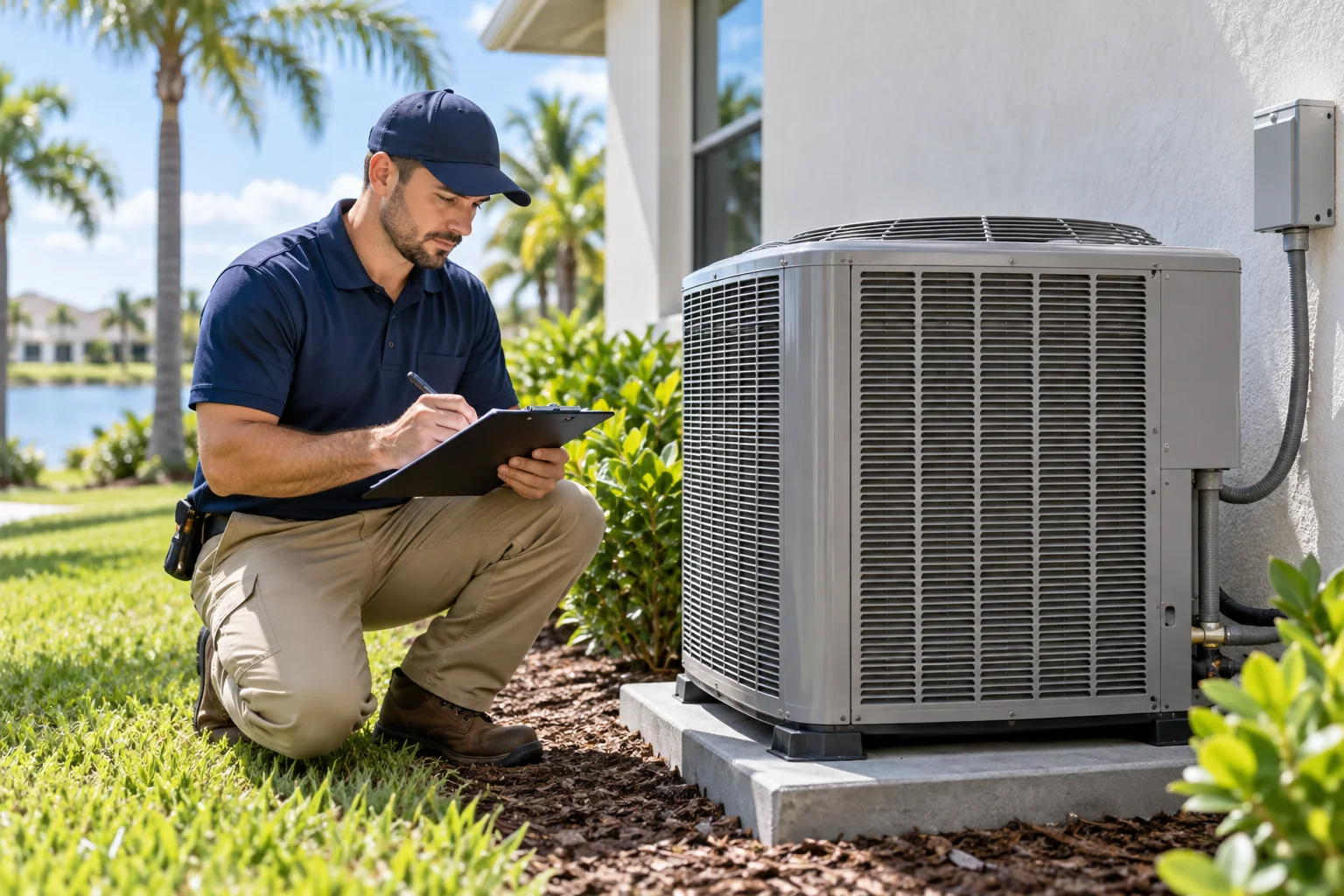
Just Bought a Home With a Ruud Furnace? Start Here in Brandon
You bought the house; you inherited the furnace. Somewhere between the closing documents and the first cold night, the Ruud gas furnace in your new Brandon home becomes your responsibility—and you may not know its age, service history, or current condition. This guide covers what to find out, what you can safely check, and how a professional maintenance visit can establish a useful baseline.
What to Find Out in the First Week
- The furnace’s age and model. The rating plate inside or on the cabinet identifies the model and serial number. Serial-number formats vary, so a technician or the manufacturer can help determine the manufacture date. Age is useful context, but it does not by itself establish the furnace’s condition or remaining service life.
- The service history. Ask the seller or their agent for maintenance records. A service sticker may provide a starting point, but missing records do not establish what work was or was not done. Share any available records with the technician.
- The warranty status. Review the warranty terms for the specific model and check whether registration or ownership-transfer steps apply. Requirements vary; do not assume a warranty is automatically transferred, shortened, or void.
- Carbon monoxide alarms. Locate alarms and follow the manufacturer’s instructions for testing and replacement. Check the date and any end-of-life indicator; replace alarms as directed. Alarms are an important safety measure, but they do not replace furnace maintenance.
- The filter. Find the filter, note its size and direction, and check it without opening the furnace cabinet. Replace it if needed, following the equipment and filter instructions. If you are unsure which filter to use or how to access it safely, ask a technician.
The Baseline Visit: Your First Maintenance Call
A maintenance visit after move-in can give you a clearer picture of an unfamiliar furnace. The technician should explain the visit’s scope and findings. Depending on the equipment and service performed, a qualified HVAC technician may inspect the heat exchanger and venting, check combustion air and safety controls, clean or adjust burners when appropriate, verify gas pressure, measure temperature rise, and use suitable instruments to check for carbon monoxide. These are technician tasks; homeowners should not open the furnace cabinet, adjust gas components, or attempt combustion or safety-control tests.
Ask for a written summary of the furnace’s observed condition, any recommended work, and which items need prompt attention. A technician can discuss the equipment’s age and condition, but remaining service life cannot be predicted precisely from a single visit.
Reading the Technician’s Report
The report may describe the furnace as operating as expected, aging with items to monitor, or needing repair or further evaluation. Ask what each finding means, what evidence supports it, and how urgently it needs attention. If a report identifies a possible safety concern—such as a venting problem or a suspected heat-exchanger defect—follow the technician’s operating guidance and ask what evaluation is needed. A symptom or single observation alone does not prove that a particular part has failed.
What the Seller’s Inspection May Not Cover
A home inspection and an HVAC maintenance visit have different scopes, and the services included in a home inspection can vary. A home inspection may not include detailed furnace cleaning, combustion testing, gas-pressure checks, or every safety-control test. The baseline visit can provide a more focused assessment of the heating equipment. If the home inspector noted a furnace concern—such as recommended service, corrosion, or age—share the report with the HVAC technician.
Setting Up for the Long Term
Ask the technician how often your specific furnace should receive maintenance and follow the manufacturer’s instructions and warranty terms. Check the filter on the schedule appropriate for its type and household conditions, and test carbon monoxide alarms as directed by their manufacturer. Keep maintenance records with the house documents. Note unusual smells, sounds, uneven heating, or changes in energy use and share them with a technician; these observations can help with evaluation, but none by itself proves a particular component has failed.
If a carbon monoxide alarm sounds, or anyone has symptoms that could be related to carbon monoxide exposure, get everyone outside to fresh air and call 911 or the local emergency service from outside. Do not re-enter until emergency responders say it is safe. Symptoms do not identify the source or prove a furnace fault. If you smell gas, leave the home without operating switches or creating a flame, then call 911 or the gas utility from a safe location.
Ruud Equipment Notes
Ruud equipment features vary by model. EcoNet-enabled features and composite base pan durability apply only where specified for the particular equipment; check the model documentation rather than assuming these features are present on every furnace. We service Ruud equipment with genuine Ruud parts when replacement parts are needed. Where work involves a refrigerant circuit, refrigerant handling is performed by EPA-qualified personnel. Maintenance can help you follow applicable manufacturer requirements, but warranty coverage depends on the terms for your specific equipment and circumstances.
Questions About Gas Furnace Maintenance in Brandon
Should I schedule maintenance soon after buying the home?
A maintenance visit is a practical way to learn about an unfamiliar furnace, especially before the heating season. It can document observed condition and identify recommended follow-up, but it cannot guarantee future performance or determine an exact remaining service life.
How do I find out how old the furnace is?
Check the rating plate for the serial number. Because serial-number formats vary, the manufacturer or an HVAC technician can help interpret it. The date is useful context, not a substitute for evaluating the equipment’s condition.
Does the warranty transfer to me as the new owner?
It depends on the warranty terms for the model. Review the documentation or contact the manufacturer to confirm whether registration or ownership-transfer steps apply and whether any deadlines remain.
What if the previous owner did not maintain it?
Missing records do not prove that maintenance was skipped or establish the furnace’s condition. Share what you know with the technician and request an assessment. The technician can explain any needed service and help you plan future maintenance.
What should I check before the first cold night?
Make sure carbon monoxide alarms are present and working according to their instructions, check the filter safely, and confirm the thermostat is set as intended. Arrange professional maintenance if the furnace’s condition or service history is unknown. Do not open the cabinet or attempt gas, venting, or combustion adjustments.
For Ruud gas furnace maintenance in Brandon, qualified same-day or next-available dispatch may be available, subject to scheduling. Emergency service is available 24/7, including nights and weekends, with no extra charge for nights or weekends.