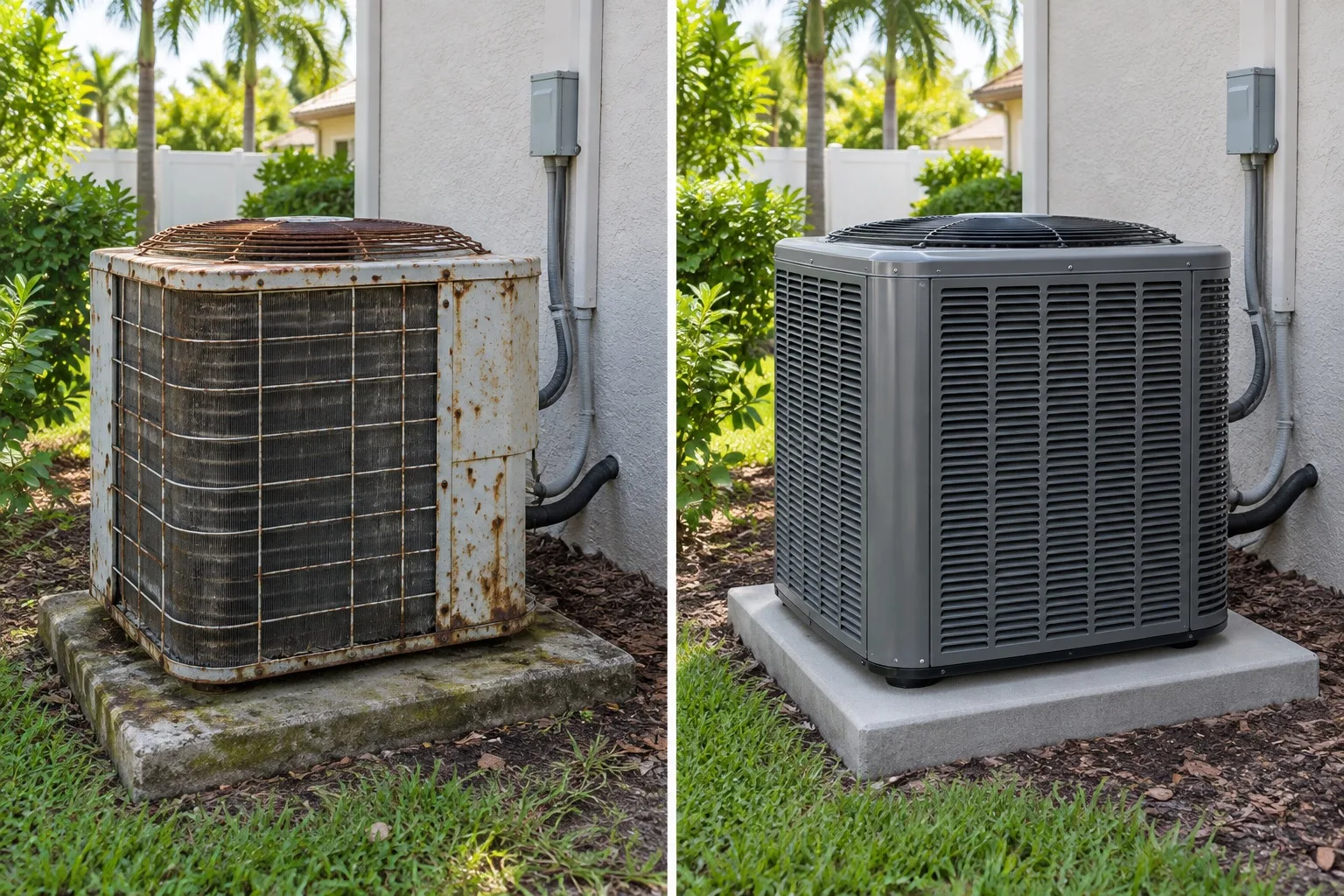
Ruud Heating System Tune-Up in Pinellas Park
A heating tune-up is a maintenance visit to check how your Ruud system operates, identify issues that merit attention, and complete appropriate routine service. It is not a guarantee against breakdowns, and a symptom by itself does not establish that a particular part has failed. The work should reflect the equipment actually installed: Ruud heating systems vary, and a heat pump is checked differently from a gas furnace.
In Pinellas Park, a heating system may sit idle during warm weather and then be needed when temperatures drop. Scheduling maintenance before you rely on heating gives a technician an opportunity to check operation and explain any concerns. If you are unsure which type of system you have, the model information on the equipment can help the service team prepare; do not remove panels to find it.
What a technician checks
The technician should identify the system type and review its operation rather than assume that every Ruud unit has the same components. For a heat pump, a tune-up may include checking thermostat settings, airflow, accessible electrical connections, the indoor and outdoor units, condensate drainage, and operation in heating mode. The exact inspection and maintenance depend on the model, its condition, and access to the equipment.
Where the system design permits, the technician can observe a heating cycle and check whether the unit starts, runs, and responds to controls as expected. A heat pump may also use a defrost cycle in certain conditions. The technician can explain what was observed and whether any further testing is appropriate. If the home has a gas furnace rather than a heat pump, its combustion-related components and safety checks are different; the technician should base the work on that equipment, not apply a heat-pump checklist.
Routine service can include cleaning or other maintenance when the equipment and its condition call for it. A tune-up does not mean every component will be disassembled, cleaned, or replaced. If inspection suggests a repair, ask what evidence supports the recommendation, what work is proposed, and whether it is separate from the maintenance visit.
What a tune-up can—and cannot—tell you
Maintenance can reveal an operating concern or a condition that deserves further investigation. It cannot promise that a system will not need repair later. For example, weak airflow, unusual noises, or a system that does not keep the home comfortable can have several possible causes. A technician needs to inspect and test the equipment before identifying the cause; those symptoms alone do not prove a failed motor, control, refrigerant component, or other part.
If a refrigerant issue is suspected, the technician must assess the system before recommending work. Any refrigerant handling is performed by EPA-qualified personnel. A tune-up should not be presented as refrigerant service unless inspection shows that such work is needed.
If a repair is recommended, ask for an explanation of the finding and the available next steps. When replacement parts are needed and appropriate, ask about genuine Ruud parts. Warranty terms vary by equipment and circumstances, so check the applicable manufacturer documents. The service provider can document work and discuss warranty-aware service, but a tune-up alone does not establish that coverage is preserved or that a particular repair is covered.
Safe checks between visits
- Check the thermostat mode and setpoint. If the system does not respond, note what happens rather than repeatedly changing settings.
- Check the air filter and replace it according to the equipment instructions and filter guidance. A dirty filter can restrict airflow, but it does not by itself diagnose another system problem.
- Look for visible water near the indoor equipment and listen for a change in normal operating sound. Keep a clear path around equipment and do not remove access panels to investigate.
- For an outdoor unit, look from a safe distance for obvious leaves or other blockage around the cabinet. Do not reach inside, bend coil fins, or use tools on the equipment.
Leave wiring, electrical components, refrigerant lines, internal cleaning, and diagnostic testing to a technician. Do not open a gas valve or electrical panel as part of a homeowner check. If you notice smoke or a burning smell, stop using the system and request professional guidance rather than trying to identify the source inside the unit.
Ruud equipment and model-specific details
Some Ruud equipment descriptions refer to EcoNet-enabled reliability and composite base pan durability. These are brand descriptors, not a statement that every Ruud heating system in Pinellas Park has those features. The applicable model should be confirmed before attributing either feature to a particular system.
Control options, service procedures, and required maintenance vary by model. If you have the model number available without opening the equipment, share it when requesting service. Keep any service records with your equipment documents, and consult the manufacturer’s instructions for maintenance intervals and warranty terms.
Scheduling a tune-up in Pinellas Park
For a planned tune-up, ask what the visit includes for your particular system and whether any recommended repair would be quoted separately. If the system is not heating, mention when the issue began, what the thermostat displays, and whether you noticed a change in sound, airflow, or water around the unit. Those observations help the technician plan an inspection; they do not identify a failed part on their own.
Qualified 24/7 service availability includes nights and weekends, with no extra charge for nights or weekends. Qualified same-day or next-available dispatch may be available, depending on scheduling and service needs. These options are for service dispatch and do not guarantee a particular arrival time or that a maintenance appointment will be available immediately.
How often should I schedule maintenance?
Follow the manufacturer’s guidance for your model and discuss an appropriate maintenance interval with the service provider. Scheduling before the period when you expect to use heating can make it easier to address questions before the system is needed. Filter checks between visits remain the homeowner’s routine task, subject to the equipment instructions.
Does a tune-up mean my system is ready for the whole season?
A technician can report the system’s observed condition and any recommended follow-up at the time of the visit. No inspection can guarantee trouble-free operation for an entire season. Ask for the findings in clear terms and keep the service documentation for future reference.
Can I book a tune-up if my system is already having trouble?
Yes, but describe the problem when scheduling so the service team can determine the appropriate visit. A system that will not heat may need diagnostic service rather than maintenance alone. The technician can inspect the equipment and explain whether maintenance, repair, or further testing is appropriate.