Trane Gas Furnace Maintenance in Pinellas Park
Regular maintenance gives a technician an opportunity to inspect a Trane gas furnace, clean serviceable components, check its operation, and identify concerns that may need further attention. It does not guarantee that a furnace will not fail, and it cannot by itself guarantee protection from carbon monoxide (CO). A careful inspection and working CO alarms are separate parts of home safety.
In Pinellas Park, a furnace may run only occasionally compared with cooling equipment. If yours has been idle, arrange maintenance before you need heat rather than waiting for an operating problem. A visit can also help you understand the furnace’s condition and which next steps, if any, are appropriate.
What a maintenance visit can include
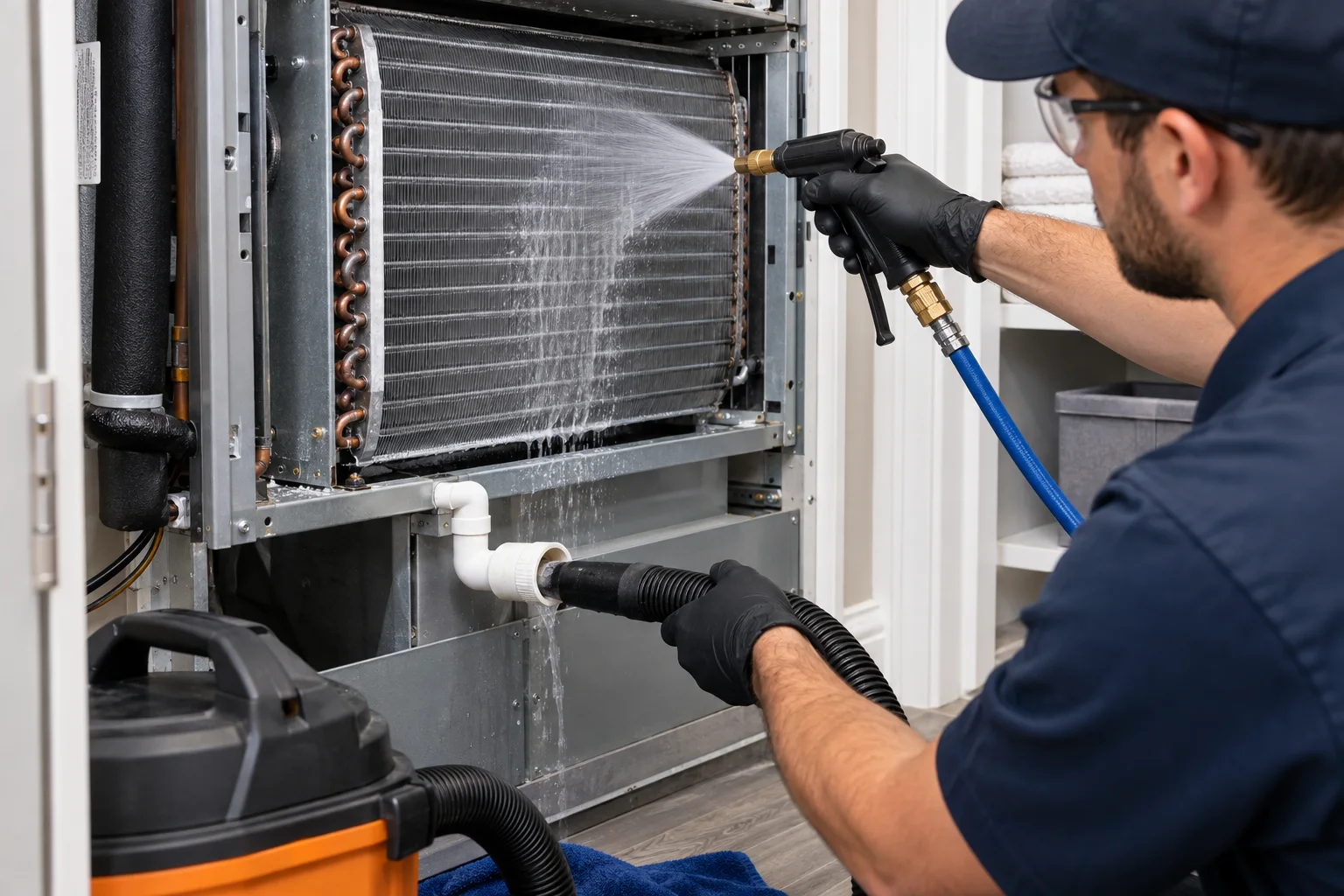
The exact work depends on the furnace model, its condition, and the manufacturer’s instructions. A technician may inspect the burner area, ignition and safety controls, accessible wiring, and venting; check operation; and replace or clean a filter if the type permits. For a condensing furnace, the technician may also inspect accessible condensate components. The technician can explain any limits to the inspection and recommend additional diagnostic work if an issue is found.
Maintenance is not the same as a repair. An unusual sound, repeated shutdown, visible damage, or measurement outside the manufacturer’s specifications may call for further testing. An inspection does not establish that a heat exchanger is cracked or that a particular component has failed unless appropriate diagnostic steps support that conclusion. Ask what was observed, what was tested, and whether a recommendation is for maintenance, diagnosis, or repair.
Items a technician should assess
- Burner and ignition operation: The technician can check how the furnace starts and runs, and clean or adjust components when appropriate for the model.
- Heat exchanger and venting: The technician can inspect accessible areas and use suitable diagnostic methods to assess concerns. A visual check alone may not settle every question about condition.
- Controls and safety devices: The technician can check operation according to the equipment’s service procedures.
- Filter and airflow: The technician can check the filter and discuss the correct type and replacement interval for your furnace and household.
- Findings and records: Ask for a clear account of work completed, observations, and any recommended follow-up.
Carbon monoxide safety: what to do
CO is odorless and cannot be identified by smell. A CO alarm is not a maintenance reminder, and a furnace inspection is not a substitute for properly installed and functioning alarms. Follow the alarm manufacturer’s instructions, including its guidance on placement, testing, and replacement. Do not ignore an alarm or assume that it is a false alarm because the furnace appears to be running normally.
If a CO alarm sounds, or anyone has possible CO exposure symptoms such as headache, dizziness, nausea, weakness, or confusion, get everyone outside to fresh air. Call 911 or the appropriate emergency service from outside and do not re-enter until authorities say it is safe. Do not attempt to find or fix the source yourself. If you smell gas, leave without operating switches or appliances and call 911 or the gas utility from a safe location.
A homeowner cannot determine from a symptom alone whether a heat exchanger, burner, vent, or other part is at fault. Report what happened and leave testing and furnace repairs to a qualified technician. Do not open the furnace cabinet to work on internal components.
Safe checks between visits
Homeowners can take a few limited steps without adjusting gas or furnace components:
- Check the thermostat setting and make sure the furnace has power if it is safe to do so.
- Check the filter and replace it if needed, following the furnace and filter instructions. Use the specified size and type; do not operate the system without a required filter.
- Keep supply and return grilles unobstructed. Do not insert objects into vents or remove furnace panels.
- Test CO alarms and maintain them as directed by their manufacturer.
- From a safe position, look for an obvious obstruction or damage around an accessible vent termination. Do not climb, dismantle venting, or try to clear a suspected blockage yourself.
Never adjust a gas valve, burner assembly, ignition system, wiring, or safety control. If the furnace repeatedly shuts down, smells unusual, makes a new noise, or does not heat, stop trying to restart it and arrange professional assessment. If an alarm sounds or you suspect an immediate safety hazard, follow the emergency steps above instead of waiting for routine maintenance.
Trane parts and warranty-aware service
When a repair requires a replacement component, genuine Trane parts may be discussed where appropriate and available. The correct part depends on the furnace model and the repair; the technician should explain compatible options before work proceeds. Keep the service record and check the written warranty terms for your specific equipment. Coverage and maintenance requirements vary, so a maintenance visit or the use of a particular part should not be represented as automatically preserving or guaranteeing warranty coverage.
Climatuff compressor technology and Spine Fin coils are descriptors associated with applicable Trane cooling equipment, not components of a gas furnace. They do not establish the features or condition of the furnace being maintained. If your home has separate Trane cooling equipment, its model and maintenance needs should be considered separately.
Routine gas furnace maintenance does not ordinarily involve refrigerant. If the visit also includes separate air-conditioning or heat-pump work, refrigerant handling is performed by EPA-qualified personnel.
Scheduling service in Pinellas Park
For a scheduled maintenance visit, have the furnace model information available if you can find it without opening the equipment. Note any recent operating changes, alarm indications, or service history; this helps the technician understand what you have observed but does not diagnose the cause.
Service availability is 24/7, including nights and weekends. Same-day or next-available dispatch is available when scheduling and service conditions allow. There is no extra charge for nights or weekends. A dispatch time is not a substitute for emergency services: if a CO alarm sounds or someone may be exposed to CO, leave and contact emergency responders.
Questions about gas furnace maintenance
How often should a Trane gas furnace be maintained?
Follow the maintenance schedule in the owner’s information for your model. If you do not have it, ask a technician to identify the model and explain the applicable schedule. Scheduling an inspection before you expect to use the heat can make it easier to address concerns before operation is needed.
Does maintenance prevent carbon monoxide?
No maintenance visit can guarantee that CO will never be present. Inspection and testing may identify certain concerns, but functioning CO alarms and an appropriate response to an alarm remain important. Ask what testing was performed and what its results do and do not show.
Does an unusual furnace symptom mean a part has failed?
No. A symptom can have more than one possible cause. A technician should inspect the equipment and perform appropriate tests before identifying a failure or recommending replacement. If the symptom involves an alarm, suspected gas leak, or immediate danger, prioritize safety rather than routine troubleshooting.
Should I repair or replace the furnace?
That decision depends on the equipment’s condition, diagnostic findings, repair options, and your needs. Ask the technician to explain the evidence for the recommendation and whether further testing is needed. Maintenance alone cannot determine that replacement is necessary.