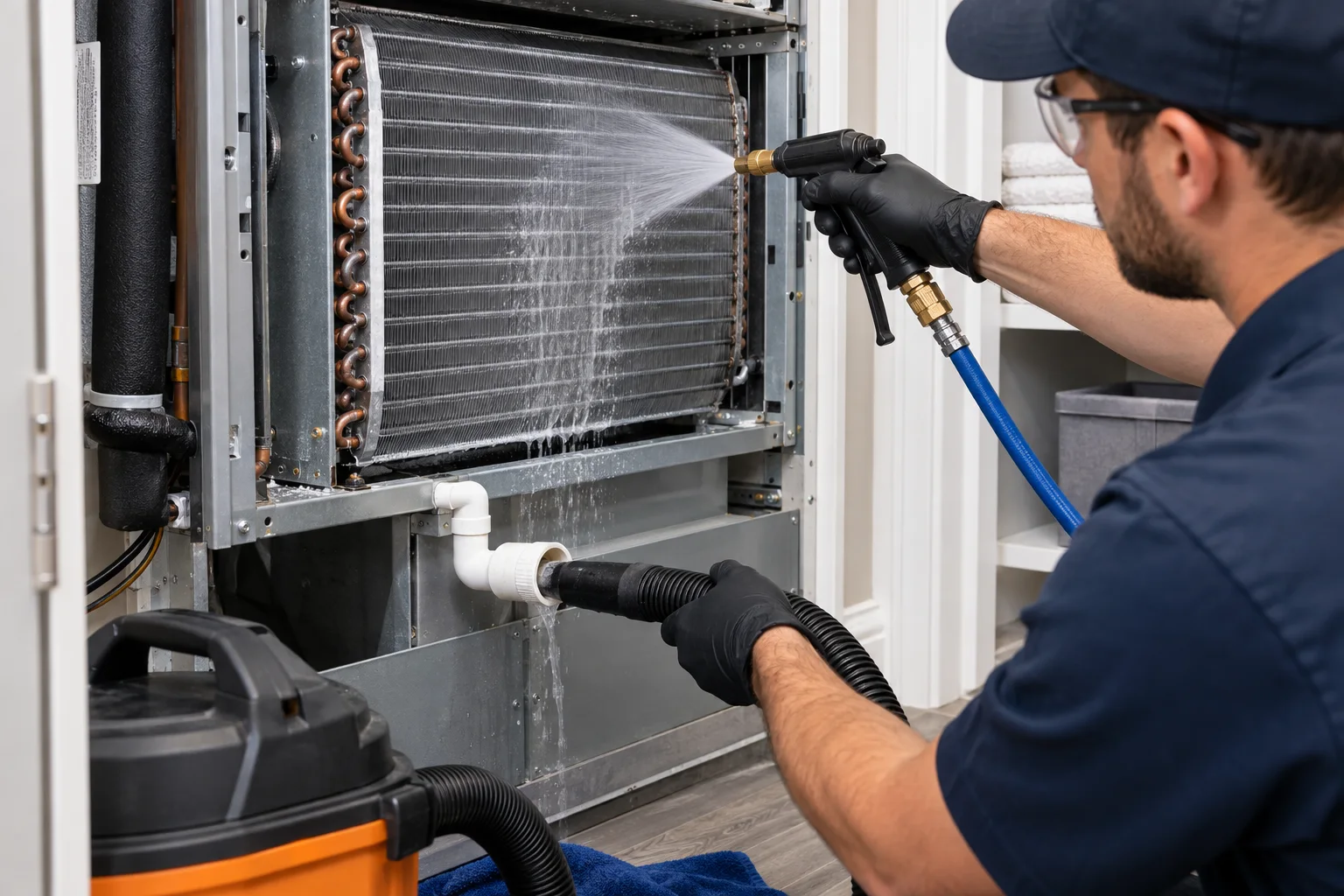
Trane reverse-cycle air conditioning repair in Clearwater
A Trane reverse-cycle system can provide cooling and, when configured as a heat pump, heating by moving heat between the home and outdoors. If it stops cooling, does not provide expected heat, or repeatedly switches off, the symptom alone does not identify the cause. Settings, airflow, controls, electrical components, drainage, refrigerant conditions, or other equipment issues may be involved. A technician should inspect the system and verify the model before recommending a repair.
In Clearwater, a loss of cooling can quickly affect indoor comfort, particularly during humid or hot weather. Note what the system is doing, make only safe observations, and arrange service if it is not operating normally. This guide explains what to check at home and what should be left to a qualified technician.
What “reverse-cycle” means for troubleshooting
In a heat-pump system, the equipment changes its operating mode to provide cooling or heating. The thermostat, indoor and outdoor equipment, controls, and refrigerant circuit must work together. The precise design and service requirements vary by model, so the Trane name by itself does not establish which part needs repair or whether a replacement component is compatible.
A system that cools but does not heat, or heats but does not cool, may have a control, sensor, airflow, electrical, or refrigerant-related issue, among other possibilities. A problem involving the component that changes operating modes is also one possibility, but the symptom does not prove that component has failed. The technician should test the system in the reported mode and compare its operation with the requirements for that model.
Safe observations homeowners can make
Before the appointment, gather details that can help narrow the inspection. Do not remove equipment panels or attempt electrical or refrigerant work.
- Check that the thermostat is set to the intended mode and temperature. Note whether the display is blank, shows an alert, or changes unexpectedly.
- Look at the air filter and replace it if it is due, following the equipment instructions. A dirty filter may restrict airflow, but it does not establish the cause of every comfort problem.
- Notice whether air is coming from the indoor registers and whether its temperature seems different from usual. Avoid reaching into equipment or touching wiring.
- From a safe distance, look for obvious obstructions around the outdoor unit. Keep the area clear without opening the cabinet or spraying components.
- Record when the trouble occurs, whether the system starts and stops repeatedly, and whether it affects the whole home or particular rooms.
- Note visible water near the indoor equipment, unusual sounds, or any thermostat message. Do not remove drain lines or try to clear an internal blockage yourself.
- If accessible without moving equipment or opening a panel, photograph the model and serial information. A service history or previous repair paperwork may also be useful.
These observations help describe the problem; they are not a substitute for testing. Do not bypass a safety control or repeatedly reset a tripped breaker. If there is a burning smell, repeated breaker trip, active water leak, or unsafe indoor temperature, turn the system off if it is safe to do so and request qualified service.
What a technician may inspect
Diagnosis should begin with the reported symptoms and the specific Trane model. Depending on the system and findings, a technician may check thermostat settings and control signals, operating sequence, airflow, filter condition, indoor and outdoor coils, electrical connections and components, drainage, and any relevant fault indications. The inspection should establish whether the system is receiving the correct call for heating or cooling and how it responds.
For a mode-related complaint, the technician can assess the operation of the controls and the components involved in changing between heating and cooling. For weak airflow or poor comfort, the inspection may consider the air handler, blower, filter, coil condition, and ductwork. Short cycling or shutdowns can have multiple possible causes, so operating measurements and the model-specific service procedure matter.
If refrigerant work is indicated, refrigerant handling should be performed by an EPA-qualified technician. A refrigerant-related symptom should not be used to guess at a leak or authorize a repair without appropriate diagnosis. Electrical panels, live testing, refrigerant connections, internal components, and safety-control testing are technician-only work.
Repair options, parts, and warranty considerations
Ask the technician to explain the findings, the proposed repair, and any reasonable alternatives before work begins. The recommendation should relate to the observed condition and the equipment model—not simply to the brand or a single symptom. If a part is proposed for replacement, ask what it does, how the inspection supports that recommendation, and whether other conditions could affect the result.
Where a replacement part is appropriate, ask about genuine Trane parts, compatibility, availability, and any applicable parts or equipment warranty. Warranty coverage depends on the equipment and its terms; it should be checked rather than assumed. Keep the service findings and repair details for future reference. If replacement of the system is being considered, compare the equipment’s condition and repair history with the proposed project scope and compatibility of the complete system.
Scheduling service in Clearwater
Velocity Air Conditioning offers qualified 24/7 service availability, including nights and weekends. Qualified same-day or next-available dispatch may be available depending on scheduling and service needs. There is no extra charge for nights or weekends. When requesting service, describe whether the issue occurs in cooling, heating, or both, along with any shutdowns, alerts, water, or unusual sounds. Provide the model information if you have it, but do not delay reporting a safety concern to look for a label.
When the technician arrives, explain what you observed and when it began. Request a clear summary of the diagnosis, the recommended work, and the scope before authorizing a repair. This helps distinguish verified findings from possibilities and gives you a basis for deciding what to do next.
Common questions
Does a Trane system that will not switch modes need a reversing-valve repair?
Not necessarily. A mode-change complaint can have several possible causes, including thermostat or control issues and other equipment conditions. A technician should test the system and identify the cause before recommending a component replacement.
Can I keep running the system if it is not cooling or heating properly?
If the system is operating abnormally, repeatedly shutting down, or associated with a safety concern, turn it off if safe and arrange service. Continuing to run it may not resolve the underlying issue. Follow any safety instructions provided for your equipment.
What should I have ready when I call?
Share the system’s symptoms, the mode selected, any visible thermostat message, and whether the problem is intermittent or constant. Model and serial information, if safely accessible, and prior service records can also help the technician prepare.