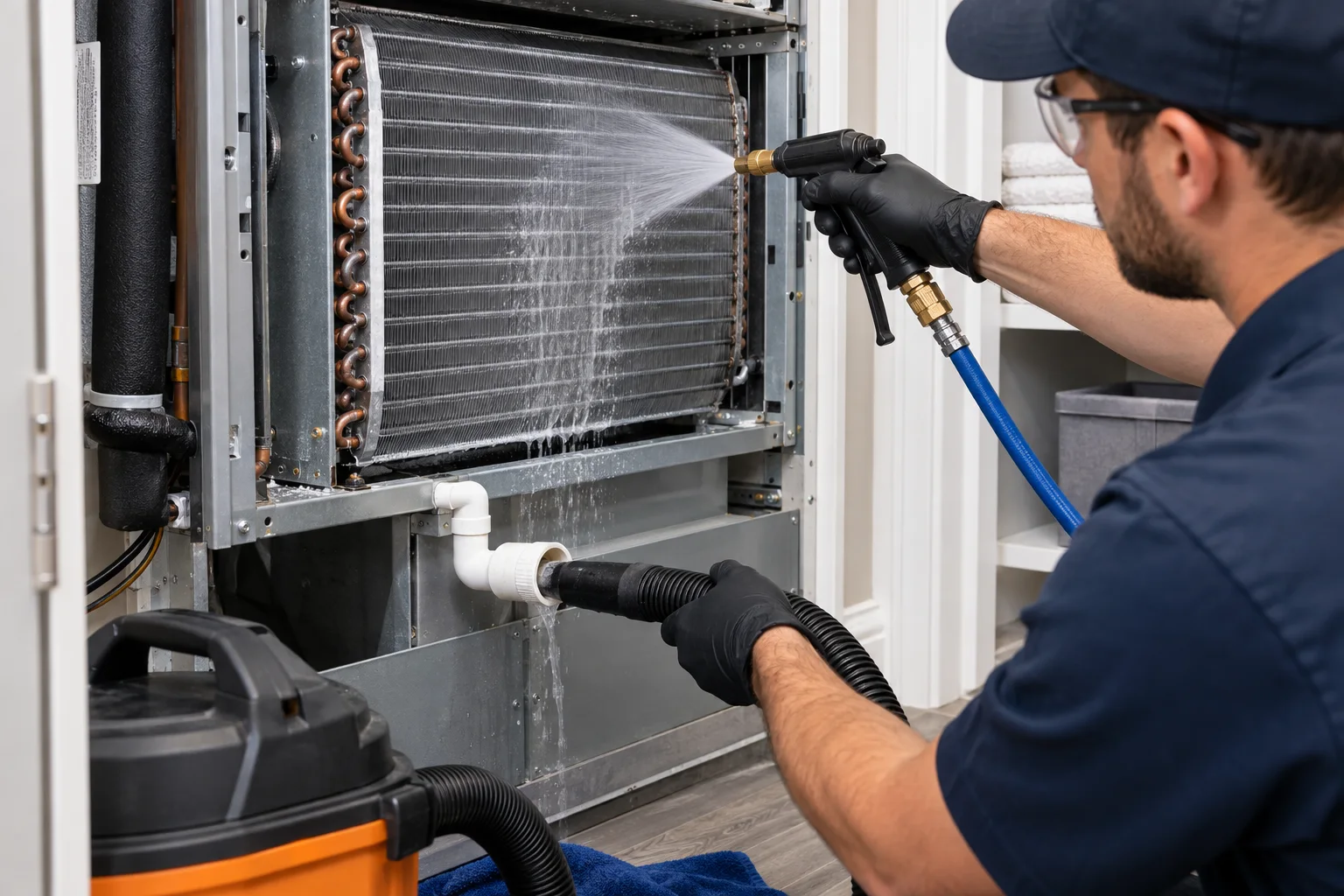
A Trane heat pump that stays in cooling mode when you call for heat needs prompt attention. The heat pump reverses direction through a reversing valve, so a unit that cannot switch into heating may be failing at the valve, its control signal, the control board, or the refrigerant circuit. This guide explains what you can check safely at your Lake Placid home, what a technician would test, and how to decide between repair and replacement. It is general guidance, not a remote diagnosis.
What a stuck cooling mode can point to
During normal heating, the reversing valve redirects refrigerant so the outdoor coil absorbs heat from outside air and the indoor coil releases it into the home. When the valve or its solenoid does not shift, the system keeps running in the cooling direction even though the thermostat is calling for heat. A thermostat or wiring fault can produce the same symptom because the unit never receives the correct mode signal. Refrigerant pressure problems and control board faults can also interrupt the cycle. Only testing can separate these causes.
Rule out a normal defrost cycle first
On cold, damp days, frost or ice can build up on the outdoor coil. To clear it, a heat pump briefly reverses to cooling so warm refrigerant thaws the coil. During this short cycle the outdoor fan may stop, and steam or vapor can rise from the unit. That behavior is expected.
A defrost cycle is brief. If cool air continues well beyond a short thaw, or the outdoor coil shows no ice while the unit still blows cool air in heat mode, treat it as a possible fault and schedule service rather than waiting it out.
Thermostat and outdoor unit checks
These checks are safe to perform without opening any panels:
- Confirm the thermostat is set to heat and the setpoint is above the indoor temperature.
- Replace thermostat batteries and confirm the display responds when you change modes.
- Look at the outdoor unit for ice, leaves, or debris blocking airflow, and clear loose debris from the outside only.
- Write down when the problem started, how long the unit runs, and whether indoor air is warm, cool, or only lukewarm.
Do not remove service panels, touch wiring, or try to reset the reversing valve. If these checks do not change the behavior, the next step belongs to a technician.
What a technician evaluates on site
A proper visit goes beyond restarting the unit. Depending on the system, a technician may verify:
- Reversing valve operation and whether its solenoid is energized when heat is requested
- Control signals from the thermostat and the control board outputs
- Defrost control behavior and outdoor coil condition
- Refrigerant pressures and the temperature difference across the coils
When refrigerant work is needed, EPA-certified refrigerant handling practices apply. Ask the technician which measurements support the diagnosis before any part is replaced.
Repair or replace: where the decision changes
A solenoid or control component may be a contained repair, while a valve failure on an older system often raises a larger cost question. Compare the age of the unit, its repair history, parts availability, expected operating cost, and the comfort problems you are living with before approving work. If replacement is on the table, review heat pump installation options in Lake Placid to compare equipment and project scope.
Warranty terms matter. Where manufacturer coverage remains active, warranty-aware repair language may apply, so keep your purchase and service records and confirm your coverage terms before work begins.
Emergency heat while you wait
Many heat pump thermostats offer an emergency or auxiliary heat setting that bypasses the outdoor heat pump and uses electric heat. It can keep the home warm while you wait for service, but it usually costs more to run, so treat it as a temporary step. If your system uses electric heat strips as backup, see our electric heat strip repair page in Lake Placid for that equipment category.
Booking service in Lake Placid
Velocity repair availability is 24/7, including nights and weekends. Same-day dispatch may be available when a technician is available. Having the following details ready helps the technician start efficiently:
- Trane model and serial number from the equipment label
- Thermostat make and model, plus the mode and setpoint you were using
- A timeline of the symptom, including when cool air started and whether it happens on every heat call
- Any recent service records or warranty documents
Questions homeowners ask about stuck cooling mode
Is a Trane heat pump stuck in cooling mode always a valve problem?
No. The reversing valve is one possibility, but thermostat signals, control board outputs, defrost behavior, and refrigerant conditions can produce the same symptom. A technician needs to test the system before naming a cause.
How long should a defrost cycle last?
A defrost cycle is designed to be short. If cool air continues well past a brief thaw, or there is no visible ice on the outdoor coil, schedule service instead of waiting for the unit to recover on its own.
Can I use emergency heat until a technician arrives?
Yes, if your thermostat offers it. Emergency heat uses electric heat and typically costs more to operate, so use it only until service arrives.
Will a repair affect my Trane warranty?
It depends on your manufacturer coverage and the repair steps involved. Warranty-aware repair language may apply when coverage remains active, so confirm your terms before work begins and keep copies of your service records.
Can I get service at night or on weekends?
Velocity repair availability is 24/7, including nights and weekends. Same-day dispatch may be available when a technician is available, so describe the symptom and its timeline when you call.
Next step: If the system stays in cooling mode after the checks above, request service and ask the technician to explain the test results and repair options before approving any work.